Everyone thinks creative project visibility is about having a fancy Gantt chart. Or maybe a shared spreadsheet that’s updated religiously. None of that is wrong. But it’s incomplete. It’s surface-level.
The hard truth? True project visibility isn't about tracking tasks. It’s about transparent communication and proactive risk management. It’s about knowing what’s *really* happening, so you can intervene before it’s too late.
1. Visibility Isn't Just Status, It's Context
A status update tells you a task is ‘in progress’. That’s it. It tells you nothing about the quality of the work, the client’s sentiment, or potential roadblocks.
What you *need* is context. Is the designer blocked by unclear feedback? Is the client suddenly questioning the brief? Is legal holding up the final asset?
Visibility means understanding the *why* behind the status. It means seeing the dependencies, the potential friction points, and the actual creative output, not just a task name.
The Symptoms of Poor Contextual Visibility
- Endless status meetings that yield no actionable insights.
- Surprise client revisions late in the process.
- Team members working in silos, unaware of adjacent risks.
- Missed deadlines attributed to “unforeseen issues” that were actually visible days ago.
- A general feeling of chaos, even when the project management tool shows everything is ‘on track’.
This isn't a project management problem. It’s a communication and workflow problem.
2. Centralize Feedback, Not Just Files
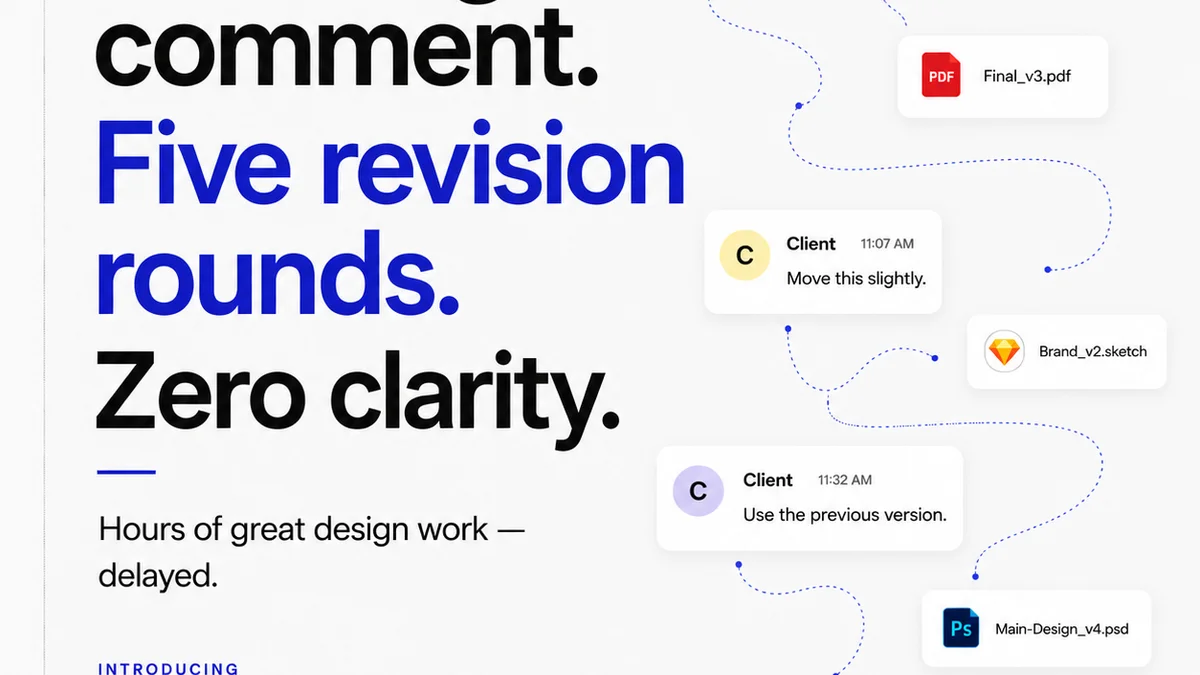
Creative feedback is notoriously messy. Emails, Slack messages, scribbled notes on PDFs, verbal comments in meetings – it’s a scattered mess. And it’s the biggest killer of visibility.
If feedback lives in a dozen different places, no one has a clear view of what’s been requested, what’s been actioned, and what’s still pending.
Consolidating feedback isn't just about organization. It’s about creating a single source of truth for revisions. Every stakeholder should see the original brief, the latest creative, and every piece of feedback given and addressed.
Best Practices for Centralized Feedback
- Establish clear channels for all feedback. No more ad-hoc emails.
- Define who can give feedback and who needs to approve it.
- Use a system that links feedback directly to the creative asset.
- Ensure all feedback is time-stamped and attributed.
- Make it easy to see the history of revisions and the rationale behind changes.
This single source of truth eliminates guesswork and reduces the chance of misinterpretation.
3. Make Revisions and Approvals Visible
The revision and approval process is where projects often get stuck. Without clear visibility, it’s a black hole.
Who is reviewing the work? What are they reviewing it against? When is their feedback due? Who is responsible for the final sign-off?
If these questions can’t be answered instantly, you have a visibility problem. This leads to delays, scope creep, and frustrated teams.
Achieving Revision & Approval Visibility
- Clearly map out the approval workflow for each project.
- Assign specific reviewers and approvers with clear deadlines.
- Automate notifications for pending reviews and overdue items.
- Provide reviewers with all necessary context – the brief, previous feedback, and the current iteration.
- Make the final approval status unambiguous. No more “I thought someone else approved it.”
When everyone knows their role and the timeline, the process moves faster and with fewer surprises.
4. Visibility into Quality Checks
Beyond client approvals, there’s the internal quality check. This is often overlooked but critical for brand consistency and technical accuracy.
Are design systems being followed? Are there accessibility issues? Are the assets technically correct for their intended platform?
If these checks happen informally or are siloed within specific teams, critical errors can slip through.
Integrating Quality Checks
- Define your quality assurance (QA) criteria upfront.
- Integrate QA into your workflow *before* client review, not after.
- Use checklists or templates for common QA tasks.
- Ensure QA findings are documented and tracked like any other feedback.
- Make QA reports accessible to the project team.
Proactive QA prevents costly rework and ensures a higher standard of output.
5. Where Revue Fits In
Managing creative projects effectively demands clarity at every stage. You need a central hub that brings together feedback, tracks revisions, and ensures approvals happen smoothly.
Revue is built for this. It centralizes client feedback, making it visible and actionable, eliminating those scattered email threads and Slack messages. You can see exactly what feedback has been given and how it’s being addressed.
Our platform streamlines the revision and approval process. Everyone involved can see the latest version, the feedback history, and the current approval status. No more ambiguity about who needs to sign off or what the next step is.
This enhanced visibility across feedback, revisions, and approvals directly impacts your team’s efficiency and your clients’ satisfaction. It turns chaotic workflows into predictable processes.
Final Thought
The goal isn't just to *know* what's happening. It's to create an environment where everyone involved has the right information at the right time to make better decisions.
Are you managing tasks, or are you truly enabling progress through clear, actionable visibility?
Frequently asked questions
What's the difference between task tracking and project visibility?
Task tracking shows what's being worked on. Project visibility provides context: the status of the work, client sentiment, potential roadblocks, and the quality of the creative output, enabling proactive decision-making.
How can I centralize creative feedback effectively?
Use a dedicated platform that allows feedback to be attached directly to creative assets. Establish clear channels for feedback, define roles for reviewers and approvers, and ensure all feedback is time-stamped and attributed.
Why are revisions and approvals often a bottleneck?
They become bottlenecks when the workflow is unclear, roles aren't defined, deadlines are missed, and there's no single source of truth for what needs to be approved. Lack of visibility leads to delays and confusion.
How does improved visibility impact client relationships?
Clear visibility builds trust. Clients feel informed and in control when they can easily see the progress, understand feedback loops, and are aware of the approval process. It reduces surprises and manages expectations effectively.