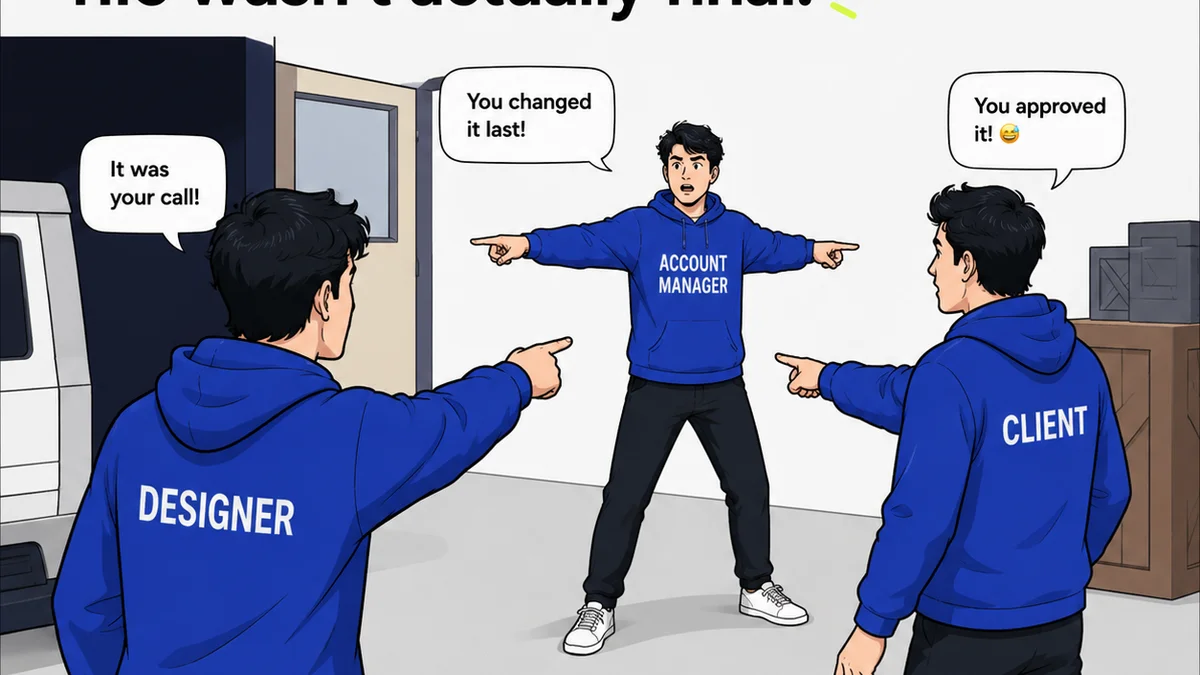
Everyone thinks they know how to proof creative work. You send it over, the client circles things with a digital pen, and maybe adds a comment. “Looks good.” Done. Easy, right?
None of that is wrong. But it’s incomplete. Treating creative proofing as a simple sign-off step is a fast track to costly mistakes, endless revision cycles, and damaged client relationships. The hard truth is that effective creative proofing is a strategic process, not a checkbox.
It’s about creating a structured, accountable system that catches errors before they become expensive problems. It’s about clarity, collaboration, and control.
1. Define the Proofing Process Before You Start
You wouldn’t start building a house without blueprints. So why start a creative project without a defined proofing process?
This isn’t just about sending a PDF. It’s about setting expectations and establishing clear guidelines for everyone involved, both internally and with the client.
Who Owns the Proof?
Designers and project managers often fall into the trap of being the final internal reviewers. This is a mistake.
The person who *created* the work should never be the *sole* reviewer. They’re too close to it. They’ll miss things. Assign a dedicated internal reviewer—someone who understands the brief, the goals, and the brand, but wasn’t in the weeds of creation.
What Constitutes a
Frequently asked questions
What is the difference between review and approval?
Review is the process of examining creative work for errors, alignment with the brief, and quality. Approval is the formal sign-off that signifies acceptance and readiness to move forward, often with legal or financial implications.
How can I ensure clients provide constructive feedback?
Set clear expectations upfront about the type of feedback you need. Provide specific questions or areas to focus on during their review. Remind them of the project goals and the brief. Using a centralized platform can also help structure their feedback.
What are common mistakes in creative proofing?
Common mistakes include relying solely on the creator for review, vague or subjective feedback ('I don't like it'), not tracking revisions, missing the final QA check, and not having a clear approval process, leading to scope creep and missed deadlines.
How many rounds of revisions are typical?
While project scope dictates this, typically 2-3 rounds of revisions are standard. Clearly define this in your contract and project brief. Any revisions beyond that should be considered out of scope and potentially billed separately.