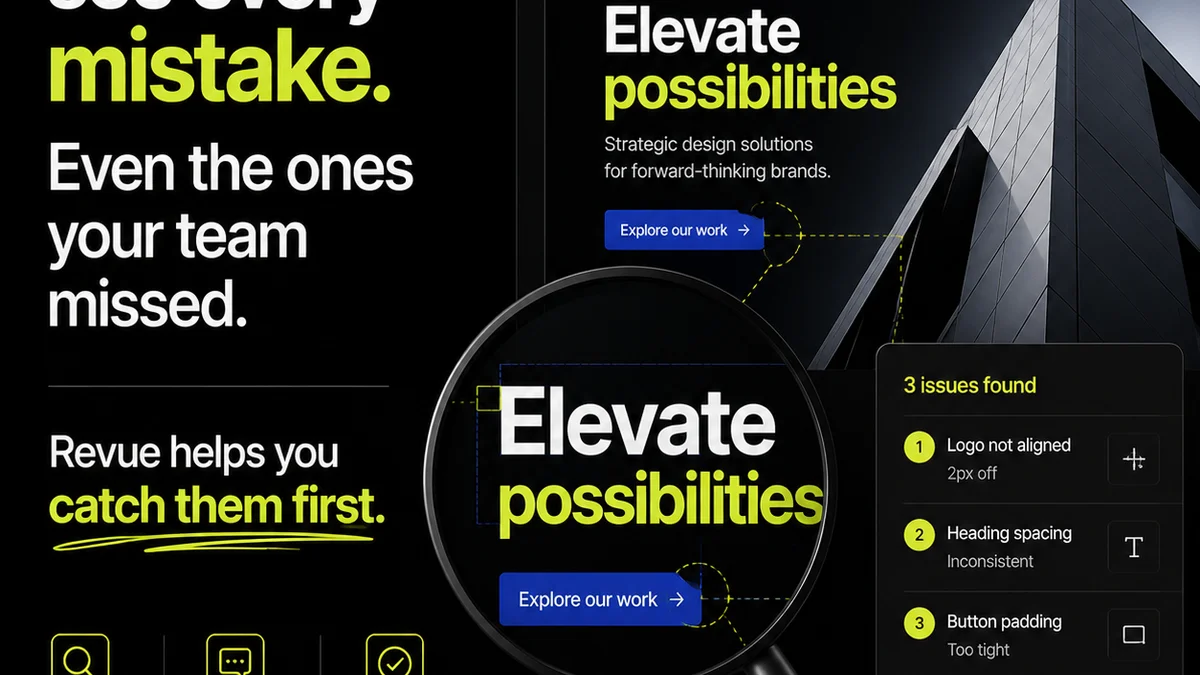
Everyone thinks creative proofreading is about catching typos. It’s about spotting grammatical errors. It’s about making sure the client’s name is spelled correctly. None of that is wrong. But it’s incomplete.
The hard truth? Creative proofreading is the final, crucial quality gate before work goes live. It’s the last line of defense against embarrassing mistakes that can damage your agency’s reputation, erode client trust, and cost you time and money.
Think about the last time a major brand shipped a campaign with a glaring error. It wasn’t the designer’s fault, or the copywriter’s. It was a failure of the proofreading process. And that failure reflects on everyone involved.
This isn't about being a pedantic word-nerd. This is about operational excellence. It's about ensuring every piece of creative work that leaves your agency is polished, professional, and error-free.
1. The Real Cost of a Creative Slip-Up
We often treat proofreading as a quick final pass. A box to tick before hitting send. This casual approach ignores the significant risks involved.
A single typo in a headline can make a campaign nonsensical. A wrong date on an event poster can lead to chaos. A misquoted statistic can undermine credibility.
These aren't just minor inconveniences. They are:
- Reputational damage: Clients and their customers notice errors. It signals a lack of attention to detail.
- Wasted resources: Correcting errors post-launch means reprinting, re-shooting, re-releasing. That's billable time down the drain.
- Client dissatisfaction: If the work isn't perfect, the client's perception of your agency suffers. This impacts future business.
- Missed opportunities: A flawed piece of creative might fail to achieve its objective because the core message is muddled by errors.
Your agency’s brand is built on the quality of its output. Creative proofreading is where that quality is verified.
2. Beyond Grammar: What Creative Proofreading Actually Entails
Traditional proofreading focuses on language mechanics. Creative proofreading needs to be broader, encompassing the entire creative output.
It’s not just about the words; it’s about the message, the context, and the execution.
Accuracy and Factual Verification
Does the copy accurately reflect the product or service? Are claims substantiated? Are names, dates, prices, and specifications correct?
This requires more than just reading. It requires cross-referencing with briefs, spec sheets, and product information. It means asking questions when something seems off.
Brand Consistency
Does the tone of voice align with the brand guidelines? Is the brand's visual identity applied correctly (logos, colors, typography)?
This goes beyond a simple style guide check. It's about ensuring the overall feeling and message are consistent with the client’s established brand persona.
Contextual Appropriateness
Is the language suitable for the target audience and the chosen medium? Is a tagline that works for social media appropriate for a print ad?
Context is everything. What reads fine in a draft might be jarring or ineffective when placed in its final context.
Technical Accuracy
For digital assets, this means checking things like:
- Link functionality: Do all URLs work and go to the correct destinations?
- Image resolution and format: Are images optimized and correctly sized for their intended use?
- Adherence to platform specifications: Are ad sizes, character limits, and technical requirements met?
- Accessibility considerations: Are alt text descriptions present and meaningful? Is color contrast sufficient (for visual elements)? (WCAG guidelines are a good reference here.)
Visual Alignment
Do the visuals support the copy? Are there any visual inconsistencies or errors?
This can include checking for:
- Misplaced elements
- Incorrect image crops or scaling
- Inconsistent styling in graphic elements
- Typos or errors within graphics themselves
This is where a fresh pair of eyes, specifically trained on spotting visual anomalies, is invaluable.
3. Building a Robust Creative Proofreading Workflow
A solid proofreading process isn’t an afterthought; it’s integrated into your project lifecycle. It requires structure, clear roles, and the right tools.
Define Clear Responsibilities
Who is ultimately responsible for the final proofread? Is it a dedicated proofreader, a project manager, or a senior creative?
Avoid diffusion of responsibility. One person, or a small, designated team, should own the final sign-off.
Establish a Multi-Stage Review Process
Don't rely on a single proofread. Implement multiple checks at different stages:
- Initial Draft Review: Focus on content accuracy, clarity, and alignment with the brief.
- Mid-Project Check: Ensure consistency as the project evolves.
- Pre-Production/Final Proofread: This is the most critical stage. The focus is on catching every remaining error – typos, grammar, factual inaccuracies, technical glitches, and visual flaws. This should be done on the *final* version of the asset, in its intended format.
Leverage Different Perspectives
The best proofreading involves multiple sets of eyes. Ideally, these should be people who are:
- Familiar with the project: They understand the goals and context.
- Unfamiliar with the project: They bring a fresh perspective and are more likely to spot obvious errors others have overlooked.
- Different roles: A copywriter spotting a design flaw, or a designer catching a copy error, is gold.
This is why a dedicated proofreader or a quality assurance (QA) specialist is so valuable. They are trained to look for things others miss.
Create Proofreading Checklists
Standardize your checks with detailed checklists tailored to different project types (e.g., website, social campaign, print collateral, video script).
A checklist ensures consistency and prevents critical items from being missed. It should cover:
- Grammar, spelling, punctuation
- Factual accuracy (names, dates, stats, prices)
- Brand voice and tone
- Call-to-action clarity and correctness
- Link functionality and accuracy
- Technical specifications (image sizes, file formats, resolution)
- Accessibility requirements (alt text, contrast ratios)
- Legal disclaimers and required copy
- Consistency with the creative brief
Proofread in the Right Environment
Distractions kill accuracy. Ensure proofreaders have:
- Adequate time (never rush a final proofread)
- A quiet space
- The correct software and tools
- The final, approved version of the asset
Proofreading should ideally be done on a hard copy or a high-fidelity digital proof, not the live website or a rapidly changing document.
4. The Human Element: Skills of a Great Creative Proofreader
While tools can help, the core of effective creative proofreading remains human skill. What makes a great proofreader?
Attention to Detail
This is non-negotiable. The ability to spot the smallest anomaly.
Critical Thinking
Not just reading, but questioning. Does this make sense? Is this accurate? Is this appropriate?
Subject Matter Familiarity
Understanding the industry, the client’s business, and the nuances of the campaign helps immensely.
Language Proficiency
A deep command of grammar, syntax, and style.
Technical Aptitude
For digital work, understanding file types, resolution, and basic web/app conventions is crucial.
Communication Skills
The ability to clearly articulate issues and suggest solutions without being overly critical.
Patience and Perseverance
Proofreading can be tedious. A good proofreader stays focused and thorough, even on the most complex or repetitive tasks.
Consider investing in training for your team or hiring specialists. It’s an investment in quality that pays dividends.
5. Where Revue Fits In
Managing feedback and revisions can be chaotic. This chaos often leads to missed details and errors slipping through the cracks.
Revue is built to bring order to that chaos. By centralizing client feedback and streamlining the revision process, it directly supports a more rigorous proofreading workflow.
- Centralized Feedback: All comments and annotations live in one place, linked directly to the asset. No more hunting through scattered emails or Slack threads. This ensures proofreaders have the complete, documented history of changes and client input.
- Version Control: Easily track different versions of an asset. Proofreaders can compare the latest revision against the previous one, highlighting changes and ensuring no new errors were introduced.
- Clear Revision History: See who made what changes and when. This transparency helps understand the evolution of the creative and identify potential points of error.
- Streamlined Approvals: Knowing when an asset has gone through all necessary internal reviews and is ready for its final proofread is critical. Revue provides that clarity.
When feedback is organized and revisions are clear, your team can focus on the actual task of ensuring creative quality, rather than wrestling with messy communication chains.
6. Final Thought
Is your agency treating proofreading as a necessary evil, or as a strategic imperative? The difference lies not just in catching errors, but in protecting your reputation, ensuring client satisfaction, and delivering consistently excellent creative work. It’s time to elevate your proofreading from a chore to a core function of quality assurance.
Frequently asked questions
What's the difference between editing and proofreading?
Editing focuses on improving clarity, flow, and content. Proofreading is the final check for surface errors like typos, grammar mistakes, and punctuation. In creative work, proofreading also includes checking factual accuracy, brand consistency, and technical specifications.
How much time should be allocated for creative proofreading?
There's no one-size-fits-all answer, as it depends on project complexity. However, it should never be rushed. Allocate sufficient time for at least one thorough, final proofread, ideally with fresh eyes, before any asset goes live. This might range from an hour for a simple social post to several days for a complex campaign.
Can AI tools replace human proofreaders?
AI tools are excellent for catching basic typos and grammatical errors. However, they cannot replicate human critical thinking, contextual understanding, brand voice assessment, factual verification, or visual accuracy checks. They are best used as a first pass or a supplement, not a replacement.
Who should be responsible for the final creative proofread?
Responsibility should be clearly defined. Ideally, it's a dedicated proofreader or QA specialist. If not, a senior team member not directly involved in the creation process (like a project manager or account director) can serve this role. The key is that it's someone whose primary focus in that moment is quality control, not creative execution.