Everyone knows creative proofreading is about catching typos. It’s the last line of defense against embarrassing errors before a client sees the work. That’s not wrong. But it’s woefully incomplete.
The hard truth is, effective creative proofreading is less about grammar and more about strategic quality assurance. It’s the difference between a client who trusts your output and one who nitpicks every pixel. It’s about protecting your agency’s reputation and, frankly, your sanity.
1. The Real Cost of Skipping Steps
The pressure to deliver fast is immense. Deadlines loom, clients are impatient, and sometimes, the temptation to cut corners on the final review is strong. Who has time for another pass when the work looks good?
But what looks good isn't always *right*. A misplaced comma in a headline can change its meaning. An incorrect product name can cause legal headaches. A misaligned element might signal a lack of attention to detail that erodes client confidence.
These aren't just minor annoyances. They're indicators of underlying process weaknesses that can:
- Damage client trust and relationships.
- Lead to costly revisions or project delays.
- Undermine the perceived value of your creative work.
- Create internal friction and blame.
- Harm your agency’s brand reputation.
This isn't about being perfect. It's about being deliberate. It’s about implementing a systematic approach to creative proofreading that goes far beyond a quick spell-check.
2. What Creative Proofreading *Really* Means
Think of creative proofreading as a final audit. It's not just about spelling and grammar, though those are crucial. It’s a comprehensive check across multiple dimensions:
Accuracy and Consistency
Does every piece of text align with the approved brief and messaging strategy? This includes:
- Brand names, product names, and taglines.
- Client-provided terminology or specific jargon.
- Consistency in tone of voice and style.
- Correct URLs, phone numbers, and addresses.
Visual Integrity
This is where creative proofreading shines for design and development teams. It involves scrutinizing:
- Alignment and spacing of all elements.
- Color accuracy and adherence to brand guidelines.
- Legibility and readability of type.
- Correct image resolution and placement.
- Functionality of interactive elements (links, buttons, forms).
Compliance and Legal
Depending on the project, this can be critical. Are you sure about:
- Disclaimers and legal copy.
- Copyright and trademark notices.
- Accessibility standards (e.g., WCAG for web).
- Industry-specific regulations.
Contextual Appropriateness
Does the final output make sense in its intended environment?
- Is the message clear and impactful for the target audience?
- Does it align with the overall campaign goals?
- Are there any unintended cultural or social implications?
This multi-faceted approach transforms proofreading from a tedious chore into a strategic imperative. It’s about validating the entire creative output.
3. Building a Bulletproof Proofreading Process
A robust proofreading process isn’t a single person’s job; it’s a team responsibility embedded within your workflow. Here’s how to build one:
Dedicated Reviewers
Assign specific individuals to the final review. Ideally, these are people who weren’t directly involved in the day-to-day creation of the asset. They bring fresh eyes and objectivity.
Checklists Are Your Friend
Don’t rely on memory. Develop detailed checklists tailored to the type of project (website, social campaign, print ad, video script). These ensure nothing gets overlooked.
Multiple Passes, Different Focuses
A single review is never enough. Plan for:
- Content Pass: Focus on copy, messaging, accuracy.
- Design Pass: Focus on visual elements, layout, branding.
- Technical Pass: Focus on links, functionality, code (if applicable).
- Final Sanity Check: A quick read-through for glaring errors.
Use the Right Tools
Leverage technology. Grammar checkers like Grammarly are a start, but they won't catch everything. For visual work, consider tools that facilitate annotation and feedback, making the process more efficient.
Establish a Clear Handoff
Define when and how assets move to the proofreading stage. Make sure all necessary context (brief, previous versions, client feedback) is readily available.
This systematic approach minimizes human error and ensures a consistent level of quality across all projects.
4. The Psychology of Seeing vs. Reading
Our brains are wired to fill in gaps and see what we *expect* to see. This is the enemy of meticulous proofreading. After staring at a piece of work for hours, days, or weeks, you become blind to its flaws.
Your own creative work is the hardest to proofread. You know what you *intended* to write or design, and your brain often substitutes that intention for the reality on the screen.
This is why fresh eyes are so critical. An external reviewer, whether another team member or a dedicated proofreader, doesn't have that same ingrained expectation. They see the work as the client will see it for the first time.
Another trick? Reading copy backward, word by word. This forces your brain to focus on individual words rather than the flow of sentences, making typos more apparent. For visual elements, printing out a design or viewing it at a different scale can reveal alignment issues or font readability problems that are missed on screen.
5. Where Revue Fits In
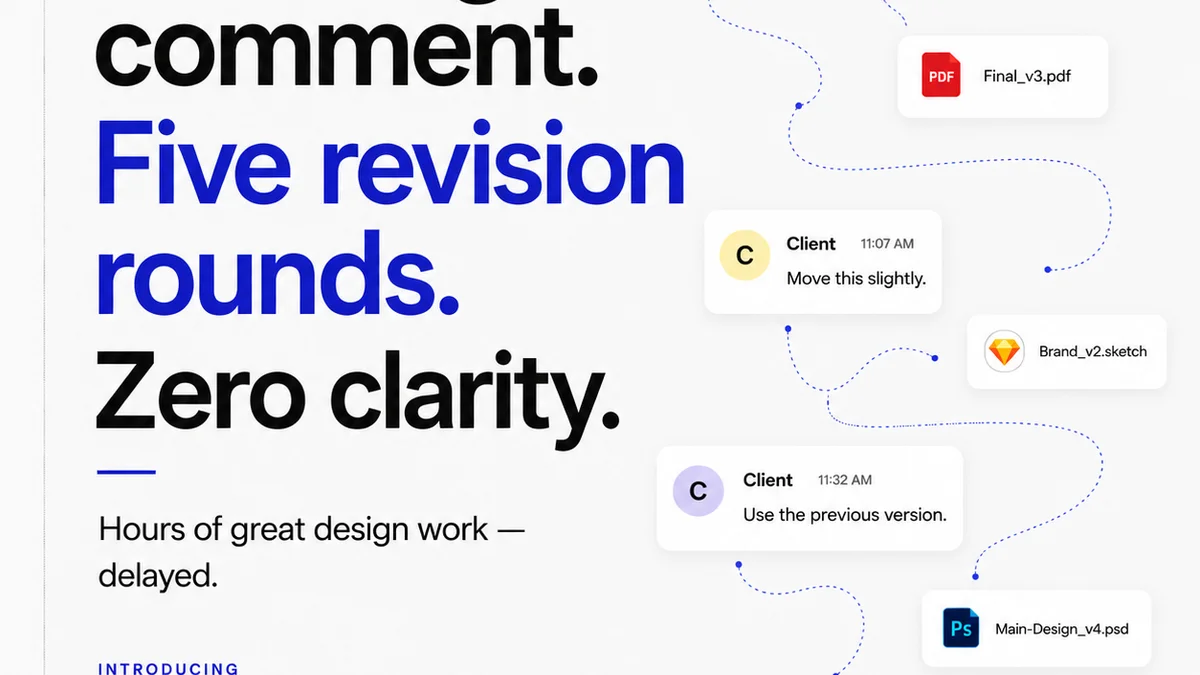
Managing the feedback and revision cycle is where many proofreading pitfalls occur. Scattered feedback across emails, Slack messages, and random documents leads to missed comments and inconsistencies.
Revue centralizes this entire process. When feedback is consolidated in one place, linked directly to the creative asset, your proofreading team has a single source of truth.
This visibility means:
- All comments are captured: No more hunting through email chains.
- Context is preserved: Reviewers see the feedback in relation to the asset.
- Revisions are tracked: It’s clear what changes have been made and why.
- Approvals are managed: The final sign-off is documented and auditable.
By streamlining feedback and approvals, Revue helps ensure that the final proofread is based on complete, organized information, drastically reducing the chance of errors slipping through.
Final Thought
Is your agency treating proofreading as a quality gate or just a final formality? The answer reveals a lot about your commitment to client satisfaction and the perceived value of your creative output. Elevate it from a task to a strategy.
Frequently asked questions
What's the difference between proofreading and editing?
Editing focuses on improving the overall content, structure, and clarity of a piece. Proofreading is the final stage, focused solely on catching surface-level errors like typos, grammatical mistakes, punctuation issues, and formatting inconsistencies before publication.
Who should be responsible for creative proofreading in an agency?
Ideally, a dedicated proofreader or a team member not directly involved in the asset's creation should handle the final proofread. This ensures fresh eyes and objectivity. However, a culture of quality means everyone plays a part in spotting errors.
How can I make my proofreading process more efficient?
Use checklists tailored to your project types, implement multiple review passes with different focuses (content, design, technical), leverage technology like grammar checkers and annotation tools, and centralize feedback with platforms like Revue to avoid hunting for comments.
Is creative proofreading different for digital vs. print assets?
Yes, while core principles of accuracy and grammar apply, digital assets require additional checks for functionality (links, buttons), responsiveness across devices, and accessibility standards (WCAG). Print assets focus more on physical production elements like bleeds, color modes, and print-specific formatting.