Everyone agrees creative quality assurance (QA) is important. It’s that last step before a client sees the work. The final check. The gatekeeper.
None of that is wrong. But it’s incomplete. It paints QA as a reactive task, a quick once-over. The real truth? Effective creative QA is a proactive, integrated part of your entire workflow, from brief to final delivery. It’s not just about catching errors; it’s about preventing them and elevating the work itself.
1. Define 'Done' Before 'Start'
What does a successful creative output look like? This isn’t just about a client’s subjective taste. It’s about objective criteria. Before a single pixel is placed or a word is written, you need a clear definition of what ‘done’ means. This involves understanding:
- The core brief objectives.
- The target audience and their needs.
- Brand guidelines and their non-negotiables.
- Technical specifications for the medium (web, print, video, etc.).
- Accessibility standards (e.g., WCAG guidelines).
- Key performance indicators (KPIs) for success.
This upfront clarity is the bedrock of any good creative process. Without it, QA becomes a guessing game. Are we meeting expectations if we don’t know what they are? Or worse, if they’re constantly shifting.
The Brief is Your North Star
Your creative brief is the single most critical document. Is it clear? Is it signed off? Does everyone involved understand it? A weak brief leads to weak work, and a chaotic QA process trying to salvage it.
Treat the brief as a living, breathing contract. Any changes or shifts in direction must be documented and agreed upon. This prevents scope creep and ensures the QA team is evaluating against the *agreed-upon* goals, not some moving target.
Technical Specs Matter
This is where many agencies stumble. They focus on the 'look and feel' and forget the 'how it works'.
For web projects, this means checking:
- Responsive design across devices.
- Cross-browser compatibility.
- Page load speeds.
- Functionality of interactive elements.
- SEO best practices.
For print, it’s about bleed, trim, color profiles, and font embedding. For apps, it’s about performance, battery usage, and platform-specific guidelines. Ignoring these technical elements is a failure of QA, plain and simple.
2. Embed QA Throughout the Lifecycle
The biggest mistake is treating QA as a final, isolated step. It’s not. It’s a continuous process.
Think of it like building a house. You don’t wait until the roof is on to check if the walls are plumb. You check at every stage.
Stage-Gate Reviews
Implement review checkpoints at the end of each major phase:
- Concept/Strategy Review: Does the core idea meet the brief?
- Design/Wireframe Review: Is the structure sound? Is the user flow logical?
- Content Review: Is the messaging clear, accurate, and on-brand?
- Development/Production Review: Does it function as intended? Is it built to spec?
- Final Pre-Launch QA: The last sweep before it goes live.
Each stage has its own set of QA criteria. This prevents major issues from snowballing and becoming expensive to fix later.
Peer Review is Essential
Before a piece of work even gets to a formal QA person or manager, encourage peer reviews. Designers reviewing designs, copywriters reviewing copy, developers reviewing code. This catches obvious errors early and fosters a culture of shared responsibility for quality.
It’s also a learning opportunity. Constructive feedback from peers can elevate the work before it’s ever seen by a client or a dedicated QA specialist.
3. Specialize Your QA Process
Not all QA is created equal. The skills needed to check a complex interactive web application are different from those needed to proofread a brochure.
Functional QA
This focuses on whether the deliverable *works* as intended. Does the button click? Does the form submit? Does the video play? This is often the domain of testers or project managers who understand the technical requirements.
Content QA
This is about accuracy, clarity, tone, and grammar. Is the spelling correct? Is the client’s name spelled right? Is the messaging consistent with the brand voice? This often falls to editors or senior copywriters.
Design QA
This checks visual consistency, adherence to brand guidelines, layout integrity, and user experience (UX). Are the fonts correct? Are the colors on-brand? Is the spacing consistent? This might be done by a design lead or a UI/UX specialist.
Brand QA
A broader check to ensure the deliverable aligns with the client’s overall brand strategy, positioning, and messaging. This is often a senior strategic role.
A robust QA process needs to account for these different types of checks. Relying on one person or one type of review is a recipe for missed errors.
4. Leverage Technology for Efficiency
Manual QA is time-consuming and prone to human error. Technology can streamline and enhance the process significantly.
Automated Testing Tools
For web and app development, automated testing tools can check for broken links, performance issues, and code errors much faster than humans can. While they don’t replace human oversight, they handle the repetitive, objective checks.
Version Control and Staging Environments
Using tools that allow for clear version tracking and deploying work to staging environments before it goes live is critical. This provides a controlled space for final QA and rollback if needed.
Centralized Feedback Platforms
This is where the real magic happens. Trying to manage feedback via scattered email threads, Slack messages, and random Word docs is a QA nightmare. A centralized platform ensures all feedback is captured, organized, and actionable.
Key features to look for:
- Visual annotation tools (markup directly on images, PDFs, websites).
- Clear comment threads tied to specific elements.
- Revision history and version comparison.
- Approval workflows.
- Task management for addressing feedback.
This isn’t just about convenience; it’s about auditability and ensuring no feedback gets lost in the shuffle. It makes the entire QA process transparent and efficient.
Where Revue Fits In
This is precisely why we built Revue. The chaos of managing creative feedback and revisions is a universal pain point for agencies and in-house teams. You’re juggling client expectations, internal reviews, and the sheer volume of assets being produced.
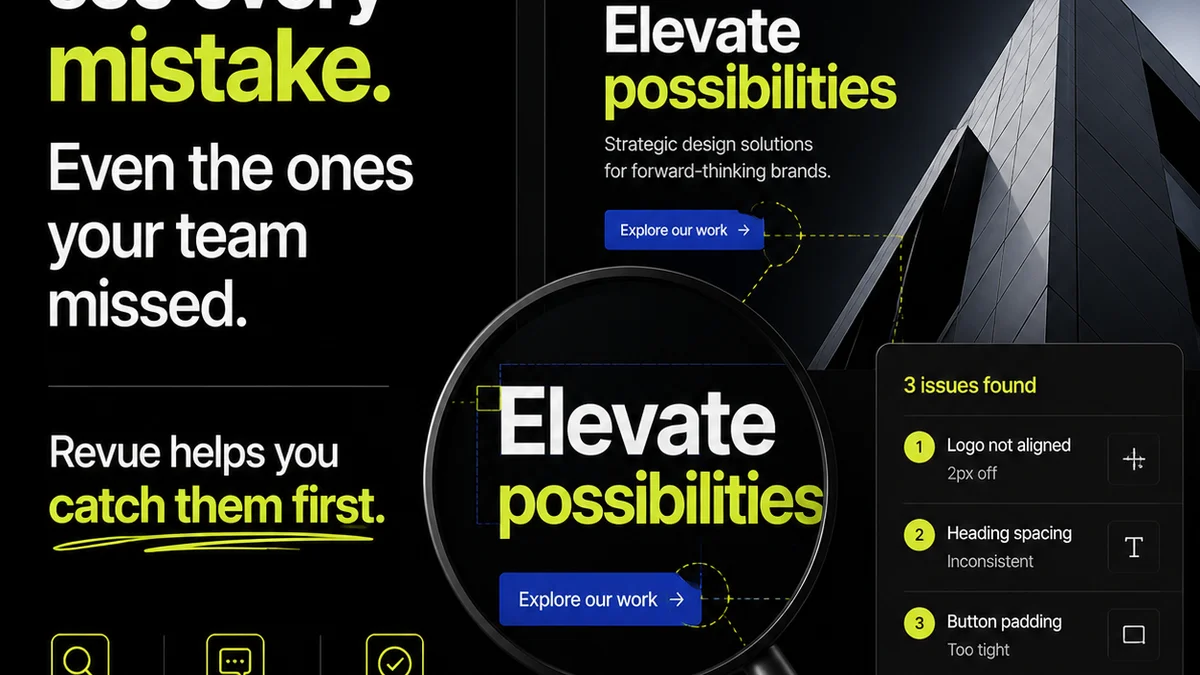
Revue acts as your central hub for all creative collaboration and quality assurance. Instead of chasing down feedback across a dozen different channels, every comment, revision request, and approval lives in one place. You can visually annotate designs, track changes across versions, and manage the entire revision and approval process with clarity.
This means your QA team isn’t spending hours trying to decipher feedback or track down the latest version. They have a clear, documented history of decisions and a single source of truth. It transforms QA from a frantic last-minute scramble into a controlled, efficient part of your workflow. You can run quality checks with confidence, knowing you’re working from a single, organized stream of information.
5. Foster a Culture of Quality
Ultimately, the best creative QA practices are only as good as the people implementing them. It requires a mindset shift across the entire team.
Ownership and Accountability
Every team member should feel responsible for the quality of the final output. This isn’t just the job of a dedicated QA person. Designers, copywriters, project managers, account managers – everyone plays a role.
Train your teams on your QA processes. Make sure they understand the criteria and the tools you use. Encourage them to be critical, but also constructive.
Continuous Improvement
Your QA process shouldn't be static. Regularly review what’s working and what’s not. Hold post-project retrospectives that specifically address QA challenges and successes.
Did we catch issues early? Were the reviews effective? Was the feedback clear? Use these insights to refine your checklists, your workflows, and your training.
Client Education
Sometimes, the biggest QA hurdles come from unclear or changing client expectations. Educate your clients on your process. Explain the importance of a clear brief, the review stages, and the impact of last-minute changes. Setting expectations upfront can prevent a host of QA problems down the line.
Final Thought
Creative quality assurance is often seen as a necessary evil – a hurdle to jump before launch. But what if we reframed it? What if QA wasn't just about catching mistakes, but about elevating the work? What if it was the engine that drove consistency, client satisfaction, and your agency's reputation for excellence?
Are you truly building quality into your process, or just checking for flaws at the end?
Frequently asked questions
What is the difference between creative QA and traditional software QA?
While both focus on quality, creative QA specifically addresses the nuances of creative deliverables like design, copy, and branding. It often involves more subjective criteria related to aesthetics and brand alignment, alongside functional checks. Traditional software QA typically focuses more on technical functionality, performance, and bug detection.
How can I ensure my team takes creative QA seriously?
Foster a culture of quality where everyone feels ownership. Provide clear training on QA processes and criteria. Integrate QA checks into project milestones and hold regular reviews. Lead by example and emphasize that quality is a shared responsibility, not just a final step.
What are the most common mistakes agencies make in creative QA?
Common mistakes include treating QA as a last-minute step, lacking a clear definition of 'done', not specializing QA checks for different types of deliverables (e.g., design vs. content), relying solely on manual checks without technology, and failing to document feedback and approvals properly, leading to lost information.
How does technology like Revue improve creative QA?
Platforms like Revue centralize feedback, provide visual annotation tools, and manage revision history and approvals. This eliminates scattered communication, ensures all feedback is captured and tracked, provides a clear audit trail, and streamlines the entire review and QA process, making it more efficient and less error-prone.