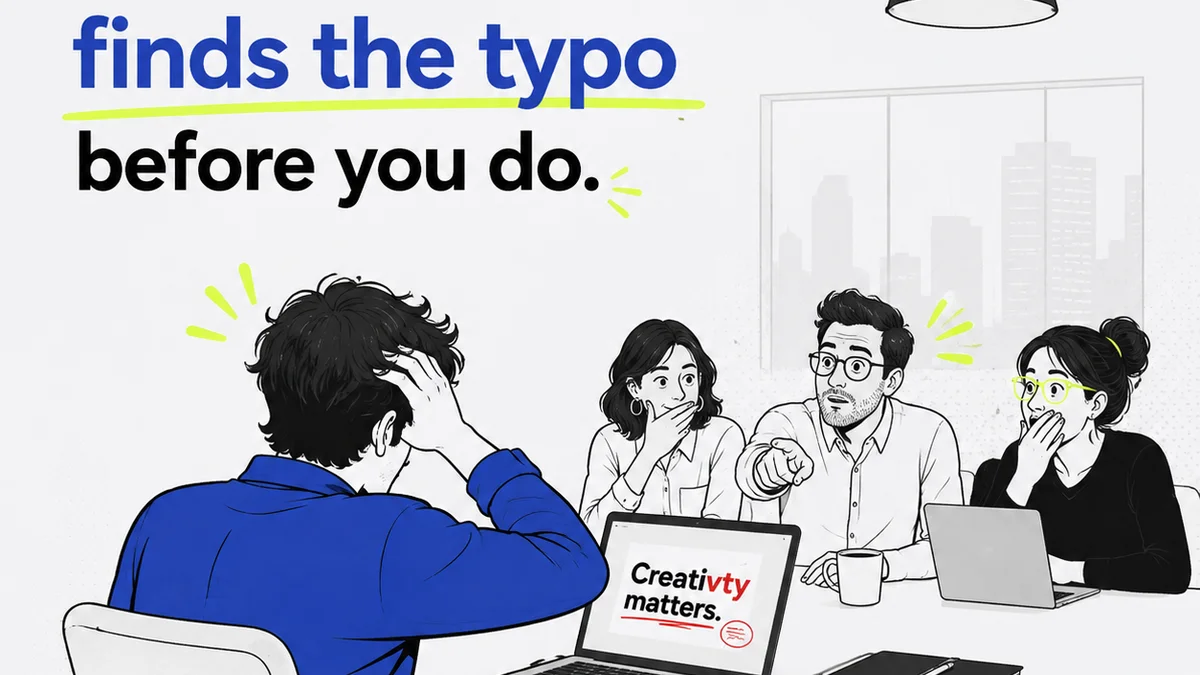
Everyone thinks creative Quality Assurance (QA) is just about catching typos and broken links before a client sees the work. A final check. A last-minute polish.
None of that is wrong. But it’s incomplete.
The hard truth? Effective creative QA isn’t a gatekeeper; it’s a continuous loop woven into the fabric of your agency’s operations. It’s the difference between delivering good work and consistently exceptional work that builds trust and drives repeat business. It’s about embedding quality into every stage, not just slapping it on at the end.
1. Redefining Creative QA: From Gatekeeper to Integrator
Too many agencies treat QA as a separate, often rushed, phase. It’s a task handed off to someone who “catches mistakes.” This view is fundamentally flawed.
True creative QA is about proactive quality control. It’s about building quality in from the brief through to final delivery.
The Reactive Trap
When QA is an afterthought, you see:
- Missed deadlines due to unexpected revisions.
- Client dissatisfaction stemming from overlooked details.
- Internal friction between creative, account, and production teams.
- Damaged agency reputation.
This reactive approach burns resources and erodes client confidence. It’s a costly way to operate.
The Proactive Shift
Shifting to an integrated QA process means:
- Establishing clear quality standards early.
- Building review checkpoints into the project workflow.
- Empowering every team member to be a quality advocate.
- Using tools that facilitate clear communication and tracking.
This isn’t about adding more steps; it’s about making each step count towards a higher standard.
2. Establishing Your Quality Standards: The Foundation
What does “quality” even mean for your agency? Without defined standards, QA is subjective and inconsistent.
You need to articulate what excellence looks like for your specific services and clients.
Define Deliverables and Criteria
For every project type, outline:
- Brand Consistency: Adherence to brand guidelines (logos, colors, typography, tone of voice).
- Technical Accuracy: Correctness of data, spelling, grammar, punctuation.
- Functional Integrity: Proper working of links, forms, interactive elements, code.
- Usability and Accessibility: Ease of navigation, readability, compliance with standards like WCAG.
- Client Mandates: Specific requirements outlined in the brief and SOW.
These aren't just nice-to-haves; they are the non-negotiables.
Document Everything
Create internal documentation for these standards. This serves as a reference for:
- Onboarding new team members.
- Training existing staff.
- Project kick-offs.
- Client alignment meetings.
Think of it as your agency’s quality bible.
3. Integrating QA into the Workflow: Not an Afterthought
The biggest mistake is bolting QA onto the end of a project. It needs to be part of the process from the start.
This means quality checks happen at multiple points, not just one.
Stage-Gate Reviews
Implement review gates at the end of each major project phase. Examples:
- Concept Review: Does the strategic direction align with the brief?
- Design Review: Does the visual execution meet brand standards and creative objectives?
- Development Review: Is the build accurate and functional?
- Content Review: Is the copy clear, accurate, and on-brand?
Each gate requires sign-off before proceeding. This catches issues when they are cheapest and easiest to fix.
Peer Reviews and Self-Checks
Encourage a culture where creatives review each other's work constructively. Implement self-checklists before submitting work for formal review.
This builds accountability at every level.
Dedicated QA Roles (When Needed)
For larger or more complex projects, a dedicated QA specialist can be invaluable. This person acts as the final objective eye, ensuring all previous checks have been completed and standards met.
However, this role should complement, not replace, the quality efforts of the entire team.
4. Leveraging Technology for Efficient QA
Manual review processes are slow, error-prone, and difficult to track. Modern tools are essential for effective creative QA.
The right technology streamlines communication and centralizes feedback.
Centralized Feedback Platforms
Tools that allow clients and internal teams to provide feedback directly on creative assets (designs, websites, videos) are game-changers.
Look for features like:
- Visual annotation (commenting directly on the image/design).
- Version control for tracking revisions.
- Clear assignment of tasks and deadlines.
- Centralized communication logs.
This eliminates messy email chains and scattered notes.
Automated Checks
For digital deliverables, leverage automation where possible:
- Link checkers: Ensure all hyperlinks are active and correct.
- Grammar and spelling tools: Integrate these into your writing and design software.
- Accessibility checkers: Tools that scan for common WCAG violations.
- Code linters: For developers, ensuring code quality and consistency.
Automation handles the repetitive, tedious checks, freeing up human reviewers for more complex issues.
5. Client Collaboration in QA: Building Trust Through Transparency
Clients often feel excluded from the QA process, leading to surprise and dissatisfaction when they finally see the work.
Involve them strategically. Make them part of the quality conversation.
Setting Expectations Early
During the SOW and kickoff phases, clearly outline the QA process, including:
- When and how feedback will be collected.
- Who is responsible for final approval.
- The number of revision rounds included.
Transparency here prevents misunderstandings later.
Structured Feedback Loops
Guide clients on how to provide effective feedback. Instead of vague comments like “I don’t like it,” encourage them to articulate specific concerns related to the project goals and established criteria.
Use shared platforms to keep feedback organized and actionable.
The Final Approval
The final sign-off should be a formal step. Ensure the client understands that this signifies acceptance of the work as meeting the agreed-upon brief and standards.
This protects both parties and clarifies accountability.
Where Revue Fits In
Managing creative feedback and revisions can quickly become chaotic. This is precisely where a tool like Revue becomes invaluable for agencies and creative teams.
Revue provides a centralized hub for all client feedback, revision tracking, and approval workflows. Instead of sifting through endless email threads or scattered documents, all communication and changes are logged in one place, tied directly to the creative assets themselves.
This means your team can conduct more effective quality checks, understand the history of revisions at a glance, and ensure nothing falls through the cracks. Visibility into the entire revision and approval process helps maintain project momentum and ensures that the final output truly meets both agency standards and client expectations.
6. The Human Element: Gut Feeling and Critical Thinking
Technology and processes are critical, but they don’t replace human judgment.
The best QA involves critical thinking and a healthy dose of skepticism.
Beyond the Checklist
A checklist is a tool, not a crutch. Even if every item is ticked, does the work *feel* right? Does it achieve the strategic objective?
This is where experienced creatives and strategists shine.
The Power of “No”
Sometimes, the most important QA function is to push back. If a client’s requested change compromises quality, strategy, or brand integrity, you need the confidence to say so, backed by your defined standards and process.
This protects the integrity of the work and the long-term success of the client’s project.
Continuous Improvement
Treat QA itself as an ongoing project. Regularly review your QA processes:
- What issues slipped through?
- Where did feedback loops break down?
- How can we improve our standards or tools?
Post-project retrospectives should include a dedicated segment on quality and process.
Final Thought
Is your agency treating creative QA as a necessary evil, a final hurdle to clear? Or is it a strategic advantage, a core component of how you deliver exceptional value?
The shift from reactive error-checking to proactive quality integration defines the difference between an agency that simply completes projects and one that builds lasting client partnerships through consistently superior creative output.
Frequently asked questions
What is the difference between creative QA and quality control?
While often used interchangeably, creative QA is typically a proactive process focused on preventing defects by building quality into each stage of development. Quality Control (QC) is more reactive, involving inspection and testing to identify defects in finished products. For agencies, integrating QA throughout the workflow is more effective than relying solely on QC at the end.
How can I make clients more involved in the QA process?
Involve clients by setting clear expectations about feedback rounds early on, using transparent feedback tools, and guiding them on providing constructive, specific feedback related to project goals. This fosters collaboration and reduces surprises.
What are the most common mistakes agencies make in creative QA?
The most common mistakes include treating QA as a final, isolated step; lacking defined quality standards; not integrating QA into the workflow from the start; relying solely on manual checks without leveraging technology; and failing to manage client expectations regarding feedback and approvals.
How does technology help with creative QA?
Technology, like centralized feedback platforms and automated checkers (for links, grammar, accessibility), streamlines the QA process. It reduces errors, saves time, improves communication by keeping feedback in one place, and provides version control for revisions.