Everyone knows insurance marketing needs to be accurate. Legal and compliance reviews are non-negotiable. But if you think a simple legal check is enough for your creative, you’re leaving massive value on the table. That’s the assumption: legal approval equals creative quality. None of that is wrong. But it’s incomplete.
The hard truth is that a truly effective creative QA process for insurance marketing goes far beyond legal sign-off. It’s about ensuring your creative work not only *avoids missteps* but actively *drives business results*. It’s about clarity, impact, and connecting with customers in a crowded, complex market.
This isn’t just about ticking boxes. It’s about building trust and demonstrating value for your clients. Let’s break down how to build a creative QA process that works, and works hard.
1. Define 'Quality' Beyond Compliance
Before you can test for quality, you need to define what it means for *your* insurance marketing. Compliance is table stakes. What else matters?
Brand Alignment
Does the creative align with the brand’s established voice, tone, and visual identity? For insurance, this often means balancing professionalism with approachability. A campaign that feels too slick might alienate a more conservative audience, while one that’s too dry won’t capture attention.
Target Audience Resonance
Will this resonate with the specific audience segment? Are you speaking their language? Addressing their pain points? Using visuals that reflect their lives and aspirations?
Clarity of Message
Is the core offer or message immediately understandable? Insurance products are complex. Your creative needs to cut through the jargon and deliver a clear, simple takeaway. What problem does this solve? What benefit does it offer?
Call to Action Effectiveness
Is the call to action (CTA) clear, compelling, and easy to act upon? Whether it’s ‘Get a Quote,’ ‘Learn More,’ or ‘Speak to an Agent,’ the next step must be obvious and frictionless.
Emotional Connection
Does the creative evoke the right emotion? For insurance, this often means building trust and peace of mind, or highlighting security and protection. It’s rarely about generating excitement, but about fostering confidence.
2. Map Your QA Workflow
A robust QA process isn’t an afterthought; it’s integrated into your workflow. Think about the stages your creative goes through and where checks are needed.
Pre-Production Checks
- Briefing Accuracy: Does the creative brief accurately reflect client goals and target audience insights?
- Concept Viability: Do initial concepts meet strategic objectives and brand guidelines?
- Risk Assessment: Are there any obvious compliance or brand risks in early ideas?
Production Checks
- Asset Integrity: Are all provided assets (logos, imagery, copy points) correct and approved?
- Adherence to Brief: Is the work staying true to the approved concept and strategic direction?
- Legal/Compliance Draft Review: This is where your legal team steps in. Ensure all claims, disclaimers, and regulatory requirements are met.
- Brand Guideline Check: Double-check logo usage, color palettes, typography, and tone of voice.
Pre-Launch Checks
- Final Copy Review: One last look at all text for typos, grammatical errors, and clarity.
- Technical QA: For digital assets, check loading speeds, responsiveness across devices, broken links, and form functionality.
- Usability Testing (if applicable): For landing pages or interactive elements, ensure the user experience is smooth.
- Final Legal/Compliance Sign-off: The absolute final word from legal before anything goes live.
Post-Launch Monitoring
- Performance Analysis: Track key metrics to see if the creative is achieving its objectives.
- Customer Feedback Review: Monitor social media and customer service channels for reactions.
3. Assemble Your QA Dream Team
Who owns what in the QA process? Clearly defined roles prevent confusion and ensure accountability. This isn't just about assigning tasks; it's about leveraging expertise.
- Account Manager/Strategist: Owns the strategic alignment and client brief interpretation. Ensures the creative answers the business question.
- Creative Director: Oversees the creative quality, brand consistency, and conceptual integrity.
- Copywriter/Editor: Responsible for clarity, grammar, tone, and accuracy of written content.
- Designer/Art Director: Ensures visual brand consistency, aesthetic quality, and proper asset usage.
- Legal/Compliance Officer: The gatekeeper for regulatory adherence and risk mitigation.
- Technical QA Specialist (for digital): Verifies functionality, performance, and cross-platform compatibility.
- Project Manager: Facilitates the workflow, tracks progress, and ensures timely reviews.
Each person brings a critical lens. Missing any one of these perspectives can lead to costly errors.
4. Leverage Technology for Efficiency
Manual review processes are slow and error-prone, especially with multiple stakeholders and complex projects. Technology can streamline this significantly.
Centralized Feedback Platforms
Tools that allow stakeholders to leave comments directly on creative assets (images, videos, PDFs, web pages) are essential. This avoids scattered email threads and confusing version control.
Version Control Systems
Always know which version is the latest and what changes were made. This prevents confusion and ensures everyone is reviewing the correct iteration.
Automated Checks
For digital assets, automated checks can catch basic errors like broken links, accessibility issues (like missing alt text), or performance bottlenecks before human eyes even see them.
Where Revue Fits In
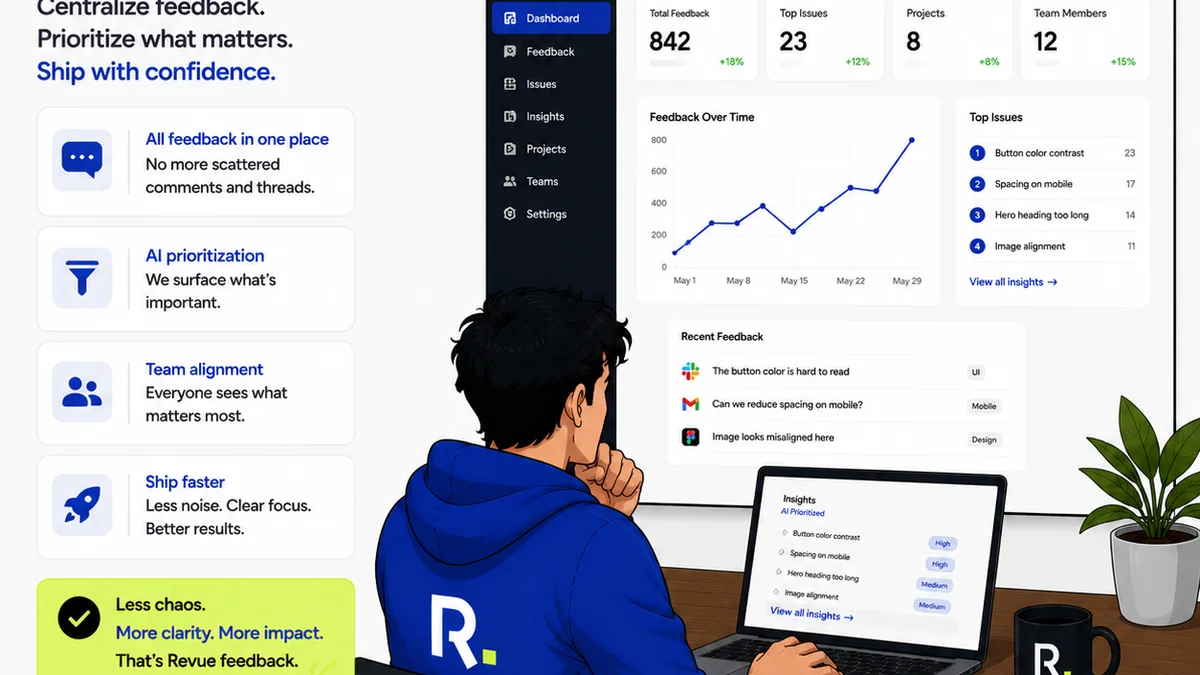
Managing feedback, revisions, and approvals for complex insurance marketing campaigns can quickly become chaotic. Scattered emails, endless version spreadsheets, and missed comments lead to delays and errors. This is precisely why a centralized platform is crucial for effective creative QA.
Revue offers a single source of truth for all your creative projects. Stakeholders can provide contextual feedback directly on proofs, track the history of revisions, and manage approvals efficiently. This ensures that every piece of creative work goes through a rigorous, documented QA process, minimizing the risk of errors and ensuring brand and legal compliance before launch.
With Revue, you get clear visibility into the entire revision and approval cycle. This transparency helps identify bottlenecks, ensures all necessary stakeholders have reviewed the work, and provides an audit trail for every decision. It transforms a potentially messy process into a structured, reliable workflow, which is vital for the precision demanded by insurance marketing.
5. Implement Specific Checks for Insurance Nuances
Insurance marketing has unique challenges. Your QA process needs to account for these.
Disclosure and Disclaimer Accuracy
Are all required disclosures present, legible, and correctly placed? This is paramount. Small print often needs to be *readable* small print.
Regulatory Compliance Monitoring
Are you up-to-date with the latest regulations from bodies like the NAIC, state insurance departments, or specific federal agencies? What’s compliant today might not be tomorrow.
Risk Aversion vs. Engagement Balance
Insurance often errs on the side of caution, which can lead to bland marketing. QA must balance the need for risk aversion with the need to actually engage a customer. Is the creative *too* safe?
Data Privacy and Security Messaging
If your marketing touches on data privacy or security features (common in cyber insurance, for example), ensure the messaging is accurate and doesn’t overpromise or mislead.
Agent vs. Company Messaging
Is it clear whether the communication is coming from a specific agent, a group of agents, or the company itself? This distinction is often legally and operationally important.
6. Foster a Culture of Quality
Ultimately, a strong QA process relies on people. You need to cultivate a mindset where quality is everyone's responsibility.
- Training: Ensure all team members understand the QA process, their roles, and the importance of accuracy and compliance.
- Feedback Loops: Regularly review QA outcomes. What went wrong? What went right? How can we improve?
- Empowerment: Give team members the confidence to flag potential issues, even if it means a slight delay. Better a delayed launch than a faulty one.
- Client Collaboration: Educate clients on your QA process and why it’s in place. Partnership builds trust.
This isn't about blame; it's about collective ownership of the final output.
Final Thought
Building a comprehensive creative QA process for insurance marketing isn't just about avoiding fines or legal trouble. It’s about building a more effective marketing engine. It’s about ensuring every dollar spent on creative drives clarity, builds trust, and ultimately, converts prospects into loyal customers. Are you building a QA process that merely checks boxes, or one that actively elevates your client’s business?
Frequently asked questions
What is the primary goal of a creative QA process for insurance marketing?
The primary goal is to ensure that all creative marketing materials are not only legally compliant and accurate but also effectively communicate the brand's message, resonate with the target audience, and drive business objectives, thereby building trust and demonstrating value.
Who should be involved in the creative QA process for an insurance company?
Key stakeholders typically include account managers, strategists, creative directors, copywriters, designers, legal/compliance officers, and technical QA specialists (for digital assets). Each role brings a unique perspective crucial for comprehensive review.
How can technology improve the creative QA process in insurance marketing?
Technology, such as centralized feedback platforms (like Revue), version control systems, and automated checks, can significantly streamline the QA process by consolidating communication, tracking changes, and catching basic errors efficiently, reducing delays and improving accuracy.
Beyond legal compliance, what other quality aspects should be checked in insurance creative?
Other critical quality aspects include brand alignment (voice, tone, visual identity), target audience resonance, clarity of message, effectiveness of the call to action, and the ability to create an appropriate emotional connection, such as trust and peace of mind.