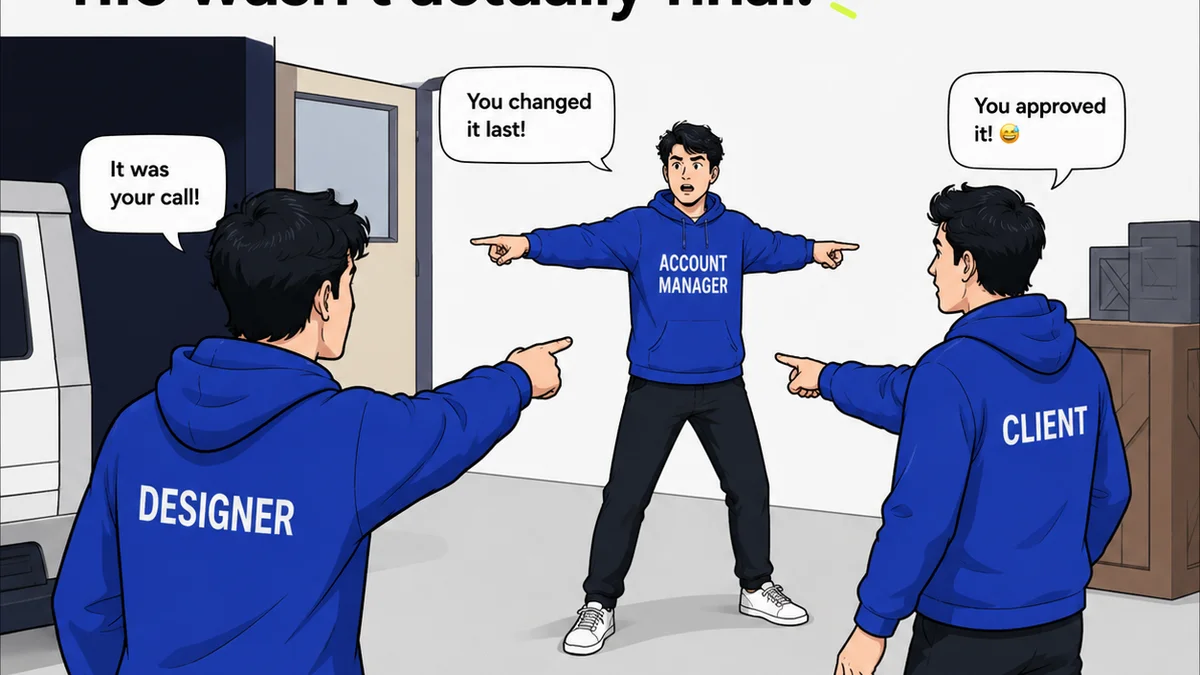
Everyone says you need a creative brief. And that’s not wrong. But a brief alone is often a blunt instrument. It’s a document, sure. But is it a tool for clarity? Or just another piece of paper to get lost in the shuffle?
The hard truth? Most creative briefs are too vague, too late, or just plain wrong. They lead to endless clarification cycles, scope creep, and creative work that misses the mark. This isn't a failure of the brief itself, but of the process around it. You need more than just a document; you need a creative request checklist.
A checklist forces discipline. It turns a fuzzy conversation into a concrete set of requirements. It ensures everyone involved, from the stakeholder to the designer, is on the same page before any creative work begins. Let’s break down what makes a checklist truly effective.
1. The 'Why' Behind the 'What'
Too many requests jump straight to deliverables. "We need a banner ad." Okay, but why?
Define the Core Objective
What business goal does this creative asset serve? Is it driving traffic? Increasing sign-ups? Boosting brand awareness? Be specific.
A vague objective like "increase engagement" is useless. A clear one like "drive 10% more qualified leads from the Q3 campaign landing page" is actionable.
Identify the Target Audience
Who are we trying to reach? Go beyond demographics. What are their pain points? Motivations? Where do they spend their time online?
Understanding the audience informs tone, visuals, and messaging. A campaign for Gen Z gamers looks very different from one for Boomer retirees.
Establish Key Performance Indicators (KPIs)
How will success be measured? Define this upfront. This links directly back to the objective.
If the objective is lead generation, KPIs might include conversion rates, cost per lead, or form submission numbers. If it's brand awareness, it could be impressions, reach, or social shares.
2. The 'Who, What, When, Where'
Once the 'why' is clear, nail down the practicalities. This is where many briefs fall short, leaving room for assumptions.
Specify Deliverables
List every single asset required. Don't assume. "Social media graphics" is too broad.
- Instagram Story (1080x1920px)
- Facebook Feed Post (1080x1080px)
- LinkedIn Banner (1584x396px)
- Email Header Image (600x200px)
Define Usage Rights and Placement
Where will this creative live? For how long? This impacts file formats, technical specs, and legal considerations.
- Digital advertising (3 months, global)
- Organic social media (ongoing)
- Print collateral (1 year, North America)
Set Clear Deadlines (and Milestones)
When is the absolute final deadline? Crucially, when are intermediate milestones needed for review and feedback?
Vague deadlines like "end of week" are a recipe for disaster. Specific dates and times prevent last-minute rushes and allow for iterative feedback.
Identify Stakeholders and Approvers
Who needs to sign off on this creative? List them by name and role. Who is the primary point of contact for questions?
This prevents the dreaded "we need to get legal's approval" at the 11th hour.
3. The 'How' of Creative Input
This is where the real collaboration happens. A good checklist prompts for the necessary creative guidance without dictating the solution.
Provide Brand Guidelines and Assets
Are there specific logos, color palettes, fonts, or imagery styles that must be used? Link to them directly.
Don't make designers hunt for the latest brand guide. Ensure they have access to the approved, up-to-date assets.
Outline Key Messaging and Tone of Voice
What are the core messages that must be communicated? What is the desired tone – formal, playful, urgent, empathetic?
This guides the copywriter and designer in crafting an appropriate message. For example, a Black Friday sale needs a different tone than a holiday charity drive.
Include Mandatory Elements
Are there any legal disclaimers, calls to action (CTAs), or specific product callouts that are non-negotiable?
List these explicitly. A missing disclaimer can kill a campaign.
Reference Examples (Good and Bad)
Show, don't just tell. Provide examples of creative that hit the mark (and explain why) and examples that missed the mark (and explain why).
This visual and contextual feedback is invaluable. It sets clear expectations for the creative output.
4. Technical and Practical Considerations
Often overlooked, these details prevent technical roadblocks and ensure the creative is fit for purpose.
Specify File Formats and Technical Specs
What are the exact requirements for each deliverable? Resolution, color mode (RGB/CMYK), file type (JPG, PNG, SVG, MP4), character limits, aspect ratios.
Getting this wrong means assets might not work where they're intended, requiring costly re-renders.
Detail Any Required Integrations
Does the creative need to work with specific platforms or tools? Are there tracking parameters or UTM codes that must be implemented?
For digital campaigns, this ensures proper tracking and attribution.
Clarify Budget and Resources
While not always on the initial request, understanding the budget can shape the creative approach. Are there limitations on stock imagery, video production, or complex animations?
Transparency here manages expectations and prevents scope creep.
Where Revue Fits In
Managing creative requests and the ensuing feedback loop can be chaotic. This is precisely where a tool like Revue becomes essential for streamlining the entire process.
Instead of juggling emails, scattered documents, and endless Slack threads, Revue provides a centralized hub. When a request comes in, it’s logged with all the necessary details – ideally, pre-populated using a structured checklist.
The creative request checklist becomes the foundation. As the project progresses, all feedback, revisions, and approvals are tracked within Revue. Stakeholders can comment directly on the creative assets, and designers have a clear, documented history of changes. This eliminates the "he said, she said" confusion and ensures everyone is working from the latest version.
Furthermore, Revue helps manage revision cycles. By clearly defining who needs to review what and when, you maintain visibility and prevent bottlenecks. Quality checks become more systematic when the entire history and all approvals are logged in one place.
Essentially, Revue transforms the checklist from a static document into a dynamic, actionable part of your workflow, ensuring clarity from the initial request through to final delivery.
5. Building Your Own Checklist
Don't reinvent the wheel. Start with a template and adapt it.
Keep it Dynamic, Not Static
Your checklist should evolve. As you encounter new challenges or refine your processes, update it.
Make it Mandatory (and Accessible)
Ensure all requests go through the checklist process. Make the checklist easily accessible to everyone who needs to submit or review requests.
Train Your Team
Don't just hand over a checklist. Explain the 'why' behind each section. Ensure everyone understands its importance.
Integrate with Your Project Management Tools
If possible, integrate your checklist process into your existing PM software. This creates a seamless workflow.
Final Thought
Is a creative request checklist just another bureaucratic hoop to jump through? Or is it the most critical step in ensuring your creative team produces work that actually lands? The difference often lies not in the checklist itself, but in how rigorously and thoughtfully it's applied. Are you setting your creative up for success, or setting it up for failure, before a single pixel is placed?
Frequently asked questions
What is a creative request checklist?
A creative request checklist is a structured list of essential questions and requirements that must be completed before a creative project begins. It ensures all necessary information, objectives, deliverables, and technical specifications are clearly defined upfront, preventing misunderstandings and scope creep.
Why is a creative request checklist better than just a brief?
While a brief outlines the project, a checklist enforces a rigorous process. It breaks down complex requirements into actionable points, ensures consistency in information gathering, and makes it harder to overlook critical details that a narrative brief might gloss over. It's about process discipline, not just content.
What are the most crucial elements of a creative request checklist?
The most crucial elements include clearly defining the project objective (the 'why'), identifying the target audience, specifying all deliverables and their technical requirements, outlining key messaging and brand guidelines, and listing all necessary stakeholders and approvers. Defining success metrics (KPIs) is also vital.
How can a checklist prevent scope creep?
By forcing a comprehensive definition of deliverables, usage rights, and mandatory elements upfront, a checklist establishes clear boundaries for the project. Any requests outside these defined parameters can be easily identified as scope creep because they weren't part of the initial, agreed-upon checklist.
How do I implement a creative request checklist in my agency?
Start by building a template based on your common project types. Make it mandatory for all new requests, ensure it's easily accessible, and train your team on its importance and how to use it. Integrate it into your project management tools if possible, and be prepared to refine it as you learn.