Everyone talks about the brief. The perfect creative brief. The client who can’t write a brief. The agency that can’t read one. We all nod along, assuming better briefs mean better creative.
None of that is wrong. But it’s incomplete.
The hard truth is, the brief is just the starting gun. The real race is won or lost in how you process, clarify, and manage that request *after* it lands. This is where creative requests truly break down, and where most agencies miss the mark.
1. The Illusion of Clarity: Beyond the Brief Document
You get a brief. Maybe it’s a masterpiece of strategic thinking. Maybe it’s a single-sentence email. You think, “Okay, I know what they want.” That’s the first mistake.
A brief is a *hypothesis*. It’s the client’s best guess at articulating a need. Your job isn’t to execute the hypothesis. Your job is to turn it into a testable, actionable plan.
The Gap Analysis
Every creative request, no matter how polished, contains gaps. These aren’t necessarily errors; they’re areas where interpretation is required.
- What does “modern” *really* mean to this specific client?
- What’s the competitive landscape they’re *actually* operating in?
- What does success look like beyond the requested deliverable?
- Who is the *ultimate* decision-maker, and what are their personal biases?
Ignoring these gaps guarantees rework and frustration. Proactively identifying and closing them is the bedrock of effective creative requests.
The Implicit vs. Explicit
Clients often communicate implicit needs. They *assume* you know certain things about their brand, their audience, or their industry. Sometimes they’re right. Often, they’re wrong.
Your process must bridge this gap. This means asking questions that uncover the *unsaid*. It means validating assumptions before they become project roadblocks.
2. The Information Black Hole: Where Requests Go to Die
Think about the journey of a creative request in your agency. Where does it live? An inbox? A Slack channel? A project management tool that no one fully checks?
This is the information black hole. Information becomes siloed, lost, or misinterpreted as it moves between people and platforms.
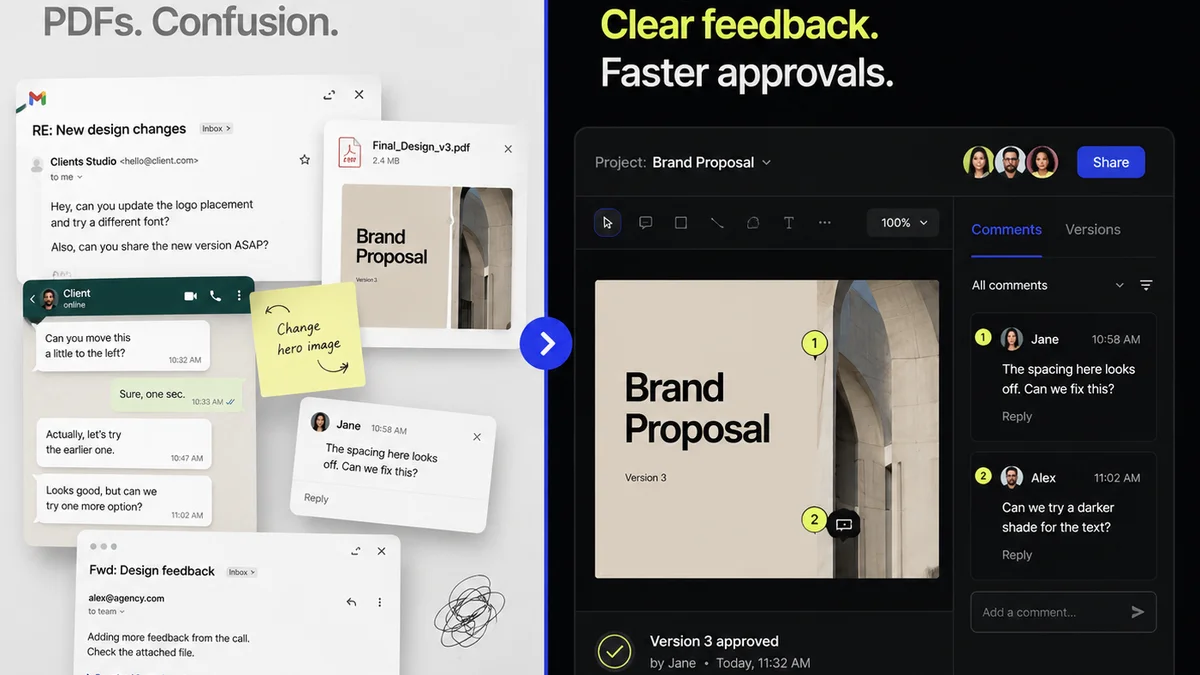
The Email Thread Vortex
The dreaded email chain. It starts with the initial request. Then comes clarification. Then a revision. Then another. Soon, you have 50 emails, and no one is quite sure what the *current* scope is.
This isn’t just inefficient; it’s dangerous. Critical details get buried. Stakeholders miss key decisions. The latest version of the brief is always the one nobody can find.
The Tooling Trap
You might use a project management tool. Great. But is it *the* single source of truth for creative requests? Or is it just another place where information gets duplicated or ignored?
If your team is constantly switching between email, chat, PM tools, and shared drives to piece together a single request, you’ve created friction. Friction kills speed and breeds errors. It turns a simple request into an archaeological dig.
3. The Revision Roulette: Managing Feedback Effectively
Feedback is the lifeblood of creative work. But uncontrolled feedback is poison.
The common assumption? More feedback is better. The contrarian truth? *Smarter* feedback, managed effectively, is what matters.
The Ambiguity Avalanche
Vague feedback like “make it pop” or “I don’t like it” is the enemy of progress. It’s subjective and offers no actionable direction.
This isn’t the client’s fault. It’s a failure of your process to elicit specific, constructive critique. Your system should guide them towards clarity.
The Endless Loop
How many revision rounds does it *really* take? If you don’t have a clear process for managing feedback and approvals, you’re likely stuck in an endless loop.
This often stems from:
- Lack of a clear decision-making hierarchy.
- No defined scope for revisions within the project.
- Feedback coming from too many disparate sources.
- No clear way to track what feedback has been actioned.
This leads to scope creep, missed deadlines, and burned-out teams.
4. The Quality Control Chasm: Bridging the Gap to Delivery
You’ve got the brief, you’ve managed the feedback, and the creative is (finally) done. Time to deliver. But wait – did you actually check if it meets the *original* objectives?
Many teams treat quality control as an afterthought, a quick glance before hitting send. This is a critical failure point in the creative request lifecycle.
The Objective Drift
Creative work can easily drift from the original goals. A beautiful design might miss the mark on brand voice. A compelling copy might not align with the strategic objective.
Your process needs a built-in quality check that refers back to the initial request and objectives. Was the problem defined? Was the solution designed to solve *that* problem?
The Unseen Requirements
Beyond the client’s explicit request, there are often unseen requirements: accessibility standards, technical specifications, brand guidelines adherence.
A robust process ensures these aren’t overlooked. It’s not just about delivering *a* creative asset; it’s about delivering the *right* creative asset, fit for purpose and platform.
Where Revue Fits In
Managing creative requests effectively isn't about having the most complex system. It's about centralizing information and streamlining communication.
Revue acts as that central hub. It brings clarity to the chaos of creative requests by:
- Centralizing Feedback: All client comments, annotations, and approvals live in one place, attached directly to the creative asset. No more hunting through emails or Slack.
- Managing Revisions: Track every version, every change, and every decision. See the complete history of feedback and revisions, making it easy to understand the scope and progress.
- Ensuring Quality: By having all communication and feedback history in one place, you can easily reference the original brief and objectives during final quality checks. Ensure the final output directly addresses the initial request and all approved revisions.
This structured approach removes ambiguity and keeps your entire team aligned, from the initial request to the final sign-off.
Final Thought
The quality of your creative output is directly proportional to the quality of your request management process. Are you treating the brief as the end of the conversation, or the beginning of a structured dialogue?
The real magic happens not in the initial ask, but in the disciplined, transparent, and collaborative journey that follows. How are you navigating that journey?
Frequently asked questions
What's the biggest mistake agencies make with creative requests?
The biggest mistake is treating the brief as the end of the conversation. Agencies often focus solely on the initial document, neglecting the crucial steps of clarifying, processing, and managing the request and subsequent feedback throughout the project lifecycle. This leads to misunderstandings, rework, and missed objectives.
How can I get clearer feedback from clients?
Guide your clients towards specificity. Instead of accepting vague comments like 'make it pop,' ask probing questions: 'What specific feeling or action do you want this to evoke?' Use tools that allow for contextual annotations directly on the creative. Establish a clear feedback process with defined rounds and designated approvers.
What is 'information black hole' in the context of creative requests?
The 'information black hole' refers to the fragmentation and loss of crucial details about a creative request as it moves between different communication channels (email, chat, PM tools) and team members. This siloing makes it difficult to track the current scope, decisions, and feedback, leading to errors and inefficiencies.
How does a centralized platform help with creative requests?
A centralized platform, like Revue, consolidates all communication, feedback, and version history related to a creative request in one accessible location. This eliminates the need to search across multiple tools, ensures everyone is working with the latest information, and provides a clear audit trail for revisions and approvals, significantly reducing errors and improving efficiency.