Everyone agrees that clear creative briefs are essential for FinTech projects. You need to know the objectives, target audience, key messaging, and desired deliverables. That’s table stakes.
But if you think a well-written brief is the secret sauce to successful FinTech creative requests, you’re missing the deeper operational currents that actually drive results.
The hard truth? The real challenge in FinTech creative is not just *what* you ask for, but *how* you manage the entire lifecycle of that request—from intake to final approval—within a highly regulated and rapidly evolving industry.
1. The Myth of the Standalone Brief
A brief is a document. It’s a snapshot in time. It doesn’t account for the messy reality of creative development.
FinTech creative requests are rarely simple. They involve complex compliance checks, multiple stakeholder approvals, and a constant need to balance innovation with regulation.
Treating the brief as the end of the line for clarity leads to endless back-and-forth, missed deadlines, and, frankly, subpar creative work.
The Real Bottlenecks
- Unclear Ownership: Who is ultimately responsible for the creative? Marketing? Legal? Product?
- Ambiguous Feedback Loops: Feedback comes in late, is contradictory, or from people not on the approved list.
- Compliance Black Boxes: Legal and compliance reviews feel like a mysterious, unpredictable process.
- Version Control Chaos: Which is the latest approved version? Where is it stored?
These aren't brief-writing problems; they are workflow problems. Problems that a better brief alone cannot solve.
2. Decoding FinTech's Regulatory Maze
This isn't your average CPG or fashion brand. FinTech operates under intense scrutiny. Every piece of creative is a potential regulatory minefield.
Think about it. Advertising financial products involves disclosures, risk warnings, and adherence to guidelines from bodies like the SEC, FINRA, or the FCA, depending on your market.
A creative request for a new investment app feature needs to consider not just user experience but also how it presents financial risk and what disclosures are legally required. This impacts copy, imagery, and even the user flow itself.
Key Regulatory Considerations
- Disclosure Requirements: What fine print is non-negotiable?
- Risk Communication: How are potential downsides clearly and accurately communicated?
- Data Privacy: How is user data handled and represented?
- Anti-Money Laundering (AML) & Know Your Customer (KYC): Does the creative indirectly touch upon these sensitive areas?
- Fair Lending Practices: Does the creative inadvertently suggest discriminatory practices?
Your creative team needs to be aware of these constraints *early* in the process, not as an afterthought during legal review.
3. The Stakeholder Spaghetti
In FinTech, creative approvals aren't just about aesthetics or brand alignment. They involve a complex web of stakeholders, each with a unique lens.
You've got marketing, product, legal, compliance, risk management, sometimes even engineering and data science. Each group has legitimate concerns that must be addressed.
Without a structured way to manage input from these diverse groups, creative requests become a game of telephone, leading to watered-down ideas and missed requirements.
Common Stakeholder Pitfalls
- The 'One More Thing' Syndrome: Last-minute requests that derail the original scope.
- Conflicting Priorities: Legal wants caution; marketing wants bold. Who wins?
- Uncertainty Over Authority: Is this feedback from someone who can actually approve it?
- Feedback Silos: Different teams providing feedback in different channels, making consolidation impossible.
This isn't about making stakeholders difficult. It's about managing their input efficiently and transparently.
4. Bridging the Gap: From Concept to Compliant Launch
The journey of a FinTech creative asset is longer and more complex than many realize. It’s not just about design and copy.
It’s about ensuring the asset is not only on-brand and effective but also legally sound and technically feasible.
This requires a system that tracks progress, manages feedback, and provides visibility into every stage of the approval process.
Stages of a FinTech Creative Workflow
- Initiation & Briefing: Clear definition of goals, audience, and requirements.
- Concept Development: Creative exploration within defined parameters.
- Internal Review: Initial feedback from core marketing/creative teams.
- Legal & Compliance Review: Rigorous vetting for regulatory adherence.
- Stakeholder Approvals: Input and sign-off from all relevant departments.
- Revision & Refinement: Iterations based on consolidated, approved feedback.
- Final Approval: Sign-off from ultimate decision-makers.
- Asset Handoff & Archiving: Delivery of final assets and storage for future reference.
Each step has potential points of failure. Each needs clear ownership and timely execution.
Where Revue Fits In
Managing FinTech creative requests effectively means bringing structure to this complexity. It means centralizing communication and feedback, providing clarity on revisions, and ensuring quality checks aren't skipped.
Revue is built for this. It acts as the central hub for all your creative projects.
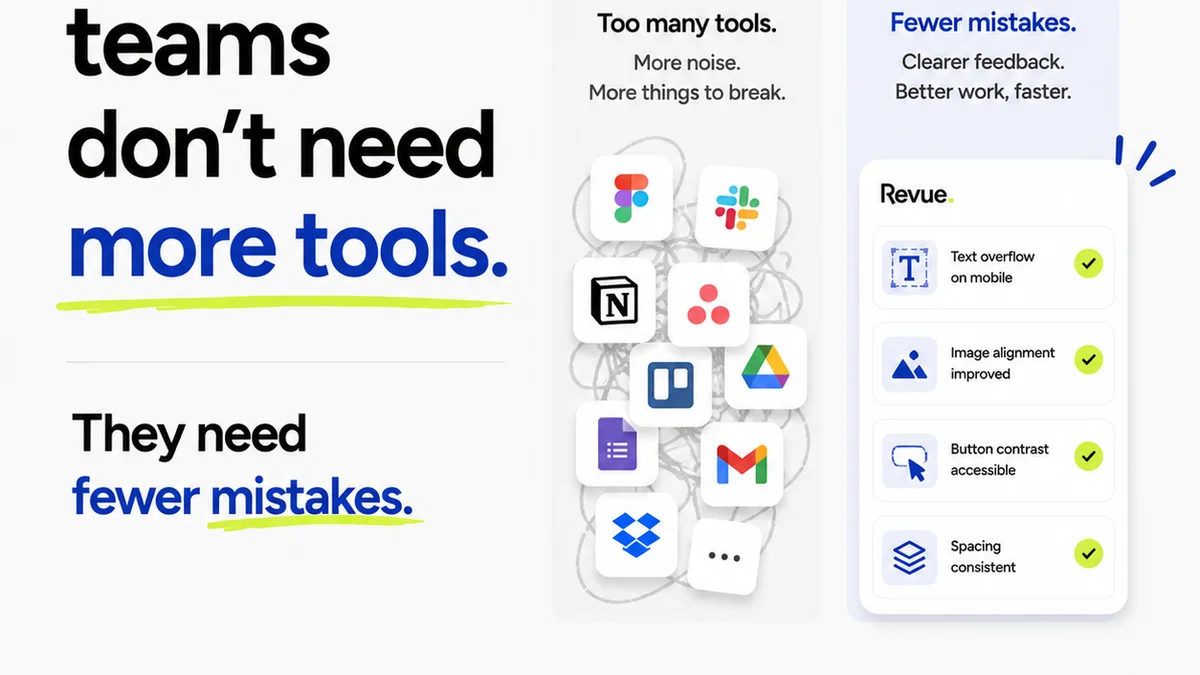
Centralized Feedback: Instead of scattered emails and Slack messages, all stakeholder feedback lives directly on the creative asset within Revue. This eliminates confusion and ensures everyone is working from the same source of truth.
Revision & Approval Visibility: Track every version, every comment, and every approval status. See exactly who has reviewed what, when they provided feedback, and what the current approval status is. This transparency is crucial for FinTech’s audit trails.
Quality Assurance Workflows: Build custom workflows that ensure critical steps like legal review and compliance checks are integrated into the process. No more assets slipping through the cracks because a review step was missed.
By providing a single pane of glass for the entire creative lifecycle, Revue helps FinTech teams navigate regulatory hurdles and stakeholder complexities with greater confidence and efficiency.
Final Thought
Is your FinTech creative process truly optimized, or are you just managing chaos with a slightly better spreadsheet?
The difference between good and great creative delivery in FinTech isn't just about talent; it's about the operational rigor that supports it.
Are you building a system that scales with your compliance needs and your creative ambition?
Frequently asked questions
What are the biggest challenges in FinTech creative requests?
The biggest challenges are managing complex regulatory compliance, coordinating feedback from multiple specialized stakeholders (legal, compliance, product), and maintaining clear version control and audit trails throughout the creative process. A simple brief is insufficient.
How does regulation impact FinTech creative?
Regulations dictate specific disclosure requirements, risk warnings, data privacy considerations, and adherence to financial advertising standards (e.g., SEC, FINRA). Creative must be vetted for compliance early and often, impacting copy, visuals, and user experience.
Why is stakeholder management crucial for FinTech creative?
FinTech creative requires sign-off from diverse teams like legal, compliance, marketing, and product. Each has unique requirements. Without a structured process, conflicting feedback, unclear ownership, and delays are common, jeopardizing project timelines and creative integrity.
How can a centralized platform help with FinTech creative requests?
A centralized platform provides a single source of truth for briefs, feedback, and approvals. It enhances transparency, clarifies ownership, streamlines communication, automates version control, and builds robust audit trails essential for FinTech's regulatory environment.