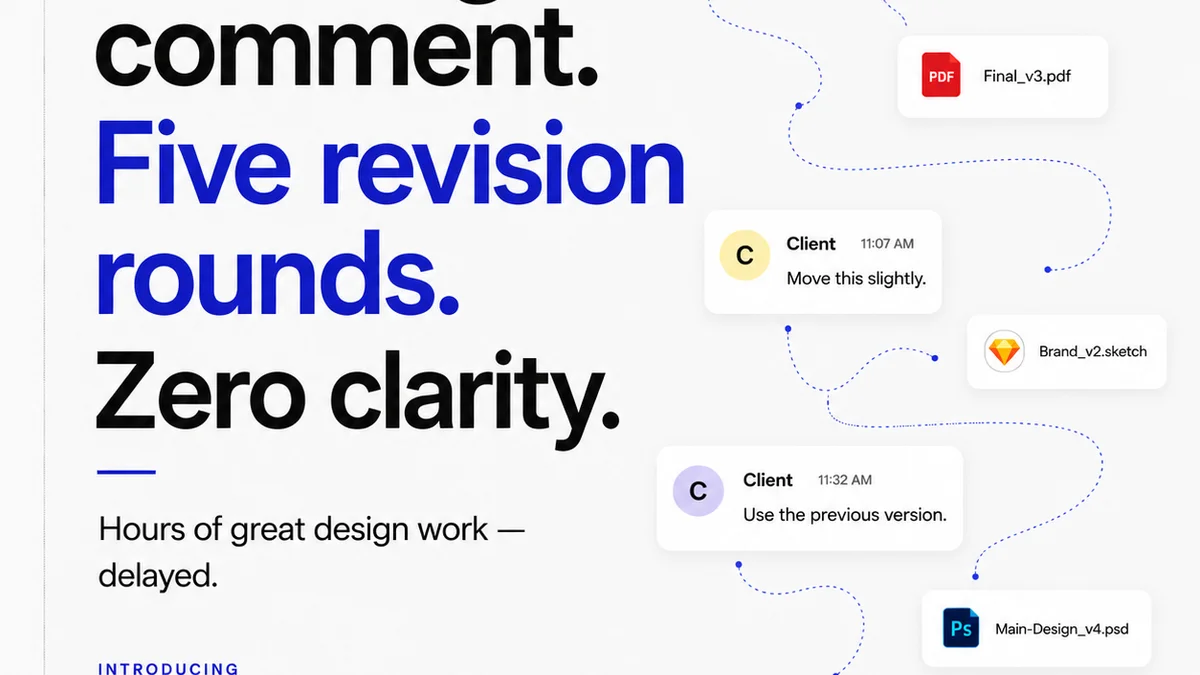
Everyone knows creative review cycles can be a nightmare. You send over the work, and then the feedback starts rolling in. It feels like a simple process: client sees work, client comments, you revise, client approves. Rinse and repeat.
None of that is wrong. But it’s incomplete.
The hard truth is that most creative teams treat review cycles as a reactive task, not a strategic process. They focus on *managing* feedback instead of *preventing* bad feedback in the first place. This leads to endless revisions, scope creep, and stressed-out creatives.
A truly efficient creative review process isn’t about having a better inbox filter. It’s about building a system. It’s about proactive communication, clear expectations, and structured feedback loops. It’s about a checklist that goes far beyond just
Frequently asked questions
What are the biggest mistakes agencies make in creative review cycles?
Common mistakes include unclear briefs, lack of structured feedback stages, not setting clear expectations for revision rounds, and failing to centralize all feedback, leading to missed comments or conflicting instructions.
How can I get more constructive feedback from clients?
Guide clients by providing specific questions to answer, setting clear objectives for the review, and using a structured feedback tool that prompts for actionable comments rather than subjective opinions. Educate clients on what constitutes useful feedback.
How many revision rounds are typical for a creative project?
The number of revision rounds should be defined in the project scope and contract. Typically, 2-3 rounds are standard, but this can vary greatly depending on project complexity and client involvement. Setting this expectation upfront is crucial.
Can a checklist really improve creative review cycles?
Yes. A comprehensive checklist ensures that all necessary steps are taken before, during, and after feedback is received. It standardizes the process, reduces errors, and fosters better communication, leading to more efficient review cycles.