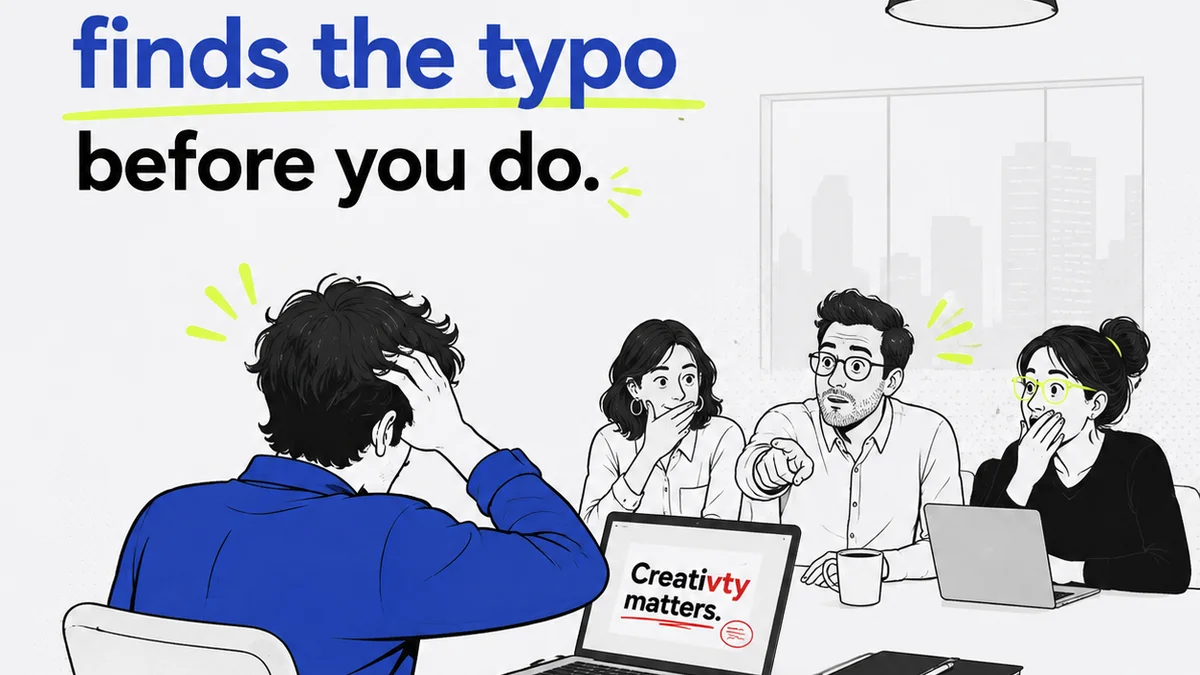
Everyone thinks creative review is a necessary evil. A bottleneck. A place where good ideas go to die.
None of that is wrong. But it’s incomplete.
The real reason creative review fails isn't the review itself. It's how it's managed – or, more often, how it's not managed.
The Hard Truth About Creative Review
Creative review is a critical juncture. It’s where strategy meets execution. Where subjective taste meets objective goals. And where the future of a project is decided.
When done poorly, it breeds frustration, delays, and subpar work. When done right, it elevates the final product and strengthens client relationships.
The assumption is that review is just… looking at stuff. Giving feedback. Signing off.
The hard truth is that effective creative review is a structured process. It requires clear objectives, defined roles, and a systematic approach to feedback and iteration.
1. The Illusion of 'Good Enough'
Many teams operate under the belief that if the creative looks *okay*, it’s good enough to move forward. This is a dangerous assumption.
“Okay” often means it meets the bare minimum. It doesn't necessarily mean it aligns with the brief, resonates with the target audience, or achieves the desired business outcome.
The Symptoms of 'Good Enough' Culture
- Missed strategic objectives.
- Creative that feels generic or uninspired.
- Client dissatisfaction disguised as minor tweaks.
- Endless rounds of revisions because the core problem was never addressed.
- Internal team burnout from chasing vague feedback.
This isn't about perfectionism. It's about rigor. It's about ensuring every piece of creative work serves a purpose.
2. Feedback: The Wild West
Unstructured feedback is the bane of creative production. It’s vague, contradictory, and impossible to act on.
Think about the last time you received feedback like:
- “Make it pop more.”
- “I don’t love it.”
- “Can we try something different?”
This isn't feedback; it's noise. It leads to guesswork and frustration.
Effective feedback is:
- Specific: What exactly needs to change?
- Actionable: How can the team implement the change?
- Objective: Tied to the brief, strategy, or user needs, not just personal preference.
- Concise: To the point, avoiding unnecessary commentary.
The goal is clarity, not just critique.
3. The Revision Rabbit Hole
Revisions are inevitable. They are part of the creative process. But they can quickly spiral out of control.
This happens when:
- The scope of revisions isn't clearly defined.
- There's no limit on the number of revision rounds.
- Feedback is iterative and contradictory across rounds.
- The original brief is forgotten or ignored.
Without a clear process, revision cycles become a black hole, sucking time, budget, and morale.
Each revision should be a step forward, not a step sideways or backward.
4. Approval: The Finality Fiasco
Approval is supposed to be the end of the line. The point where everyone agrees the work is ready.
But what happens when approval is given, only for issues to surface later?
- A stakeholder who wasn't involved in the review process raises concerns post-approval.
- A technical issue is discovered that impacts the design.
- The client has a change of heart after signing off.
This breaks trust and leads to costly rework. True approval signifies alignment and agreement on the final output.
5. The Cost of Inefficiency
Every delay, every rework, every missed deadline has a tangible cost.
It’s not just billable hours. It’s:
- Strained client relationships.
- Damaged team morale.
- Lost opportunities for future work.
- Reduced profitability.
Creative review, when managed poorly, is a silent killer of agency success.
Where Revue Fits In
This is where a centralized system for creative review becomes indispensable.
Revue is built to bring order to the chaos of creative feedback and approvals.
It provides a single source of truth for all project feedback, ensuring that every comment is logged, tracked, and addressed.
Centralized Feedback: Instead of scattered emails, Slack messages, and scribbled notes, all feedback lives in one place. This means no more hunting for that one crucial comment buried in an inbox.
Revision Visibility: Track every iteration clearly. See the evolution of the creative, understand the rationale behind changes, and ensure that feedback is being incorporated correctly.
Clear Approvals: Formalize the sign-off process. Get definitive approvals tied to specific versions, reducing the risk of post-approval surprises.
Quality Checks: Beyond just aesthetic approval, systems like Revue can help ensure that all necessary stakeholders have reviewed and signed off, and that key project requirements have been met before final delivery.
It transforms creative review from a reactive mess into a proactive, efficient workflow.
Final Thought
Is your creative review process a point of friction or a catalyst for brilliance?
The difference often comes down to whether you’re managing the feedback, or letting the feedback manage you.
Frequently asked questions
What is the main problem with creative review?
The main problem isn't the review itself, but the lack of a structured process for managing feedback, revisions, and approvals. This often leads to confusion, delays, and subpar creative work.
How can I make creative feedback more actionable?
Actionable feedback is specific, objective, and tied to project goals or the brief. It clearly states what needs to change and ideally suggests how to implement the change, rather than being vague or purely subjective.
What are the signs of an inefficient revision process?
Signs include endless revision cycles, contradictory feedback, unclear scope for changes, and revisions that don't move the project forward. This often results from a lack of clear objectives or a centralized system for tracking changes.
Why is formal approval important in creative review?
Formal approval signifies alignment and agreement from all stakeholders on the final creative output. It prevents issues from surfacing after delivery, reducing the need for costly rework and maintaining client trust.