Everyone thinks they know what makes a good creative review. You get the client's notes, you make the changes, they approve. Simple, right?
None of that is wrong. But it’s incomplete.
The hard truth is, a chaotic or arbitrary creative review process is a silent killer of agency profitability and team morale. It’s where good ideas go to die, where scope creep festers, and where your best people burn out.
1. The Myth of the 'Subjective' Review
We often hear that creative work is inherently subjective. That feedback is just an opinion. That there's no 'right' way to review a campaign or a website design.
This thinking is a crutch. It excuses a lack of rigor. It allows bad habits to persist.
The reality? While creative output has artistic merit, the *process* of reviewing it doesn't have to be a black box.
Feedback Can Be Categorized
Not all feedback is created equal. Some is strategic, some is aesthetic, some is purely personal preference. Sorting it is the first step.
- Strategic Alignment: Does this revision align with the brief? Does it meet the defined KPIs?
- Brand Consistency: Does this fit the established brand guidelines and voice?
- User Experience (UX): Is this intuitive and easy for the target audience to use?
- Technical Feasibility: Can this actually be built or implemented as designed?
- Aesthetic Appeal: Does this look good? Does it evoke the right emotion? (Yes, this can be subjective, but *why* it looks good or bad often isn't.)
- Personal Preference: This is the one to watch out for. 'I don't like blue' is not actionable feedback without context.
A structured approach means you can identify and prioritize feedback that actually moves the project forward, rather than chasing down every whim.
2. Defining 'Done': Clarity Over Consensus
What does it mean for a project to be truly 'done'? Too often, 'done' means 'the client stopped asking for changes'. That's not done; that's surrender.
A robust creative review process hinges on defining 'done' *before* you start, not after you're exhausted.
The Brief is Your North Star
Your initial creative brief isn't just a formality. It's the foundation. It should outline:
- Project goals and objectives.
- Target audience.
- Key messaging.
- Mandatory elements or constraints.
- Success metrics.
Any feedback or revision request must be evaluated against this document. If it doesn't align, it requires a deeper conversation, not just an edit.
Establish Approval Gates
Don't wait until the final deliverable to get a formal sign-off. Build in checkpoints.
For a website, this might be wireframes, then mockups, then a staging link. For a campaign, it could be concept boards, then draft copy and visuals, then a final set of assets.
Each gate is an opportunity to confirm alignment and catch misinterpretations early. This prevents the dreaded 'final review' where everything needs a total overhaul.
3. The Feedback Loop: From Noise to Signal
The most common complaint from creatives? Ambiguous, conflicting, or endless feedback. This isn't just frustrating; it's inefficient.
Your review process needs to filter the noise and amplify the signal.
Who Gets to Give Feedback?
Not everyone on the client side has the authority or expertise to critique the creative. Define stakeholders early.
A good rule of thumb: limit primary feedback to the key decision-maker or a designated point person. Others can provide input, but it should be channeled through that primary contact.
This avoids the 'committee of one' problem where every person on the client team has a different idea of what's needed.
Standardize Your Communication Channels
Email chains get lost. Slack messages are ephemeral. Phone calls lack a clear record. Relying on ad-hoc communication for critical feedback is a recipe for disaster.
Centralized platforms, like Revue, allow feedback to be logged, tracked, and responded to in context. This ensures nothing falls through the cracks.
Use clear annotation tools. If reviewing a PDF, use PDF markup. If reviewing a website, use a dedicated tool. Don't just type 'make the logo bigger' into a comment box without indicating *where*.
Quantify Where Possible
Even for subjective elements, try to add some structure.
- Revision Rounds: Agree on a set number of revision rounds per deliverable.
- Timeboxing: Allocate specific time for feedback and revisions to prevent endless cycles.
- Change Logs: Maintain a clear log of all changes made, linked to specific feedback items.
This provides a framework and accountability for both sides.
4. Quality Assurance: The Unsung Hero
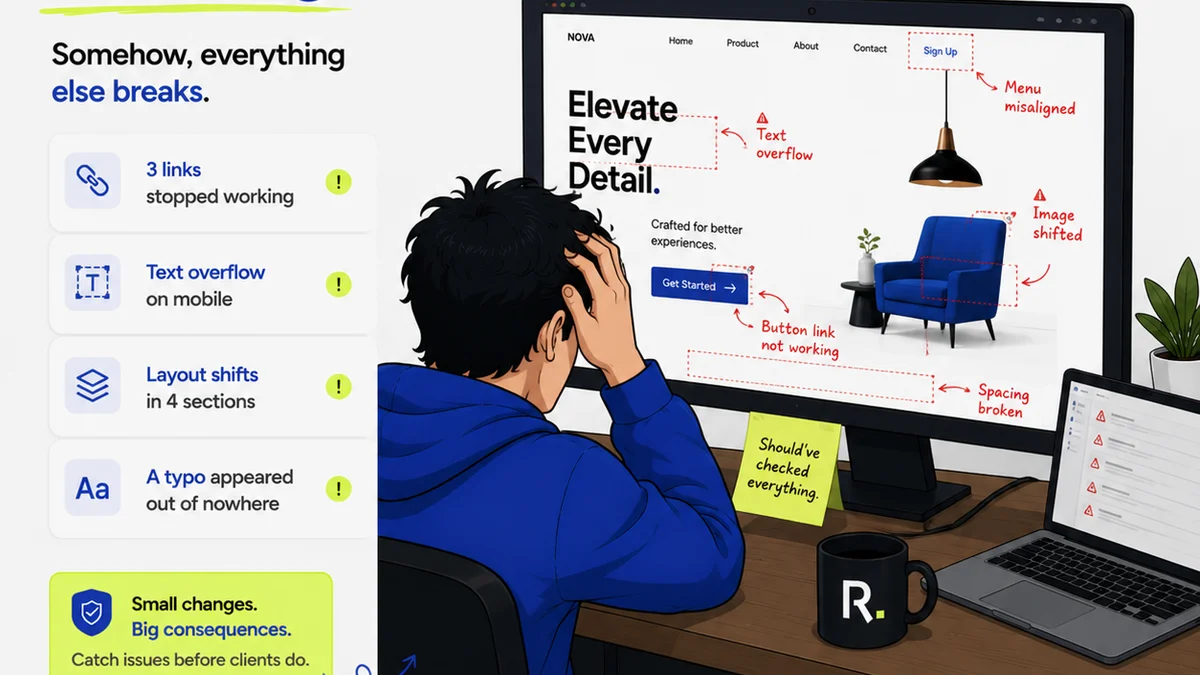
Before work even gets to the client for review, there's a critical internal step: Quality Assurance (QA).
Too many teams skip or rush this. They assume the designer or writer will catch their own errors. This is a mistake.
Internal Checks Prevent External Pain
A dedicated QA process catches:
- Typos and grammatical errors.
- Broken links.
- Inconsistent formatting.
- Design elements out of alignment.
- Brand guideline violations.
- Accessibility issues (e.g., WCAG compliance).
This isn't about micro-managing; it's about professionalism. It shows the client you value their time and your own output.
Checklists are Your Friend
Develop standardized QA checklists tailored to different project types. A website QA checklist will differ from a print ad checklist.
These checklists should cover:
- Content accuracy and completeness.
- Visual consistency (fonts, colors, spacing).
- Functionality (buttons, forms, navigation).
- Cross-browser and cross-device compatibility.
- Performance metrics.
This systematic approach ensures a higher standard of work leaves your agency, reducing the likelihood of minor issues derailing a major review.
Where Revue Fits In
The best creative review process isn't about reinventing the wheel. It's about building a more efficient, transparent, and accountable version of it. It's about moving from gut feel to informed decision-making.
Tools like Revue are built to support this evolution. They provide a centralized hub for:
- Feedback Management: Capture all client comments, annotations, and approvals in one place, tied to specific assets. No more hunting through emails.
- Revision Tracking: Clearly see what feedback has been addressed, what's pending, and what's been approved. This visibility prevents confusion and scope creep.
- Version Control: Keep track of different iterations of creative assets, ensuring everyone is referencing the latest approved version.
- Quality Checks: Integrate internal QA steps and checklists directly into the workflow, ensuring standards are met before client eyes ever see the work.
By centralizing these critical stages, you create a single source of truth for the entire project lifecycle. This streamlines communication, reduces errors, and builds trust with your clients.
Final Thought
Is your current creative review process a source of efficiency and clarity, or a bottleneck that drains resources and erodes trust?
The difference often lies not in the talent of your team, but in the structure and tools you provide them. It's time to stop accepting subjective chaos as an inevitability and start building a process that works.
Frequently asked questions
What is the most common mistake in creative review processes?
The most common mistake is treating creative feedback as purely subjective and arbitrary. This leads to a lack of structure, inconsistent application of brand guidelines, and inefficient revision cycles. A robust process categorizes feedback and ties it back to project objectives.
How can I make client feedback more actionable?
Define clear stakeholders early on to consolidate feedback. Establish standardized communication channels (like a dedicated platform) and annotation tools. Ensure feedback is always evaluated against the original brief and project goals, rather than personal preference.
What is the role of Quality Assurance (QA) in creative reviews?
QA is a critical internal step that catches errors, inconsistencies, and technical issues before work is presented to the client. This includes checking for typos, broken links, brand guideline adherence, and accessibility compliance, thereby reducing external friction and demonstrating professionalism.
How many revision rounds are standard?
While there's no single 'standard,' it's best practice to agree on a defined number of revision rounds with the client upfront. This prevents endless cycles and provides clear expectations for both parties. This number should be documented in the project brief or contract.