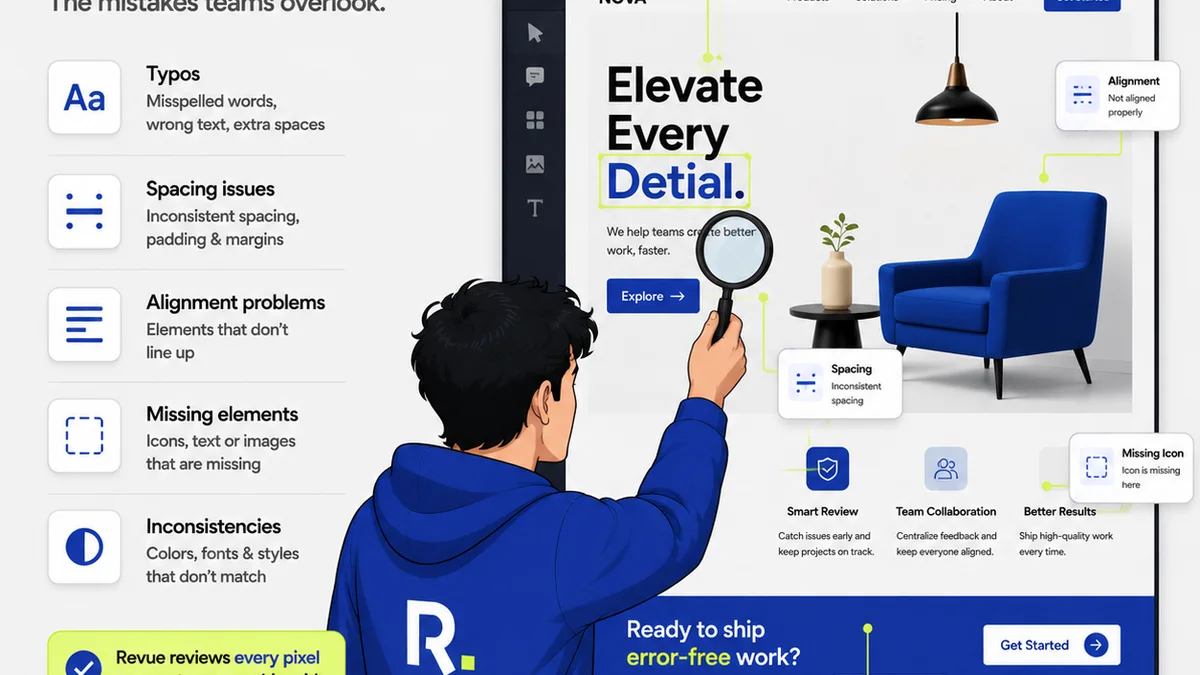
Everyone thinks managing creative revisions is about simply making changes. That's the easy part, right? Just iterate until the client is happy.
None of that is wrong. But it’s incomplete.
The hard truth? Effective revision management isn't about the *changes*. It’s about the *process* that governs them. It’s the bedrock of efficient creative delivery and client trust.
1. The Myth of Infinite Revisions
Agencies often fall into the trap of offering unlimited revisions. It sounds client-friendly. It feels like good service.
But it’s a race to the bottom.
Unlimited revisions breed scope creep. They devalue your work. They create an endless loop where the project never truly ends, draining your team's energy and your profit margins.
The Real Cost of 'Unlimited'
- Unpredictable timelines
- Budget overruns
- Team burnout
- Client frustration (yes, even when they ask for it)
- Diminished creative output
Clients don't actually *want* endless revisions. They want a clear path to a great outcome. They want to feel heard and confident in the process.
Your job is to provide that clarity, not an open-ended commitment to endless tweaking.
2. Defining Scope Upfront: The Unsexy Foundation
This is where the real magic begins. Before a single pixel is placed or a word is written, you need to nail down the project scope.
This isn't just about deliverables. It’s about defining the *boundaries* of creative exploration and the *parameters* for feedback.
Key Elements of a Solid Scope
- Clear Objectives: What does success look like for this project? What business problem are we solving?
- Target Audience: Who are we trying to reach? What resonates with them?
- Deliverables: Exactly what assets will be produced? For which channels? In what formats?
- Tone of Voice & Brand Guidelines: What's the established personality? What are the non-negotiables?
- Revision Rounds: Explicitly state the number of revision rounds included. Define what constitutes a 'round'.
- Decision-Making Process: Who is the final approver on the client side?
A well-defined scope acts as your project's constitution. It sets expectations and provides a reference point when discussions get fuzzy.
3. Centralized Feedback: The Single Source of Truth
Email chains. Slack messages. Random sticky notes. Phone calls.
This is the graveyard of good feedback.
Scattered feedback is chaotic feedback. It leads to missed comments, conflicting instructions, and endless back-and-forth trying to piece together what was actually requested.
You need a single, central place where all feedback lives.
Why Centralization Matters
- No More 'Did You See My Email?': All feedback is logged and visible in one place.
- Context is King: Comments are tied directly to the creative asset.
- Version Control: Track which version feedback applies to.
- Accountability: See who provided which feedback and when.
- Efficiency: Reduces time spent searching for lost comments.
This isn't just about convenience; it's about accuracy and reducing the risk of misinterpretation.
4. Structuring Feedback for Actionability
Not all feedback is created equal. Some is gold. Some is... well, less so.
The problem isn't just *where* feedback lives, but *how* it's given. Vague, subjective comments are the bane of a creative team.
Teach your clients (and your team) how to give constructive feedback.
Actionable Feedback vs. Opinion
Opinion: 'I don't like it.' 'Make it pop more.' 'It feels a bit bland.'
Actionable: 'The headline could be more direct. Suggestion: Try leading with the benefit, like 'Save 30% on your next order'.' 'The call-to-action button needs to stand out more. Suggestion: Increase its contrast against the background by using a darker shade of blue.' 'The imagery doesn't clearly convey the feeling of relaxation. Suggestion: Consider swapping the current photo for one showing people unwinding on a beach.'
Guide clients to explain *why* something isn't working and *what* they envision as a potential solution.
Pro Tip: Use structured feedback forms or templates for client reviews. This forces clarity.
5. The Art of the Revision Round
A 'revision round' should be a discrete, defined phase of work. It’s not a continuous trickle.
When a client provides feedback, it should be consolidated. Your team then addresses *all* the feedback for that round in one go.
This batching approach is critical.
Benefits of Batching Revisions
- Focus: Allows the team to concentrate on a set of tasks.
- Efficiency: Reduces context switching.
- Clarity: Ensures all points are addressed systematically.
- Predictability: Helps maintain project timelines.
After the round is delivered, you go back to the client for their *final* review of those specific changes. This creates clear checkpoints.
6. Managing Client Expectations (and Your Own)
This is an ongoing conversation, not a one-time setup.
Educate your clients on your process. Explain *why* clear scope, centralized feedback, and defined revision rounds are essential for delivering the best possible outcome for *them*.
Be transparent about timelines. If a request falls outside the agreed scope, address it immediately.
Handling Scope Creep Gracefully
- Acknowledge the Request: 'I understand you'd like to add X.'
- Reference the Scope: 'Based on our initial agreement, this falls outside the defined scope for Y.'
- Propose Solutions: 'We can certainly accommodate this. It will require an adjustment to the timeline and budget. Would you like me to prepare a change order for that?' Or, 'If this is a lower priority, we can address it in a separate phase.'
This isn't about being difficult; it's about professional project management and protecting the integrity of the project and your agency.
7. Where Revue Fits In
All these best practices—clear scope, centralized feedback, actionable reviews, structured revisions—are designed to streamline your creative workflow. They are also exactly what Revue is built to facilitate.
Revue provides a single source of truth for client feedback. Instead of juggling emails and messages, all comments are logged directly on the creative asset.
You can see exactly what feedback was given, by whom, and on which version. This eliminates confusion and ensures nothing gets lost.
The platform supports clear communication, making it easier to track revision rounds, manage approvals, and maintain visibility throughout the entire creative process. This helps you enforce scope, gather precise feedback, and deliver exceptional work, on time and on budget.
8. Final Thought
Revision management is often seen as a reactive necessity. A chore.
But what if it’s viewed as a proactive strategy? A tool for building stronger client relationships, fostering clearer communication, and ultimately, elevating the quality of creative work?
The difference between simply 'making changes' and mastering revisions lies in the commitment to a robust, transparent, and disciplined process.
Are you managing revisions, or are revisions managing you?
Frequently asked questions
What is the biggest mistake agencies make with revisions?
The biggest mistake is treating revisions as an afterthought or a simple 'make it better' request. Agencies often fail to define scope clearly upfront, leading to unlimited revisions, scope creep, and team burnout. Effective revision management starts with a solid process, not just the act of changing the work.
How can I prevent scope creep during revisions?
Prevent scope creep by clearly defining project objectives, deliverables, and the number of revision rounds in your initial scope agreement. When new requests arise that fall outside this scope, address them transparently. Explain that they require a change order to adjust timelines and budgets, rather than just adding them to the current task.
What makes feedback actionable?
Actionable feedback is specific, objective, and provides context or suggestions for improvement. Instead of saying 'I don't like it,' actionable feedback explains *why* it's not working and offers a potential solution, like 'The call-to-action button isn't prominent enough. Suggestion: Increase its contrast against the background by using a darker shade of blue.'
How many revision rounds are typical?
The number of revision rounds should be clearly defined in the project scope. While there's no universal standard, 2-3 rounds are common for many creative projects. The key is to agree on this number upfront and to define what constitutes a 'round' to avoid endless back-and-forth.