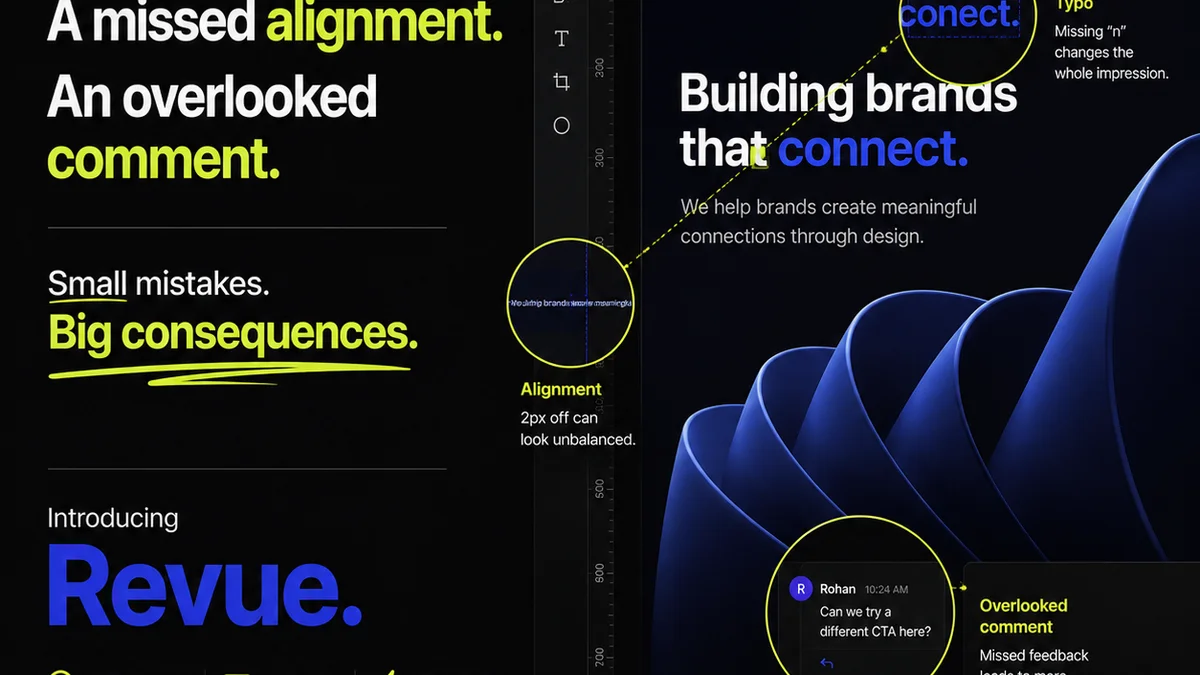
Everyone talks about managing client feedback. They say you need clear briefs, defined stakeholders, and polite follow-ups. None of that is wrong. But it’s incomplete.
The real challenge isn't just collecting feedback; it's managing the entire revision workflow from first draft to final sign-off. This is where projects live or die. And where most agencies bleed profitability.
1. The Myth of 'Minor Tweaks'
Clients often say, “Just a few small changes.” We all know what that usually means. It’s rarely just a few. It’s often a cascade of edits that spiral into scope creep, missed deadlines, and frustrated teams.
This perception gap is the first hurdle. Your job is to bridge it, not just accept it.
The Hidden Cost of Vague Feedback
When feedback is:
- Ambiguous (“Make it pop more”)
- Contradictory (two stakeholders wanting opposite things)
- Late (arriving after the deadline)
- Unsubstantiated (“I just don’t like it”)
…it forces your team into guesswork. Every revision request that requires interpretation or clarification costs time. Time that wasn’t quoted. Time that erodes profit.
This isn't about blaming clients. It's about acknowledging the operational friction and building systems to mitigate it.
2. Structuring for Clarity, Not Chaos
A chaotic revision process is a symptom of poor structure. You need a framework that anticipates issues and guides the conversation.
Define the Revision Rounds, Explicitly
Before the work even begins, agree on the number of revision rounds included in the project scope. Be specific.
Example: “This proposal includes two rounds of revisions. Round 1 will address overall concept and direction. Round 2 will focus on minor adjustments and polish. Additional rounds will be billed separately at our standard hourly rate.”
This sets expectations upfront. It’s not a negotiation tactic; it’s a process clarification.
Establish Feedback Windows
When will feedback be due? When will revisions be delivered?
- Client feedback due: 48 hours after delivery of assets.
- Agency revision delivery: 72 hours after receipt of consolidated feedback.
These aren’t rigid rules but guiding principles. They create a rhythm. They prevent endless back-and-forth.
Consolidate All Feedback
This is non-negotiable. A single point of contact for feedback is ideal. If not possible, all feedback must be funneled into one place before being reviewed by the project lead.
An email chain with 15 replies? A Slack thread with 50 messages? A nightmare.
Centralizing feedback prevents conflicting instructions and ensures nothing gets lost. It’s the bedrock of efficient creative revision.
3. The Art of Receiving (and Giving) Constructive Feedback
Feedback is data. But it needs to be actionable data.
Ask Probing Questions
When feedback is vague, push for specifics. Don’t just accept “Make it better.” Ask:
- “What specifically about this element isn’t working for you?”
- “What outcome are you hoping to achieve with this change?”
- “Can you point to an example of what you mean?”
This transforms subjective opinions into objective requirements.
Use Visual Annotation Tools
Emailing screenshots with arrows and boxes is archaic. Modern tools allow direct annotation on the design itself. This pins feedback to the exact element needing change.
It removes ambiguity. It saves immense time.
Separate Feedback from Approval
These are distinct stages. Feedback is input for iteration. Approval is the final sign-off.
Don’t let stakeholders mix them. A stakeholder might give feedback on Draft 1, but that doesn’t mean Draft 1 is approved. Clarify the stage.
4. Managing Scope Creep Without Conflict
This is where many agencies falter. They fear saying “no” or “that’s extra,” damaging client relationships.
The
Frequently asked questions
What is a revision workflow?
A revision workflow is the structured process an agency or design team follows to manage changes and edits requested by a client on creative work, from initial feedback to final approval.
How can I reduce scope creep in revisions?
Clearly define the number of revision rounds in your contract, establish feedback windows, consolidate all feedback into one source, and use probing questions to clarify vague requests. Charge for additional rounds beyond the agreed scope.
What's the best way to handle vague client feedback?
Don't accept vague feedback at face value. Ask specific, probing questions like 'What outcome are you hoping to achieve?' or 'Can you point to an example of what you mean?' to uncover the underlying need.
How important is centralizing feedback?
Extremely important. Centralizing feedback prevents conflicting instructions, ensures no feedback is missed, and provides a single source of truth for the project team, significantly improving efficiency and reducing errors.