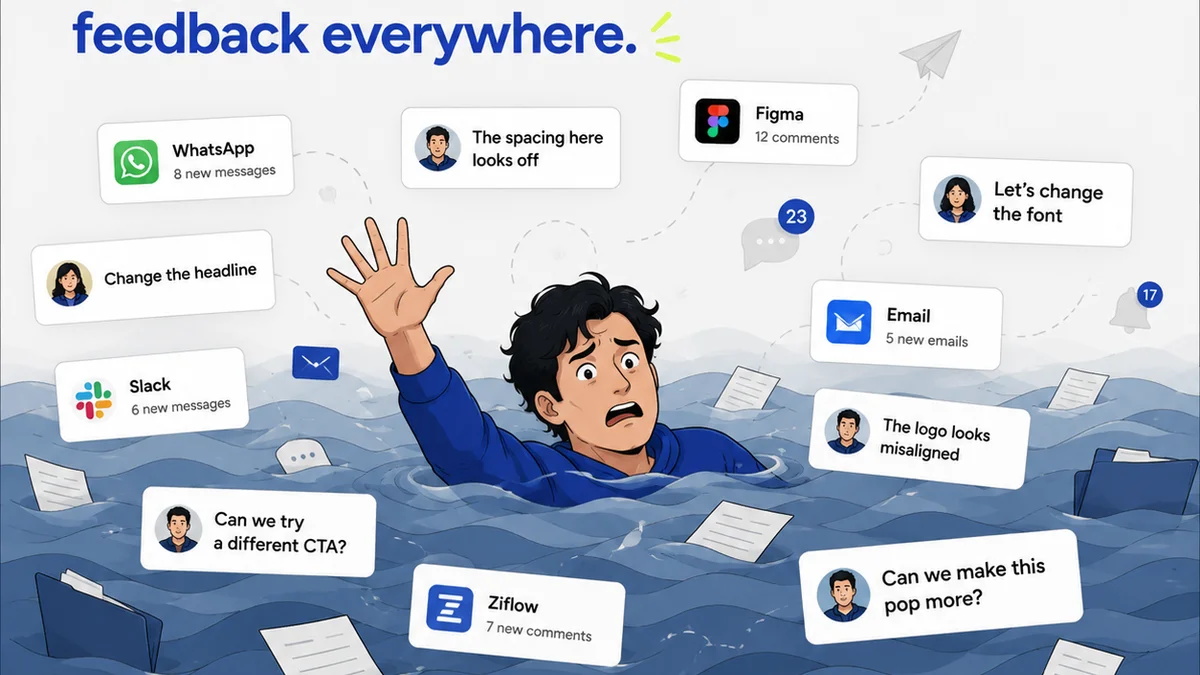
Everyone knows creative revisions are a necessary evil. You get client feedback, you make changes, you send it back. Simple, right?
Wrong. That’s the surface-level understanding. The real problem—and the real solution—lies deeper, in the operational backbone of your agency or team.
The Hard Truth About Creative Revisions
The truth is, most teams don't manage revisions; they react to them. This reactive approach breeds chaos, erodes profitability, and grinds creative momentum to a halt. It’s not about the tools you use, or even the talent you have. It’s about the *process* you follow.
When revisions become a black hole of endless emails, scattered notes, and conflicting requests, something fundamental is broken. It’s not just frustrating; it’s a direct threat to your bottom line and your team’s sanity.
1. The Feedback Fragmentation Fallacy
The biggest assumption is that feedback, once received, is clear and actionable. It’s rarely that simple.
Feedback often arrives fragmented:
- Scattered across email threads.
- Buried in Slack messages.
- Jotted down in meeting notes.
- Whispered in hallway conversations.
- Even implied through ambiguous comments on a PDF.
Each piece is a puzzle shard, and you’re expected to assemble the whole picture without a clear guide. This fragmentation is a direct consequence of poor revision management.
The Cost of Scattered Feedback
When feedback isn’t centralized, the costs are hidden but significant:
- Time Sink: Hours spent hunting for comments, cross-referencing, and clarifying what was *really* meant.
- Misinterpretation: The risk of acting on incomplete or misunderstood feedback, leading to rework.
- Scope Creep: Vague feedback easily morphs into requests that go beyond the original brief, often without formal sign-off.
- Team Friction: Designers and account managers waste energy deciphering, not creating.
This isn't just an inconvenience; it’s a drain on billable hours and project timelines. Effective creative workflow demands a single source of truth for all feedback.
2. The Illusion of 'One More Thing'
The phrase “just one more thing” is the siren song of endless revisions. It sounds minor, harmless. But it’s a trap.
Each seemingly small tweak, when not properly tracked, adds up. It’s rarely just one more thing. It’s one more thing, then another, then another, until the original scope is a distant memory.
The Revision Cycle Breakdown
A healthy revision process has clear stages and defined endpoints. An unhealthy one becomes a loop:
- Initial Delivery: Project submitted for review.
- Feedback Round 1: Client provides comments.
- Revision Round 1: Team implements feedback.
- Re-Delivery: Revised project sent back.
- Uh Oh, 'One More Thing': Client adds a new, often unrelated, request.
- Repeat: The cycle restarts, often with less clarity and more frustration.
This cycle perpetuates because there's no clear mechanism to:
- Define what constitutes a 'major' vs. 'minor' revision.
- Track the cumulative impact of small changes.
- Enforce the agreed-upon scope and number of revision rounds.
Good project management for creative work means having guardrails for these cycles.
Establishing Revision Boundaries
Clear boundaries are non-negotiable. This means:
- Defining the number of revision rounds in your contract.
- Creating a clear system for logging and prioritizing feedback.
- Implementing a formal approval gate after each round.
Without these, you’re essentially inviting scope creep and operational drag.
3. The Approval Bottleneck Blame Game
When a project stalls waiting for client approval, who’s to blame? Often, it’s a shared responsibility, but the process usually points fingers.
The lack of clear visibility into the approval status creates a bottleneck that affects everyone.
Visibility is Key
Imagine this:
- The client thinks they approved it last week.
- The account manager thinks it’s still with legal.
- The designer is waiting for the go-ahead to start the next phase.
This confusion is rampant when approvals aren't managed with the same rigor as feedback.
The Approval Process Imperative
A robust creative approval workflow requires:
- A centralized place for stakeholders to review and approve/reject.
- Automated notifications for pending approvals and status changes.
- A clear audit trail of who approved what, and when.
- Defined escalation paths for stalled approvals.
If your approval process relies on chasing people down, you’re losing valuable time and creating unnecessary friction.
4. The Quality Control Conundrum
The final check before launch. It’s supposed to be a quick sweep for typos or broken links. But often, it becomes a last-minute scramble.
This is where poor revision tracking really bites you. Changes made in the heat of revision rounds can introduce new errors.
The Ripple Effect of Rushed Revisions
When revisions are handled haphazardly, the quality suffers:
- Typos slip through.
- Image resolutions are incorrect.
- Links are broken.
- Technical specifications are missed.
- Accessibility guidelines are ignored.
These aren't just aesthetic issues; they can have real business consequences, from damaged brand perception to legal non-compliance.
Integrating Quality Checks
A solid revision process includes built-in quality control:
- Checklists for common errors.
- Dedicated QA time, not an afterthought.
- Automated checks where possible (e.g., link checkers).
Your revision strategy must account for maintaining, not just changing, the quality of the work.
Where Revue Fits In
Managing creative revisions effectively isn't about wishful thinking; it’s about implementing operational rigor. It requires a system that tackles feedback fragmentation, manages revision cycles, clarifies approvals, and ensures quality.
This is where a centralized platform designed for creative collaboration makes a difference. Revue provides a single source of truth for all project feedback, revisions, and approvals.
Imagine:
- All client comments logged in one place, linked directly to the creative asset.
- Clear visibility into who said what, when, and what actions were taken.
- Streamlined approval flows with automated notifications and audit trails.
- Reduced back-and-forth, freeing up your team to focus on great work.
Revue helps transform the chaotic world of creative revisions into a manageable, transparent process. It’s about operational excellence, not just creative output.
Final Thought
Are your creative revisions a source of stress and inefficiency, or a well-oiled machine driving projects to successful completion?
The difference isn't magic. It's a commitment to process, clarity, and the right tools.
Frequently asked questions
What is the biggest mistake agencies make with creative revisions?
The biggest mistake is treating revisions as a simple back-and-forth rather than a structured operational process. This leads to fragmented feedback, scope creep, and endless cycles because there's no clear system for capturing, prioritizing, and approving changes.
How can I prevent scope creep during creative revisions?
Prevent scope creep by clearly defining the number of revision rounds in your contract, establishing a process for logging and prioritizing feedback, and implementing formal approval gates after each round. Centralizing feedback also helps identify when requests fall outside the original scope.
Why is centralized feedback important for revision management?
Centralized feedback ensures all comments, notes, and requests are captured in one place, linked to the specific creative asset. This eliminates time wasted searching through emails and messages, reduces misinterpretations, and provides a clear audit trail, making the revision process much more efficient and transparent.
How do I ensure quality control during revisions?
Integrate quality control by using checklists for common errors, dedicating specific time for QA before final delivery, and leveraging tools that can automate checks where possible. Ensure that the revision process itself doesn't introduce new errors by maintaining clear communication and tracking all changes.