Everyone talks about creative ROI. They’ll point to engagement rates, click-throughs, or conversion numbers. None of that is wrong. But it’s incomplete.
The real creative ROI isn't just about the final campaign numbers. It's baked into the entire process. It’s about efficiency, clarity, and how smoothly your team collaborates to deliver exceptional work.
1. The Hidden Costs of Miscommunication
You think you’re saving time by firing off quick emails or Slack messages. You’re not. You’re creating silos of information.
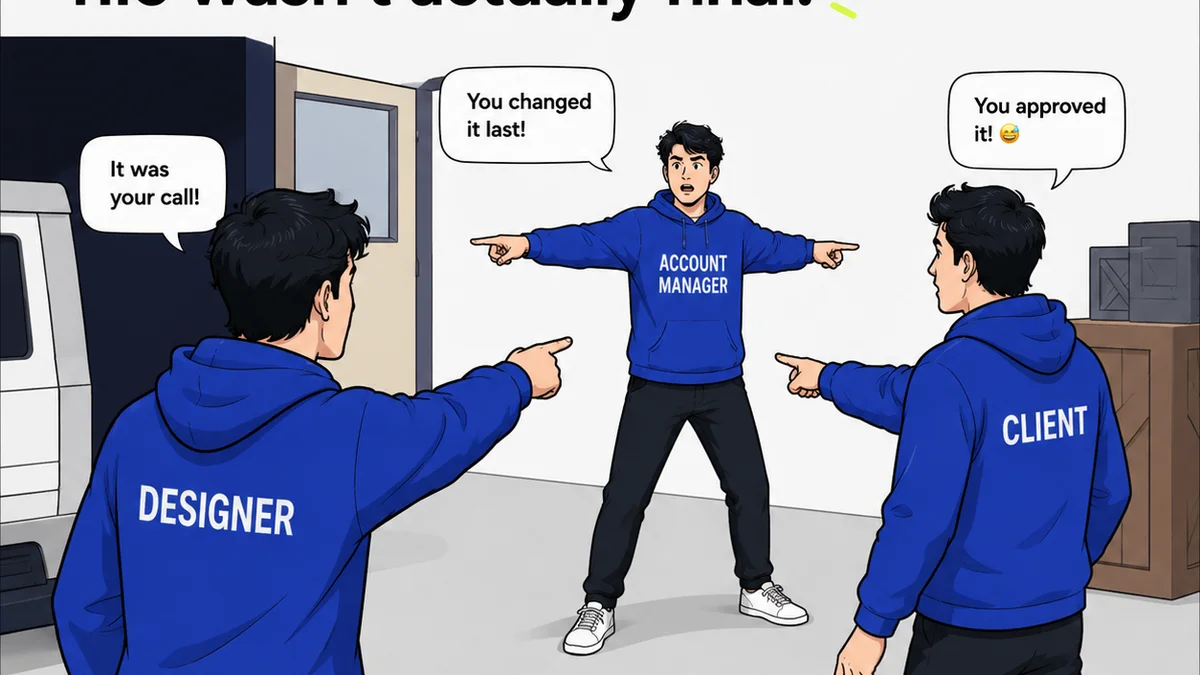
This leads to endless back-and-forths, duplicated effort, and missed details. Every missed detail is a potential rework, a delay, and a hit to your bottom line.
Symptoms of Communication Breakdown:
- Endless email chains with conflicting feedback.
- Key stakeholders left out of crucial conversations.
- Team members asking the same questions repeatedly.
Frequently asked questions
What is creative ROI?
Creative ROI, or Return on Investment, measures the profitability and effectiveness of creative work. It goes beyond simple campaign metrics to evaluate the efficiency and impact of the creative process itself, including resource allocation, time spent, and client satisfaction.
Why is a creative ROI checklist important?
A creative ROI checklist helps agencies and teams identify inefficiencies, reduce wasted time and resources, and ensure that creative efforts are directly contributing to business goals. It shifts the focus from just campaign performance to the operational health driving that performance.
How can centralized feedback improve creative ROI?
Centralized feedback eliminates confusion, reduces back-and-forth, and ensures all stakeholders are working from the same information. This speeds up revisions, minimizes errors, and ultimately lowers the cost of delivering creative work.
What are common pitfalls in measuring creative ROI?
Common pitfalls include focusing only on surface-level metrics (like likes or shares) without considering the cost of achieving them, failing to track time and resources accurately, and not accounting for the efficiency of the internal creative process.