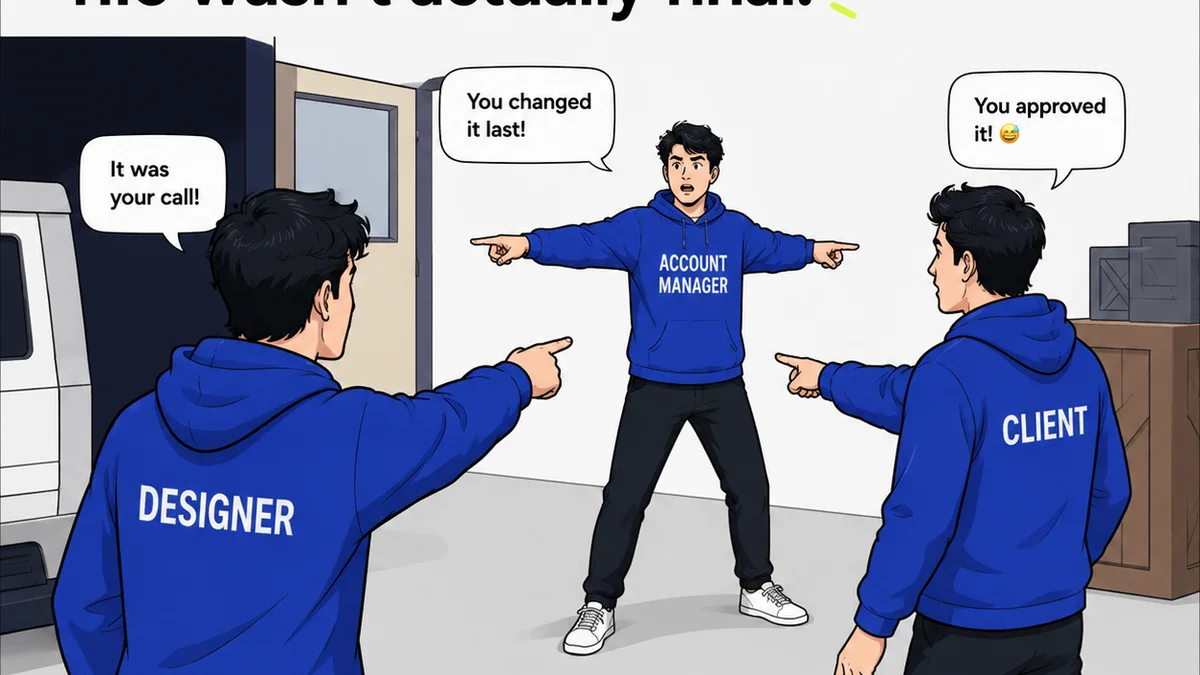
Everyone talks about creative team collaboration like it’s about the tools. Get the right software, the right chat app, the right project manager, and voilà: seamless teamwork.
None of that is wrong. But it’s incomplete. It’s like saying a great meal is about the plates. The plates matter, sure, but they don't cook the food or decide the menu.
The hard truth is that most creative collaboration breakdowns aren't technical. They're human. They're about process, communication, and clarity—or the lack thereof. Fixing collaboration means fixing these fundamental workflow issues.
1. Assuming Everyone Knows the 'Why'
This is the most common, and most damaging, mistake. You brief a project. You assign tasks. You expect output. But did anyone clearly articulate the *purpose* of the project? The business goal? The user need?
Without a shared understanding of the 'why,' your team is working in the dark. Each member might interpret the objective differently, leading to misaligned efforts and wasted work. It’s not enough for one person to know. Everyone involved needs to grasp the core objective.
The Symptoms
- Endless, aimless revisions.
- Deliverables that miss the strategic mark.
- Team members working at cross-purposes.
- A general feeling of 'busywork' without clear impact.
- Difficulty prioritizing tasks when things get complex.
This isn't about micromanaging. It’s about strategic alignment. When the 'why' is clear, the 'what' and 'how' become much easier to figure out, individually and collectively.
2. Relying on 'Ad Hoc' Feedback Loops
Email chains that stretch to infinity. Slack messages lost in the noise. A quick chat by someone's desk. This is how most creative teams handle feedback. It’s chaotic and inefficient.
This informal approach sounds agile, but it’s often just a recipe for missed feedback, conflicting instructions, and lost context. Key stakeholders might be left out, or junior members might not feel empowered to speak up. The result? Bottlenecks and frustration.
The Symptoms
- Conflicting feedback from different sources.
- Crucial notes getting buried and missed.
Frequently asked questions
What is the biggest mistake creative teams make in collaboration?
The biggest mistake is assuming everyone understands the 'why' behind a project. Without a shared understanding of the core objective, team members can work at cross-purposes, leading to wasted effort and misaligned deliverables.
How can teams improve feedback loops?
Move away from ad-hoc feedback via email or chat. Implement a centralized system for collecting, organizing, and acting on feedback. This ensures all comments are captured, context is maintained, and everyone involved is on the same page.
Why is clear ownership important for creative collaboration?
Lack of clear ownership leads to tasks falling through the cracks or multiple people duplicating effort without coordination. Assigning a single point of accountability for each task or project phase prevents confusion and ensures progress.
How can creative teams avoid scope creep?
Scope creep often stems from unclear initial briefs and poorly managed change requests. Establish a clear process for defining scope upfront and a system for evaluating and approving any changes, ensuring they align with project goals and budget.