Everyone talks about creative team collaboration. It’s the buzzword du jour in agency land and in-house departments alike. You hear about fostering a positive environment, encouraging idea sharing, and building synergy. None of that is wrong. But it’s incomplete.
The hard truth? Effective collaboration isn't a nice-to-have; it's the operational backbone that directly impacts a retail brand’s bottom line. It’s how you launch faster, iterate smarter, and ultimately, sell more. This isn't about kumbaya; it's about cutting through the noise and delivering campaigns that resonate.
1. The Myth of the Lone Genius vs. The Collaborative Reality
We often romanticize the solitary creative genius. The designer locked away, emerging with a masterpiece. The copywriter fueled by caffeine, crafting the perfect tagline in isolation. This is a narrative that sells, but it doesn't reflect how great retail work actually gets done.
In reality, brilliant campaigns are built on layers of input, critique, and refinement. They are the product of diverse perspectives colliding and coalescing.
The Friction That Sparks Innovation
When team members with different skill sets and viewpoints interact, friction occurs. This isn't negative conflict; it's productive tension. A designer’s visual approach might challenge a copywriter's narrative. A project manager’s timeline constraints might force a marketer to rethink a campaign’s scope. This friction forces clarity.
Speed Through Shared Understanding
Misunderstandings are death to retail timelines. Launch dates are non-negotiable. When teams collaborate openly, they build a shared understanding of the brief, the audience, and the goals. This prevents costly rework later.
- Reduced scope creep due to early alignment.
- Faster decision-making when roles and responsibilities are clear.
- Fewer revisions because the initial direction is well-understood.
2. Collaboration as a Catalyst for Retail Agility
The retail landscape shifts at lightning speed. Trends emerge and fade. Consumer behavior changes. Competitors launch new initiatives. An agile creative team can pivot quickly. A siloed team gets left behind.
Rapid Response to Market Changes
Imagine a competitor suddenly drops their prices or launches a surprise sale. Your team needs to react. If your creative, marketing, and production teams are in constant communication, you can brainstorm and deploy a counter-campaign within hours, not days.
Iterative Campaign Development
A campaign rarely lands perfectly on the first try. Effective collaboration allows for continuous iteration. Feedback loops are tight. A/B tests are integrated. The team learns what’s working and what’s not, and adapts the creative in near real-time.
- Quickly test different messaging or visuals.
- Adapt ad creative based on early performance data.
- Refine landing pages based on user behavior.
This iterative process is critical for optimizing ad spend and maximizing ROI.
3. Unlocking Deeper Customer Insights Through Teamwork
Who knows your retail customer better than the people working directly on their campaigns? When creative teams collaborate effectively, they pool their collective insights.
Bridging the Gap Between Data and Creativity
Data analysts might see patterns in purchasing behavior. Social media managers might understand the nuances of online sentiment. Copywriters might grasp the emotional triggers in customer language. When these insights are shared and synthesized, the creative output becomes far more resonant and effective.
Holistic Campaign Strategy
A truly collaborative team doesn't just execute tasks; they build a cohesive strategy. The visual identity, the messaging, the channel selection, and the customer journey all work in concert. This holistic approach ensures a consistent and powerful brand experience across all touchpoints.
- Consistent brand voice and visual style.
- Seamless customer journeys from ad to purchase.
- Messaging that speaks directly to customer needs and desires.
This level of integration is impossible without deep, ongoing collaboration.
4. The Operational Grit: Making Collaboration Work
Collaboration sounds great. Making it happen is hard work. It requires more than just putting people in the same room (or virtual room).
Clear Roles and Responsibilities
Ambiguity kills collaboration. Everyone needs to know who is responsible for what, who makes the final call, and who needs to be consulted. This prevents duplication of effort and ensures accountability.
Defined Feedback and Approval Workflows
This is where many creative teams stumble. Endless email chains, lost comments, and unclear sign-offs lead to frustration and delays. A structured process for providing and acting on feedback is essential.
Shared Tools and Platforms
Teams need a central hub to communicate, share files, track progress, and manage feedback. Without this, vital information gets scattered, leading to miscommunication and missed deadlines.
- Centralized asset management.
- Transparent revision history.
- Clear audit trails for approvals.
This is the operational bedrock of effective creative output.
Where Revue Fits In
Managing creative projects and client feedback can quickly become chaotic. This is especially true in fast-paced retail environments where approvals need to be swift and accurate.
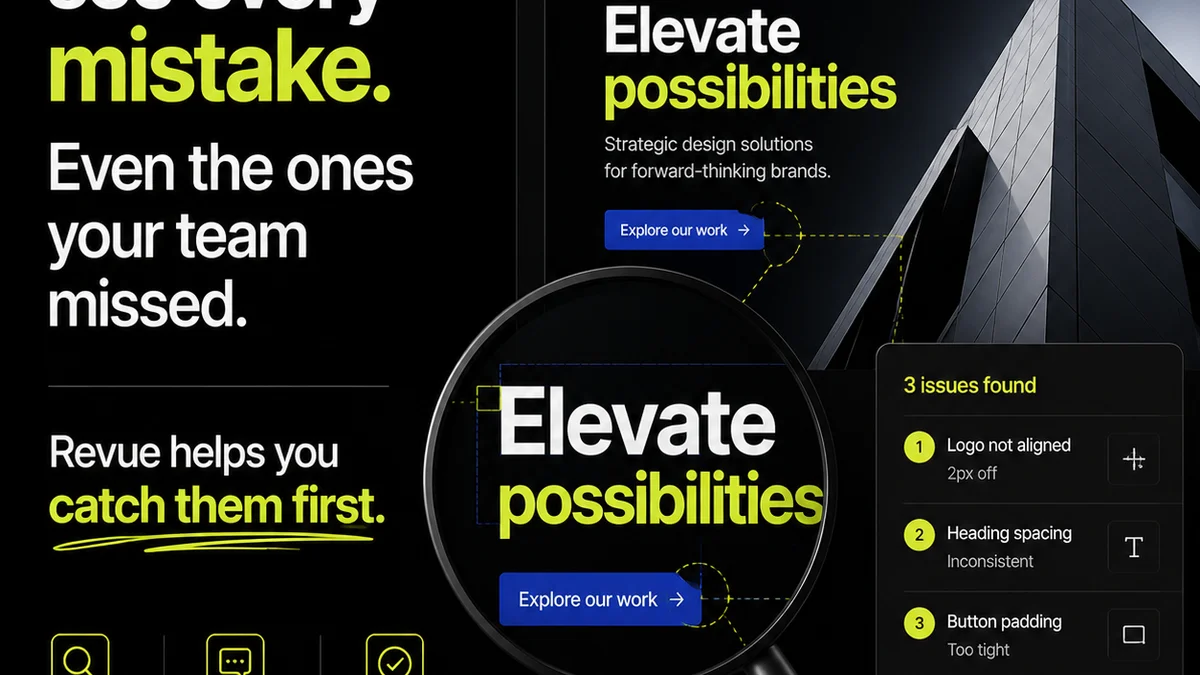
Revue provides a centralized platform designed to streamline these very processes. It brings together stakeholders, simplifies feedback loops, and provides clear visibility into the revision and approval stages.
- Centralized Feedback: Consolidate all comments and annotations directly on creative assets, eliminating scattered email threads and messy spreadsheets.
- Clear Revision Tracking: See every version of a creative piece, who made what changes, and when. This transparency avoids confusion and ensures everyone is working from the latest iteration.
- Streamlined Approvals: Define clear approval workflows, assign reviewers, and get explicit sign-offs, creating an auditable trail and reducing bottlenecks.
- Quality Assurance: Ensure all creative meets brand guidelines and project requirements before final delivery, a critical step for maintaining brand consistency in retail.
By providing a single source of truth for creative work, Revue empowers teams to collaborate more effectively, reduce errors, and accelerate their time to market. It’s about turning operational friction into creative momentum.
Final Thought
Retail success hinges on connecting with customers through compelling creative. But the real magic isn't just in the final ad or product display; it's in the collaborative process that brings it to life. Are your team's workflows designed to foster innovation and speed, or are they accidentally stifling them?
Frequently asked questions
How does creative collaboration impact retail sales?
Effective collaboration leads to more resonant and targeted campaigns. This means better customer engagement, higher conversion rates, and ultimately, increased sales. It also reduces costly errors and speeds up time-to-market, optimizing ad spend.
What are the biggest challenges to creative collaboration in retail?
Common challenges include unclear roles and responsibilities, scattered feedback across multiple channels, lack of a central platform for assets and communication, and tight, often unrealistic, deadlines that can lead to rushed work and silos.
How can a team improve its creative collaboration?
Improvement comes from establishing clear workflows for feedback and approvals, using shared platforms for communication and asset management, defining roles explicitly, and fostering a culture where diverse perspectives are valued and encouraged.
Is client feedback part of creative team collaboration?
Absolutely. Managing client feedback effectively is a critical component. Centralizing this feedback, ensuring it's clearly understood by the internal team, and tracking revisions based on it are all vital parts of the collaborative process that Revue helps to manage.