Everyone knows you need a system for creative version control. The common advice? Name your files logically. Use dates. Add 'v1', 'v2', 'final', 'final_really_final'.
None of that is wrong. But it’s incomplete. It treats version control like a filing cabinet problem.
The hard truth is that true creative version control isn't about file names. It's about process, communication, and visibility. It's about knowing *why* a version exists, who approved it, and what changes it contains.
1. The Illusion of 'Final'
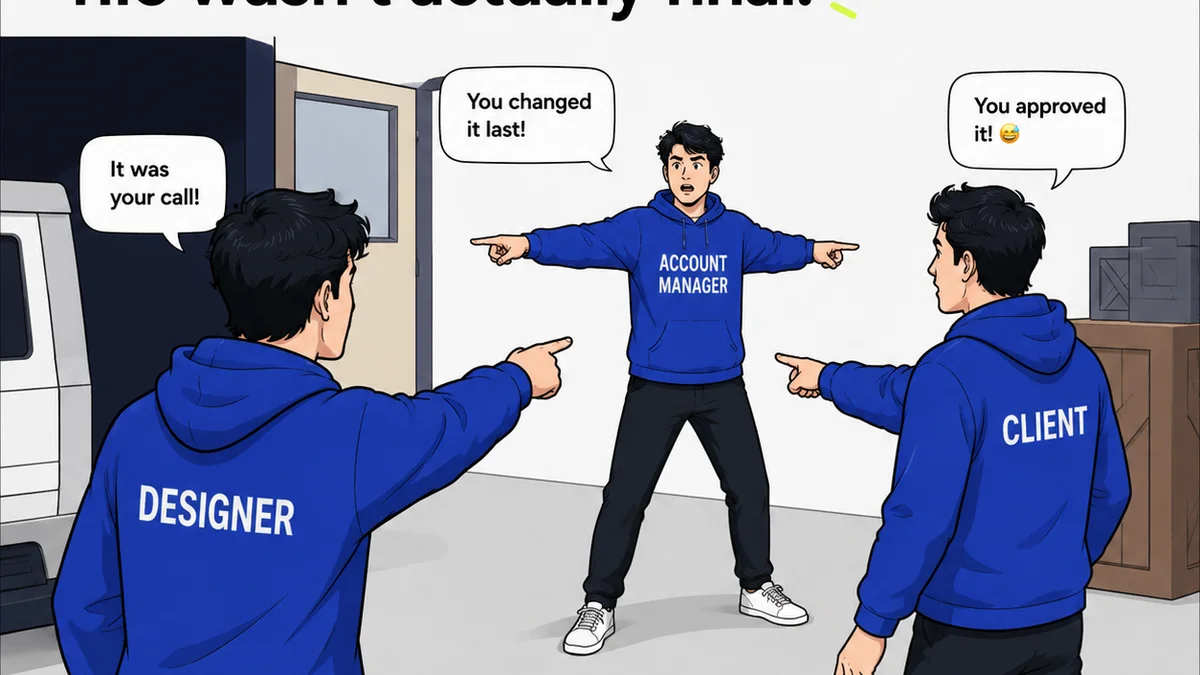
What does 'final' even mean in a creative context? It’s a moving target. A client asks for one small tweak after signing off on 'final'. An internal stakeholder has a
Frequently asked questions
What are the biggest mistakes agencies make with version control?
Relying solely on file naming conventions without a process for tracking changes and approvals. This leads to confusion about which version is truly the latest and approved one, causing rework and missed deadlines.
How can I improve client feedback loops to aid version control?
Centralize all feedback in one place. Use tools that allow clients to comment directly on creative assets. This creates a clear audit trail, linking feedback to specific versions and reducing miscommunication.
What's the difference between version control and revision management?
Version control is the system for managing different iterations of a creative asset. Revision management is the broader process of handling client requests for changes, including tracking, implementing, and approving those revisions, often building upon a version control system.
Can software really help with creative version control?
Absolutely. Dedicated platforms can automate version tracking, provide clear approval workflows, and centralize all communication around assets. This significantly reduces manual errors and speeds up the review process.