Everyone thinks they know how to manage creative versions. You use a clear file naming system. Maybe it’s something like ProjectName_Deliverable_Client_v03_20231027_FINAL_FINAL.psd. It feels organized. It feels controlled.
None of that is wrong. But it’s incomplete.
The hard truth is that version control isn't just about the files on your hard drive. It’s about the clarity, communication, and accountability surrounding each iteration.
1. The Illusion of File-Based Control
The common assumption is that a robust naming convention is the bedrock of good version control. That if every file is meticulously labeled, chaos is averted.
But look closer.
What happens when two people work on the same file simultaneously? What about when feedback is given verbally, or buried in a sprawling email chain? What if the ‘final’ version is actually the second-to-last one?
Your file names become a fragile facade. They don't capture the context, the decisions, or the actual state of the project.
The Symptoms of File-Centric Thinking
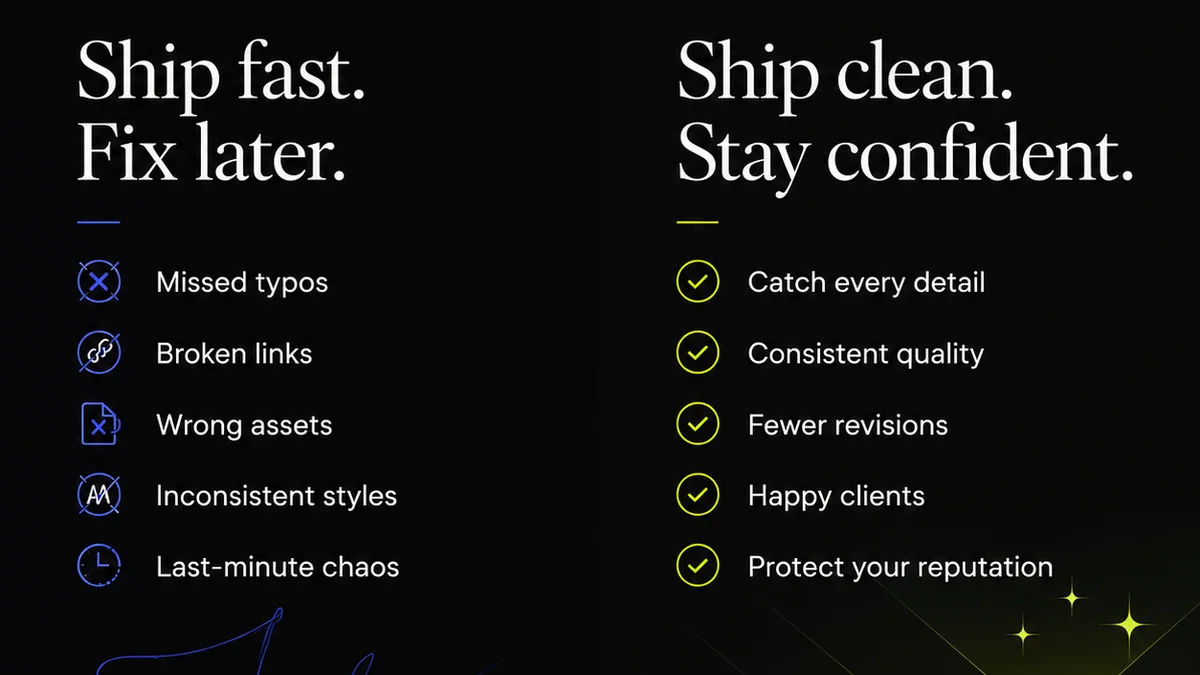
- Endless searching for the 'real' final file.
- Accidental overwrites of crucial work.
- Confusion over which feedback thread is the most recent or relevant.
- Wasted time re-doing work based on outdated versions.
- Lack of clear audit trail for client approvals.
2. The Real Problem: Lack of Centralized Context
The deeper operational truth is that creative version control breaks down due to a lack of a single source of truth for feedback and approvals. Files are just the output; the process is where the real control lies.
Think about it: your files might be perfectly named, but if the instructions for the latest revision are lost in Slack, or if a client approved a design via a quick text message, your file naming system is useless.
This is especially true in agencies, where multiple stakeholders, clients, and team members are involved.
Where Context Gets Lost
- Disparate Communication Channels: Feedback in email, Slack, Teams, Zoom notes, and even sticky notes.
- Manual Tracking: Relying on spreadsheets or memory to track revisions.
- Ambiguous Stakeholder Input: Multiple decision-makers providing conflicting or unclear direction.
- Delayed Approvals: Waiting days for a sign-off, only for it to be on an old version.
- Lack of Transparency: Team members not knowing the latest status or approved direction.
This fragmentation is the enemy of efficient version control.
3. Building a Workflow-Based System
True version control requires a system that manages the *process* of creation, feedback, and approval, not just the files themselves. This means focusing on transparency and collaboration.
Key Pillars of Workflow Control
- Centralized Feedback: All client and stakeholder comments must live in one place, linked directly to the creative asset. This eliminates
Frequently asked questions
What's the biggest mistake agencies make with version control?
Relying solely on file naming conventions. This approach is brittle and doesn't account for the crucial context of feedback, communication, and approvals, leading to confusion and errors.
How can I ensure everyone is working on the latest version?
Implement a centralized platform where all feedback and revisions are logged. This creates a single source of truth, making it clear which version is current and approved.
Does version control apply to digital assets only?
No, the principles of version control apply to any creative output where iterations and approvals are necessary, including video, web design, marketing copy, and more.
How does version control impact client relationships?
Effective version control reduces misunderstandings, speeds up the approval process, and provides a clear audit trail, leading to greater client trust and satisfaction.