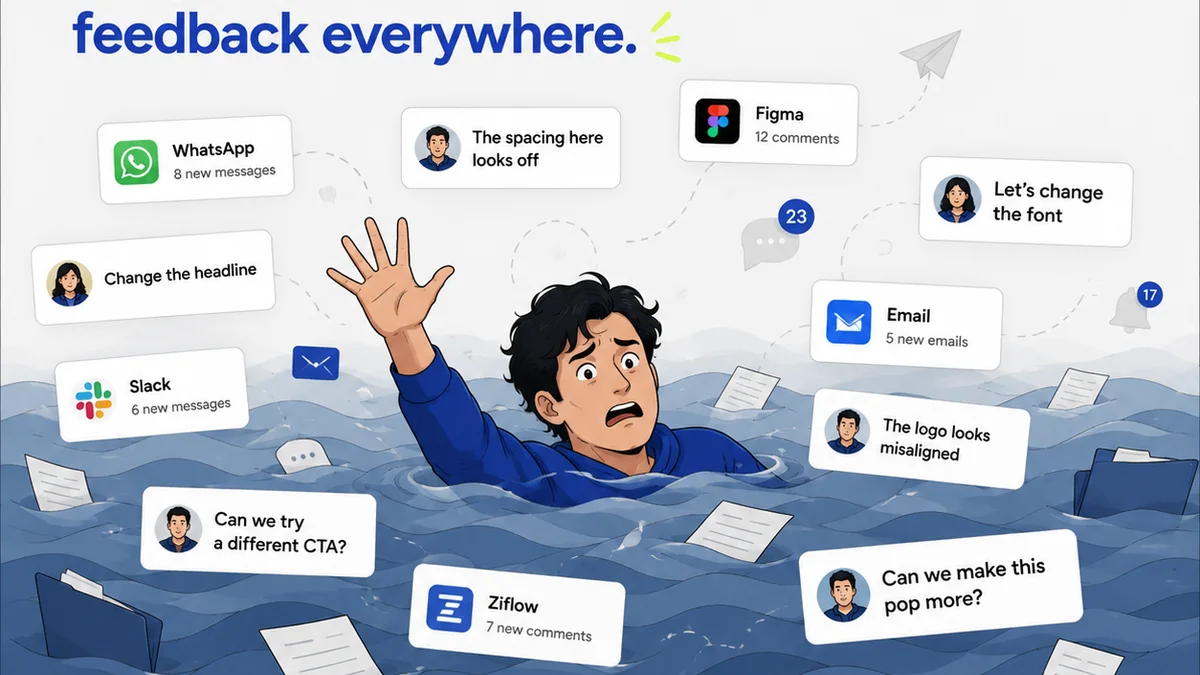
Everyone talks about creative workflows. They paint a picture of smooth sailing, from brief to final delivery. It sounds easy, right? Just follow the steps.
None of that is wrong. But it’s incomplete.
The hard truth? A basic checklist is just a to-do list in disguise. It doesn't account for the chaos, the communication breakdowns, or the sheer complexity of creative projects. Real creative workflow management is about building a system that anticipates problems, clarifies expectations, and ensures quality, every single time. It's about moving from reactive firefighting to proactive control.
1. Defining the 'Why' Behind Your Workflow
Before you list a single task, you need to understand *why* you’re doing it. What are the goals of your creative workflow? Is it faster turnaround? Fewer revisions? Higher client satisfaction? Increased profitability?
Most agencies chase efficiency without defining what ‘efficient’ actually means for them. This leads to optimizing the wrong things.
Setting Clear Project Objectives
Every project needs a North Star. This isn't just the client's brief; it's your internal definition of success. Consider:
- What does a successful outcome look like for the client?
- What does a successful outcome look like for your agency (profit, learning, portfolio)?
- What are the non-negotiables for quality and brand consistency?
Identifying Bottlenecks and Failure Points
Where do projects typically get stuck? Where do errors creep in? Common culprits include:
- Vague briefs leading to scope creep.
- Delayed client feedback causing missed deadlines.
- Lack of clear ownership for review stages.
- Inefficient file management and version control.
- Insufficient QA before client delivery.
A true workflow checklist doesn't just list steps; it highlights these critical junctures and builds in checks and balances.
2. The Foundational Elements of a Robust Workflow
A robust creative workflow isn't just a sequence of tasks. It's built on a few core principles:
Clear Communication Channels
Assume nothing. Document everything. Establish protocols for how information flows. Who needs to know what, and when? How should feedback be given? Centralizing this is key.
Defined Roles and Responsibilities
Who owns each stage? Who approves what? Ambiguity here is a project killer. Every team member must know their part and the parts of others.
Standardized Processes
Repetitive tasks should be repeatable. This doesn't mean stifling creativity. It means creating reliable structures so creative energy isn't wasted on administrative overhead.
Integrated Tools
Your tools should talk to each other. A disconnected tech stack creates manual work, errors, and delays. Think about how design, project management, and communication tools can work together.
3. Building Your Creative Workflow Checklist: The Stages
Let's break down the typical stages and what to include in your checklist for each. Remember, this is a template; customize it for your agency's specific needs.
Stage 1: Briefing and Discovery
This is where everything starts. Get it right, and the rest is easier.
Checklist Items:
- Client Brief Received & Reviewed: Is it comprehensive? Does it align with our understanding?
- Discovery Call Completed: Key stakeholders identified? Objectives clarified? KPIs established?
- Scope of Work (SOW) Drafted & Approved: Clearly defines deliverables, timelines, and budget.
- Technical Requirements Documented: Any platform-specific needs, accessibility standards (WCAG compliance, etc.)?
- Creative Kick-off Meeting Scheduled: Internal team aligned on project goals and client expectations.
Stage 2: Concepting and Creative Development
This is the core creative phase. Structure is needed, but flexibility is paramount.
Checklist Items:
- Mood Boards/Style Guides Approved: Client sign-off on visual direction.
- Initial Concepts Presented: Number of concepts, presentation format, and feedback mechanism defined.
- Client Feedback Received (Round 1): Consolidated and documented.
- Revisions Implemented: Based on approved feedback.
- Internal Creative Review: Peer review for quality, brand alignment, and technical feasibility.
Stage 3: Design and Production
Executing the approved concepts. Precision and adherence to specifications are critical.
Checklist Items:
- Final Design Mockups Approved: Client sign-off on all final visual assets.
- Asset Specifications Confirmed: File formats, dimensions, resolutions, color profiles.
- Content Integration: Copy, imagery, and other assets are finalized and placed.
- Build/Development Started (if applicable): Hand-off to development team with clear specs.
- Internal QA - Design: Check for visual consistency, adherence to specs, and creative integrity.
Stage 4: Review and Approval
This stage is often a major bottleneck. Streamlining it is crucial.
Checklist Items:
- Client Review Package Prepared: All assets are organized and ready for final review.
- Client Feedback Received (Final Round): Clear, consolidated, and actionable.
- Minor Revisions Completed: Addressing final feedback points.
- Final Client Approval Obtained: Formal sign-off documented.
Stage 5: Delivery and Handoff
Getting the final assets to the client or into production.
Checklist Items:
- All Final Files Organized and Packaged: According to agreed-upon specifications.
- Delivery to Client/Platform Confirmed: Proof of delivery.
- Project Documentation Archived: Brief, SOW, approvals, final assets.
- Internal Project Debrief (Optional but Recommended): Lessons learned for future projects.
4. The Role of Technology in Your Workflow
Many assume technology *is* the workflow. It’s not. It’s an enabler.
Spreadsheets and email chains are not a workflow; they're a recipe for disaster. You need systems designed for collaboration and visibility.
Consider tools that help with:
- Centralized Feedback: A single source of truth for all client comments.
- Version Control: Tracking every iteration and preventing confusion.
- Approval Tracking: Clear audit trails of who approved what and when.
- Project Management: Task assignment, deadline tracking, and progress visualization.
- Asset Management: Organized storage and retrieval of all project files.
Where Revue Fits In
Building and managing a robust creative workflow requires clarity and control. It’s about ensuring every stakeholder is on the same page, every revision is accounted for, and every final asset meets the mark.
This is precisely where Revue excels. It acts as the central nervous system for your creative projects. Imagine:
- Centralized Client Feedback: Instead of scattered emails and Slack messages, all client comments live directly on the creative asset. No more hunting for that one crucial note.
- Clear Revision and Approval Visibility: See at a glance which version is current, who has reviewed it, and what the status of approvals is. This eliminates guesswork and speeds up sign-offs.
- Streamlined Quality Checks: By having a clear, documented process with all feedback and approvals in one place, the final quality check becomes a confirmation, not a frantic search for missed details.
Revue helps bridge the gap between your defined workflow steps and the messy reality of creative collaboration, ensuring your checklist translates into tangible results.
5. Making Your Checklist Dynamic, Not Static
Your creative workflow checklist shouldn't be a document you create and forget. It needs to evolve.
Regular Audits and Updates
Set a cadence – quarterly, bi-annually – to review your workflow. What's working? What's not? Are there new tools or processes that could improve things?
Team Feedback Integration
Your team is on the front lines. They know where the friction points are. Create a mechanism for them to provide feedback on the workflow itself. Act on this feedback.
Client Process Refinement
Talk to your clients. Are they finding the feedback process clear? Are the review cycles efficient from their perspective? Adjustments here can significantly improve client relationships.
Final Thought
Is a creative workflow checklist just a list of tasks, or is it the operating system for your agency's success? The difference lies in how deeply you embed it into your culture and how rigorously you refine it. Are you just checking boxes, or are you building a predictable engine for exceptional creative output?
Frequently asked questions
What are the key stages of a creative workflow?
A typical creative workflow includes stages like Briefing & Discovery, Concepting & Creative Development, Design & Production, Review & Approval, and Delivery & Handoff. Each stage has specific tasks and checkpoints crucial for project success.
How can a checklist improve client feedback?
A checklist ensures that feedback is requested, consolidated, and addressed systematically. It helps define the process for giving and receiving feedback, preventing common issues like vague comments or missed crucial notes, leading to more efficient revisions.
What's the difference between a task list and a workflow checklist?
A task list simply enumerates jobs to be done. A workflow checklist, however, maps out the sequence, dependencies, roles, and quality gates of those tasks, providing a strategic framework for consistent project execution and predictable outcomes.
How often should a creative workflow checklist be updated?
It's best practice to review and update your creative workflow checklist regularly, ideally quarterly or bi-annually. This allows you to incorporate lessons learned from recent projects, adapt to new tools or processes, and integrate team feedback for continuous improvement.