Everyone thinks hospitality creative work is about pretty pictures and fancy menus. That it’s all about guest experience and brand aesthetic.
None of that is wrong. But it’s incomplete.
The hard truth is that behind every stunning hotel lobby or viral restaurant campaign is a complex, often chaotic, creative process. Without robust workflow best practices, even the most talented teams produce inconsistent, delayed, and over-budget work. Especially in hospitality, where brands span physical spaces, digital touchpoints, and constant customer interaction.
1. Define Your Brand Ecosystem, Not Just Your Brand
Hospitality brands live everywhere. A hotel isn't just a website; it's the lobby signage, the room service menu, the staff uniforms, the social media feed, the local event flyers, and the email newsletters. Each touchpoint needs to feel like it belongs to the same brand.
This requires a unified creative strategy that goes beyond a style guide. It needs to account for the physical and digital realities of your brand's presence.
The Problem with Siloed Creative
When design, marketing, and operations teams work in silos, you get:
- Inconsistent visual language across different platforms.
- Messaging that doesn't align with the actual guest experience.
- Missed opportunities to reinforce brand identity at critical touchpoints.
- Wasted time and resources redoing work that doesn't fit the broader ecosystem.
This isn't just an aesthetic problem; it's an operational one. It erodes brand equity and confuses customers.
2. Centralize Client and Stakeholder Feedback
In hospitality, feedback comes from everywhere: hotel managers, F&B directors, marketing leads, sales teams, even franchise partners. And it often comes through email, text, Slack, or hallway conversations.
This scattered feedback loop is a recipe for disaster. It leads to:
- Misinterpretation of requests.
- Lost comments and crucial details.
- Endless email chains trying to track down approvals.
- Confusion about who has the final say.
- Delays that impact launch dates for seasonal promotions or new property openings.
You need a single source of truth for all creative feedback and approvals. A system where every stakeholder can see the project status, leave clear, contextual comments, and approve or reject revisions directly.
Context is King
Feedback without context is useless. A comment like “make it pop more” on a new cocktail menu design means nothing if you don't know what “pop” means to the person who said it, or what specific element they're referring to.
Tools that allow for annotation directly on the creative asset—whether it's a PDF menu, a website mockup, or a social media graphic—are essential. This ensures comments are tied to specific elements, reducing ambiguity and back-and-forth.
3. Streamline Revision and Approval Cycles
Hospitality projects often involve multiple rounds of revisions. A new campaign might need approvals from brand marketing, regional managers, and legal. A website update could involve UX, content, and product teams.
Without a clear process, these cycles drag on indefinitely. Stakeholders forget what they approved, new people jump in with fresh feedback late in the game, and designers get stuck in an endless revision loop.
Visibility is Non-Negotiable
Your team needs to know who needs to review what, when it's due, and what the status is. This visibility prevents bottlenecks and keeps projects moving.
When approvals are managed digitally, you get an audit trail. You can see exactly when feedback was given, when revisions were made, and when final sign-off occurred. This accountability is critical, especially when dealing with multiple properties or diverse teams.
4. Implement Rigorous Quality Assurance (QA)
The pressure to launch new campaigns, update websites, or roll out new collateral for a hotel opening or a restaurant launch is immense. In this rush, quality checks can become an afterthought.
But in hospitality, sloppy execution is immediately visible and damaging.
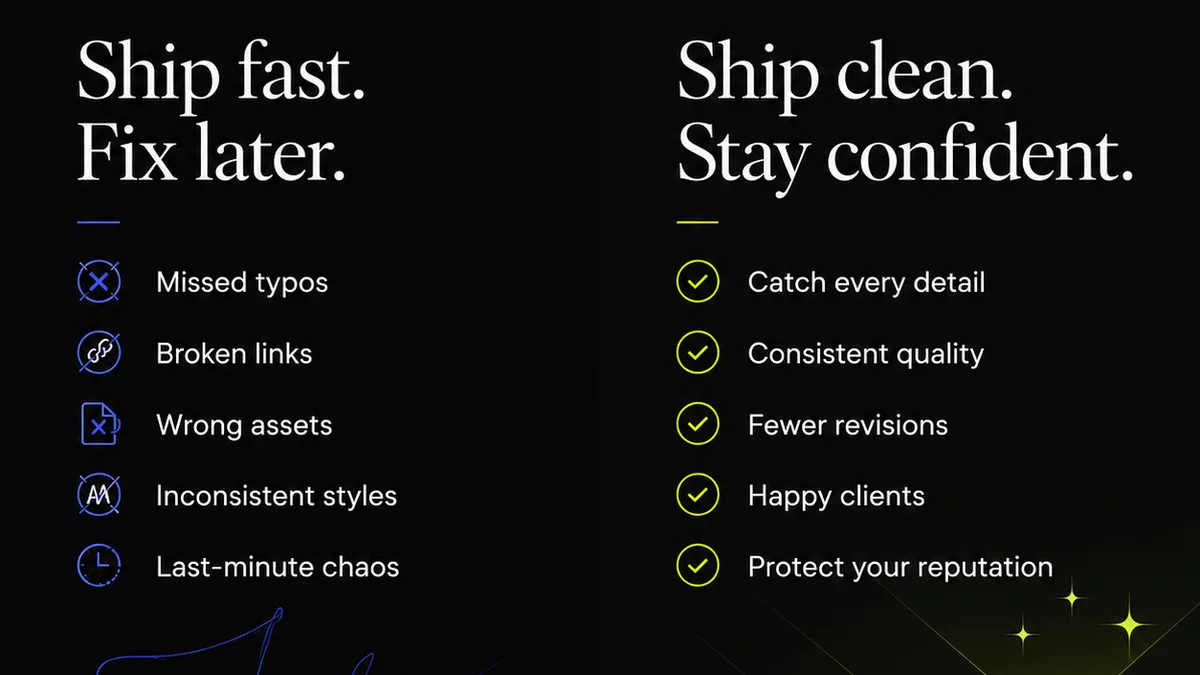
- Typos on a menu that misrepresent ingredients or prices.
- Broken links on a booking engine.
- Outdated information on a property page.
- Inconsistent branding across digital ads and physical signage.
These errors don't just look bad; they cost money and erode trust.
Beyond Spellcheck
QA in hospitality needs to be comprehensive. It involves:
- Content Accuracy: Are all prices, dates, names, and details correct?
- Brand Consistency: Does it adhere to brand guidelines across all elements?
- Technical Functionality: Do all links, forms, and interactive elements work?
- Usability: Is it easy for the target audience (guests, potential guests, staff) to understand and use?
- Accessibility: Does it meet accessibility standards for all users? (WCAG guidelines are a good baseline here).
Automated checks can catch some issues, but human oversight is crucial for nuanced brand and user experience checks.
Where Revue Fits In
Managing creative workflows for hospitality brands is complex. You're juggling multiple stakeholders, diverse assets, and constant touchpoints.
Revue is built to bring order to this chaos. It centralizes all your creative assets and feedback in one place.
Imagine this: All your marketing collateral, website mockups, social media graphics, and even PDF menus live in a single project space. Stakeholders receive clear notifications for review, can leave contextual comments directly on the assets, and provide clear approvals.
No more digging through email chains. No more confusion about the latest version. Just a clear, visible, and efficient process from brief to final delivery.
This allows your creative teams to focus on what they do best: crafting compelling brand experiences, not wrangling feedback.
Final Thought
Hospitality is about seamless experiences. Your creative workflow should be no different.
Are you treating your creative process as an extension of your brand's commitment to excellence, or is it an internal hurdle?
Frequently asked questions
What are the biggest workflow challenges in hospitality creative?
Scattered feedback from multiple stakeholders across various channels (email, Slack, in-person), lack of clear approval processes, inconsistent brand application across physical and digital touchpoints, and rushed quality assurance leading to errors.
How can hospitality brands ensure brand consistency across all touchpoints?
Develop a comprehensive brand ecosystem strategy beyond a simple style guide. Centralize feedback and approvals using a dedicated platform to ensure all creative assets align with the overarching brand identity and messaging.
Why is centralized feedback crucial for hospitality creative projects?
Centralized feedback eliminates confusion, reduces misinterpretation, prevents lost comments, and provides a clear audit trail. It ensures all stakeholders are working from the same information, leading to more efficient revisions and timely approvals.
What role does quality assurance play in hospitality creative workflows?
Rigorous QA is vital in hospitality to catch errors in content, branding, and functionality before they reach guests. It ensures accuracy, maintains brand integrity, and prevents negative guest experiences or operational issues that can arise from mistakes.