Government agencies are often perceived as slow, bureaucratic behemoths. And let’s be honest, sometimes that’s not far from the truth. You might think the core problem is simply “red tape” or “slow approval processes.”
None of that is wrong. But it’s incomplete.
The deeper, harder truth is that many government creative workflows are riddled with hidden inefficiencies that silently bleed budgets and cause costly project delays. These aren’t always obvious, but they add up. Fast.
1. The Illusion of Centralized Feedback
Many government departments believe they have a handle on feedback. They might use email chains, shared drives, or even dedicated project management tools. They think if the feedback is *somewhere*, it’s managed.
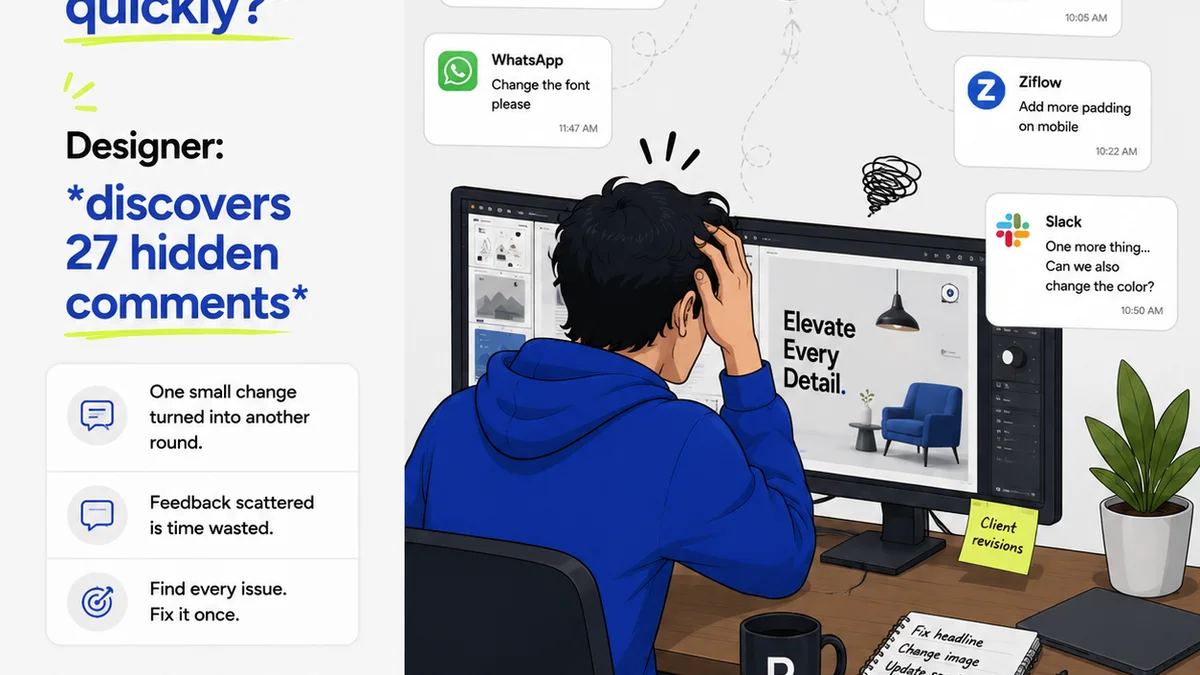
Here’s the hard truth: scattered feedback isn't managed feedback. It's chaos.
When feedback lives in separate email threads, Slack messages, or even handwritten notes from in-person meetings, critical details get lost. Stakeholders miss revisions. The creative team wastes hours chasing down the *actual* latest version of feedback.
Symptoms of Scattered Feedback
- Endless email chains with conflicting instructions.
- Creative teams asking, “Which version of the feedback is the final one?”
- Missed deadlines because a crucial comment was buried in an old email.
- Disagreements arising from misinterpretation of notes.
- Wasted hours manually consolidating feedback from multiple sources.
This isn't just annoying; it's expensive. Every hour spent searching for, clarifying, or redoing work due to lost feedback is billable time, or taxpayer money, being squandered.
2. The Revision Black Hole
Approvals in government are notoriously complex. Multiple layers, different departments, and varying levels of authority mean getting a sign-off can feel like navigating a labyrinth.
The assumption is that once feedback is given, the revision process is straightforward.
The reality? The revision process itself often becomes a black hole, swallowing time and resources without clear visibility.
Without a clear, centralized system, tracking revisions is a nightmare. Who made what change? When? Was it approved? Was it based on the *latest* feedback?
The Cost of Unseen Revisions
- Multiple rounds of revisions that don't actually address the core issues.
- Final deliverables that don't meet the original brief because the feedback loop broke.
- Senior stakeholders signing off on work that wasn't properly reviewed at earlier stages.
- Increased risk of errors and non-compliance due to lack of a clear audit trail.
This lack of transparency means that costly mistakes can slip through the cracks, requiring expensive fixes later or, worse, leading to public miscommunication or failed initiatives.
3. Quality Checks as an Afterthought
Many government creative teams perform quality checks. They might have a checklist or a final review step.
The assumption is that a final check is enough to catch errors.
The hard truth is that quality checks are often tacked on at the end, when time is short and pressure is high. This makes them less effective.
When quality control is an afterthought, it becomes a rushed process. It’s not about proactive prevention; it’s about reactive damage control.
Why Late-Stage QC Fails
- Checklists are incomplete or not tailored to the specific project.
- Reviewers are fatigued and less likely to spot subtle errors.
- Critical issues discovered at this late stage require significant rework, blowing budgets and timelines.
- The focus shifts from creative excellence to simply meeting the deadline.
Think about the cost of a public-facing campaign with a typo or an accessibility flaw. The reputational damage and the cost to fix it can be astronomical, far outweighing the investment in a robust, integrated quality assurance process.
4. The Myth of the
Frequently asked questions
What are the biggest hidden costs in government creative workflows?
The biggest hidden costs stem from inefficiencies like scattered feedback, unclear revision tracking, and late-stage quality checks. These lead to wasted hours, duplicated effort, rework, and missed deadlines, all of which translate to significant budget overruns and project delays.
How can government agencies improve their creative feedback process?
Agencies can improve feedback by centralizing all communication and comments in a single platform. This ensures everyone is working from the same information, reduces misinterpretations, and provides a clear audit trail, saving time and preventing costly errors.
Why is revision tracking so important in government projects?
Clear revision tracking is crucial because it provides visibility into who made what changes, when, and why. This prevents conflicting edits, ensures that feedback is properly incorporated, and helps maintain accountability throughout the project lifecycle, avoiding costly rework.
Can implementing new tools really help government creative workflows?
Yes, implementing the right tools can significantly streamline government creative workflows. Centralized platforms for feedback, revisions, and approvals eliminate confusion, reduce manual effort, and provide the necessary oversight to catch errors early, ultimately saving time and money.