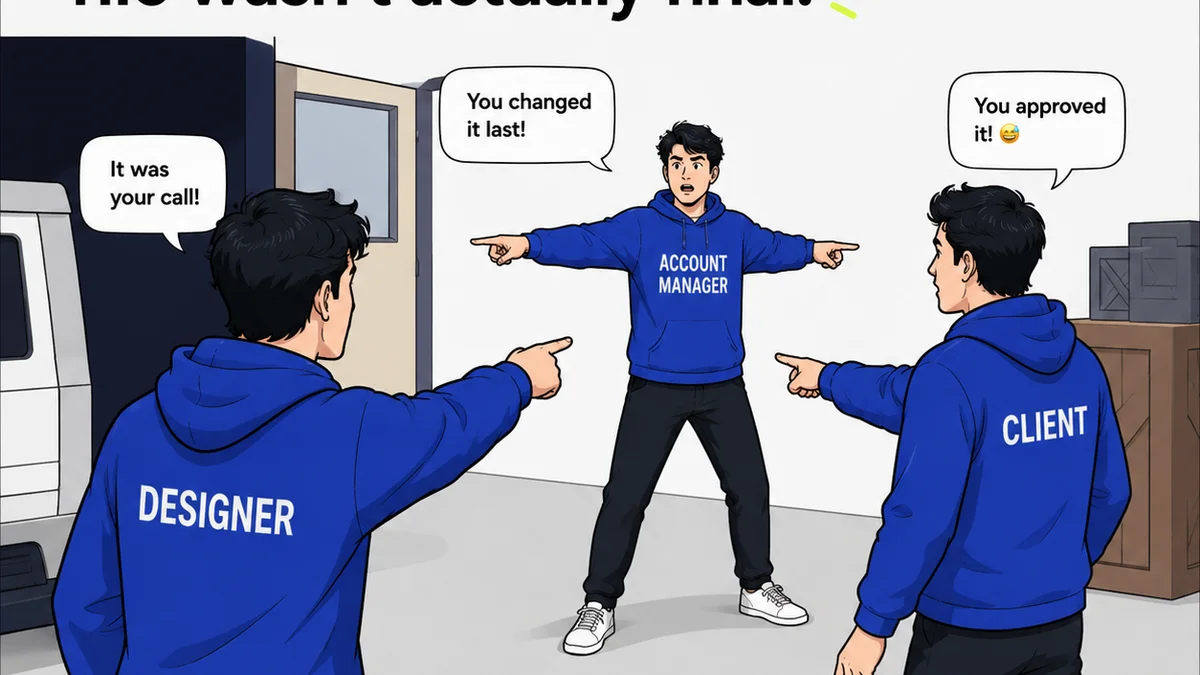
Everyone thinks the biggest challenge for creative agencies working with retail clients is managing endless feedback loops and scope creep. It’s a common assumption. Clients wanting more, changing their minds, not knowing what they want. It’s the daily grind, right?
None of that is wrong. But it’s incomplete. Focusing solely on client behavior misses the operational rot that truly cripples your ability to deliver great creative, on time and on budget. The hard truth? Your internal creative workflow is probably the biggest saboteur.
1. The Illusion of 'Good Enough' Briefs
Retail demands speed and volume. This often leads to a rushed briefing process. “Just get it done” mentality. Briefs become shorthand, assumptions replace clarity, and crucial context gets lost.
This isn't just about missing details. It’s about a fundamental misunderstanding of how a solid brief fuels every subsequent stage of creative production. Without a clear North Star, designers, copywriters, and account managers are navigating blind.
The Symptoms of a Weak Brief
- Endless rounds of revisions that feel like they’re exploring new territory.
- Team members asking the same clarifying questions repeatedly.
- Deliverables that miss the strategic mark, despite looking aesthetically pleasing.
- Frustration mounting on both agency and client sides.
- Projects running over budget and past deadlines.
A weak brief isn't just an inconvenience; it's a direct hit to profitability and client trust.
2. Siloed Communication: The Feedback Black Hole
In retail, speed often means parallel processing. Different teams work on different aspects, and communication often happens in fragmented channels – email chains, Slack threads, ad-hoc meetings, even scribbled notes.
This siloed approach creates information gaps. What one person knows, another doesn't. This leads to duplicated effort, conflicting directions, and a complete lack of visibility into the project's status.
When feedback isn't centralized, it gets lost. It gets misinterpreted. Or worse, it gets ignored because it was never seen by the right person at the right time.
The Cost of Silos
- Misunderstandings that lead to incorrect revisions.
- Wasted time searching for lost feedback or approvals.
- Lack of a single source of truth for project status.
- Difficulty in tracking who said what, and when.
- Increased risk of errors slipping through to final delivery.
For fast-moving retail projects, this is a recipe for disaster.
3. The Revision Revision Revision Trap
Retail clients often have large internal teams with diverse opinions. The approval process can become a game of telephone, with feedback passed down a hierarchy, diluted and distorted with each step.
This isn't necessarily malicious. It's often a byproduct of inefficient processes. Without a clear, structured way to gather, organize, and act on feedback, revisions snowball.
What starts as a minor tweak can become a fundamental redesign because the core issues were never addressed effectively in the first place.
Recognizing the Trap
- Feedback arriving piecemeal, not as consolidated input.
- Multiple stakeholders providing conflicting comments.
- The same points being raised multiple times across different revision rounds.
- A feeling that you're making changes without truly solving the client's problem.
- Burnout among creative teams facing seemingly endless revisions.
This cycle erodes creative morale and damages client relationships.
4. Neglecting the Quality Check Gauntlet
In the rush to meet retail deadlines, quality control often becomes an afterthought. A quick scan before hitting send. Is it *mostly* right? Ship it.
This is a perilous gamble. A single typo, a broken link, an off-brand color – these aren't minor glitches. For a retail brand, they are direct reflections of carelessness. They undermine the brand's professionalism and the agency's credibility.
Think about the impact of a poorly executed campaign. It doesn't just look bad; it actively damages the brand perception you worked so hard to build.
The Fallout of Poor QC
- Brand inconsistencies across marketing materials.
- Technical errors that frustrate end-users (e.g., broken website links, unreadable QR codes).
- Off-brand messaging that dilutes the brand voice.
- Missed opportunities to reinforce brand guidelines.
- Reputational damage for both the brand and the agency.
A robust quality check isn't a luxury; it's a non-negotiable aspect of professional delivery.
5. Ignoring the Post-Project Debrief
Projects end, and the next one immediately begins. There’s little time for reflection. What went well? What didn't? How can we improve next time?
This lack of structured debriefing means mistakes are repeated. Lessons learned are forgotten. The same workflow bottlenecks reappear project after project.
Retail clients expect continuous improvement. If your agency isn't learning and adapting, you're falling behind.
The Value of Reflection
- Identifying recurring pain points in the workflow.
- Documenting successful strategies and processes.
- Providing actionable feedback for team members.
- Optimizing future project timelines and resource allocation.
- Fostering a culture of continuous improvement.
Skipping the debrief is akin to running a race without checking your lap times.
Where Revue Fits In
These aren't just theoretical problems. They are operational realities that plague creative teams daily. The common thread? A lack of centralized control and visibility over the creative process.
This is where a platform designed for creative workflows makes a difference. Imagine a single source of truth for all client feedback, revisions, and approvals. No more digging through emails or Slack.
Revue helps you centralize feedback directly on the creative assets themselves. This means clear, contextual comments that are easy to act on. Revision history is tracked, so you always know what’s changed and why.
The approval process becomes streamlined. Stakeholders can review and approve or request changes with clear visibility. This dramatically reduces misunderstandings and accelerates decision-making.
Furthermore, built-in quality check features ensure that every deliverable is scrutinized against brand guidelines and project requirements before it ever reaches the client. This systematic approach minimizes errors and ensures brand consistency – critical for retail.
By providing this structure, Revue doesn't just manage feedback; it optimizes the entire creative workflow, freeing up your team to focus on what they do best: creating great work.
Final Thought
The retail landscape is unforgivingly fast. Brands demand agility, creativity, and flawless execution. If your internal processes are holding you back, you're not just missing deadlines; you're missing opportunities.
Are you managing your creative workflow, or is it managing you?
Frequently asked questions
What is the most common creative workflow mistake in agencies?
The most common mistake is assuming client behavior is the primary issue, when in reality, internal operational inefficiencies and poor workflow management are often the root cause of delays and errors.
How can agencies improve their creative briefing process for retail clients?
Agencies can improve briefing by establishing a standardized, detailed brief template that requires specific strategic context, target audience insights, and clear objectives. Encourage collaborative brief creation and ensure all key stakeholders review and sign off before creative work begins.
Why is centralized feedback crucial for retail creative projects?
Centralized feedback ensures all comments are captured in one place, reducing miscommunication, preventing lost input, and providing a clear audit trail. This is vital for fast-paced retail projects where clarity and speed are paramount.
How does ineffective revision management impact an agency?
Ineffective revision management leads to scope creep, wasted resources, team burnout, and client frustration. It can result in projects running over budget and past deadlines, damaging both profitability and client relationships.
What role does quality control play in retail creative delivery?
Quality control is essential in retail to maintain brand integrity and professionalism. Errors in creative assets can undermine brand perception and erode client trust, making a rigorous QC process non-negotiable.