Everyone thinks managing creative projects across time zones is about finding the perfect meeting time. A quick calendar check, a bit of juggling, and voilà: problem solved.
None of that is wrong. But it’s incomplete.
The hard truth? Successful global creative workflows aren't built on meeting schedules. They're built on robust processes, clear communication protocols, and tools that bridge the gaps when you're offline. It’s about operational excellence, not just calendar Tetris.
1. The Asynchronous Advantage
We often default to synchronous communication – meetings, instant messages, phone calls – because it feels immediate. It feels productive.
But for distributed teams, relying solely on synchronous communication is a recipe for frustration. It demands everyone be available simultaneously, which is impossible across significant time differences. It creates bottlenecks and delays.
The real power lies in asynchronous communication. This is about sharing information and making decisions in a way that doesn't require immediate responses.
Defining Asynchronous Communication
Think of it as leaving a detailed, well-organized message for someone to pick up when they're back online. This could be:
- Detailed project briefs with clear objectives and deliverables.
- Well-documented feedback rounds with specific annotations.
- Recorded Loom videos explaining complex concepts.
- Updated project management boards with clear task statuses.
- Comprehensive design system documentation.
The key is providing all necessary context so the recipient can understand, act, and respond without needing a real-time conversation.
Building Asynchronous Habits
This requires a cultural shift. Team members need to learn to:
- Over-communicate context. Assume less, explain more.
- Structure their messages for clarity and actionability.
- Be patient. Understand that a response might take hours, not minutes.
- Utilize tools that facilitate asynchronous workflows.
When done right, asynchronous work becomes more efficient. It allows for focused work periods, reduces meeting fatigue, and gives everyone time to think critically before responding.
2. Standardize Everything (That Can Be Standardized)
In a distributed environment, ambiguity is your enemy. You need to eliminate as much guesswork as possible.
This means standardizing your processes, your documentation, and your communication templates.
Project Briefs and Kick-offs
A standardized project brief template is non-negotiable. It forces clients and internal stakeholders to provide essential information upfront:
- Project goals and KPIs.
- Target audience.
- Key messaging.
- Mandatory elements and constraints.
- Deliverables and formats.
- Tone of voice and brand guidelines.
This brief becomes the single source of truth, accessible to everyone regardless of when they log in.
Feedback and Revision Cycles
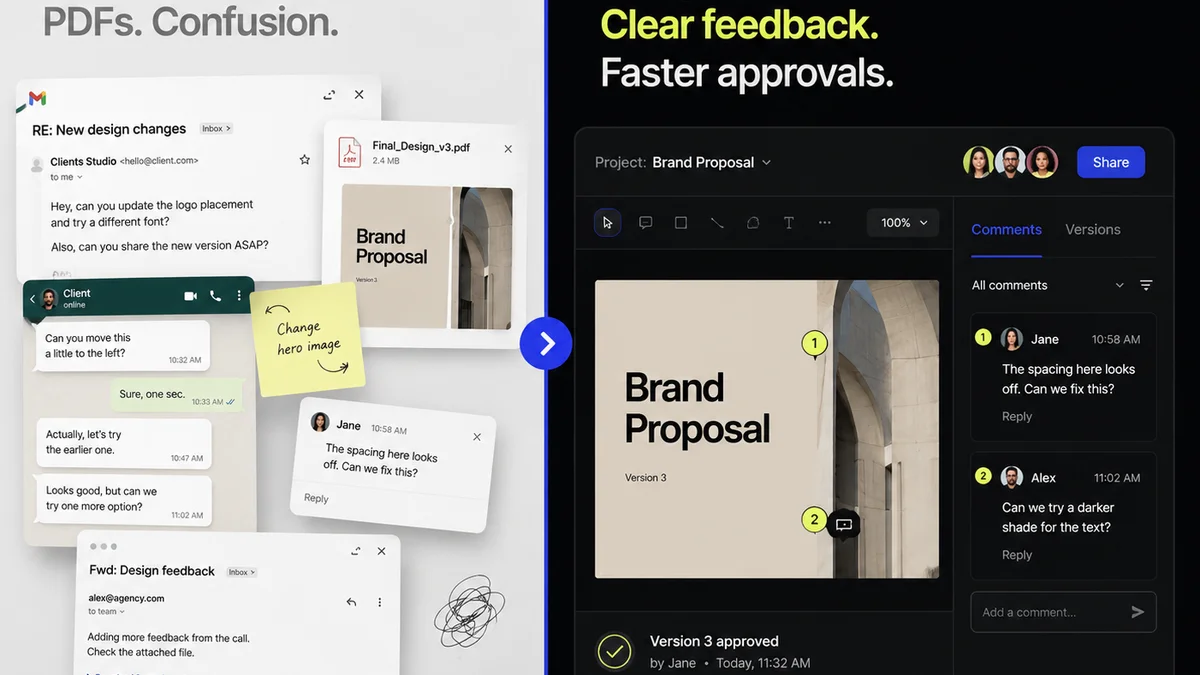
This is where most cross-time-zone projects break down. Without standardization, feedback becomes a chaotic back-and-forth.
Establish clear guidelines for:
- When feedback is due: Set firm deadlines for each round.
- How feedback is delivered: Use a single, centralized platform. No emailing attachments back and forth.
- What kind of feedback is acceptable: Focus on objective criteria, not subjective opinions. Is it meeting the brief? Is it technically feasible?
- How many revisions are included: Be explicit about scope.
This structure ensures that feedback is consolidated, actionable, and doesn't get lost in translation or time zones.
File Naming and Organization
A consistent file-naming convention and folder structure are lifesavers. Imagine trying to find the latest version of a design when files are named things like `logo_final_v3_reallyfinal.ai`.
Adopt a clear system:
- `[Project Name]_[Deliverable Type]_[Version Number]_[Date].ext`
- Example: `AcmeCorp_WebsiteRedesign_HomepageMockup_v02_20231027.psd`
Centralized cloud storage with version history is a must.
3. Communication Protocols: The Unspoken Rules
Your team needs to know how, when, and where to communicate about different types of issues.
This isn't about micromanaging; it's about creating clarity and efficiency.
Defining Communication Channels
Not all communication is created equal. Use channels strategically:
- Urgent Issues: Designated chat channel (e.g., Slack, Teams) with clear expectations for response times (e.g., within 2 business hours for the relevant team).
- Project Updates & Discussions: Project management tool comments (e.g., Asana, Jira, Monday.com) or a dedicated project channel.
- Formal Decisions & Approvals: Email or a dedicated approval tool.
- Knowledge Sharing & Documentation: Wiki or shared drive (e.g., Notion, Confluence, Google Drive).
When someone asks
Frequently asked questions
What is the biggest challenge of creative workflow across time zones?
The biggest challenge is often communication breakdown and delays caused by synchronous work expectations. Relying on immediate responses from people in different time zones leads to frustration, missed opportunities, and inefficient workflows. Embracing asynchronous communication is key to overcoming this.
How can I ensure feedback is timely when working across time zones?
Set clear, firm deadlines for each feedback round. Utilize a centralized feedback tool where all comments are visible and organized. Communicate these deadlines well in advance and establish a protocol for what happens if feedback is late, such as proceeding with the last approved version or moving to the next stage.
What tools are essential for managing creative projects across time zones?
Essential tools include a robust project management system (like Asana, Jira, or Monday.com) for task tracking and updates, a centralized communication platform (like Slack or Microsoft Teams) for quick messages, a cloud storage solution with version control (like Google Drive or Dropbox) for file management, and a dedicated feedback and approval tool (like Revue, Figma, or Ziflow) to streamline creative reviews.
How do I handle urgent issues when team members are offline?
Designate specific channels for urgent matters and define clear escalation paths. Ensure there's always a point person or a small team available during overlapping business hours, or establish a 'follow-the-sun' support model if critical. For non-critical but time-sensitive issues, document them thoroughly in your project management tool and tag relevant individuals for when they come online.