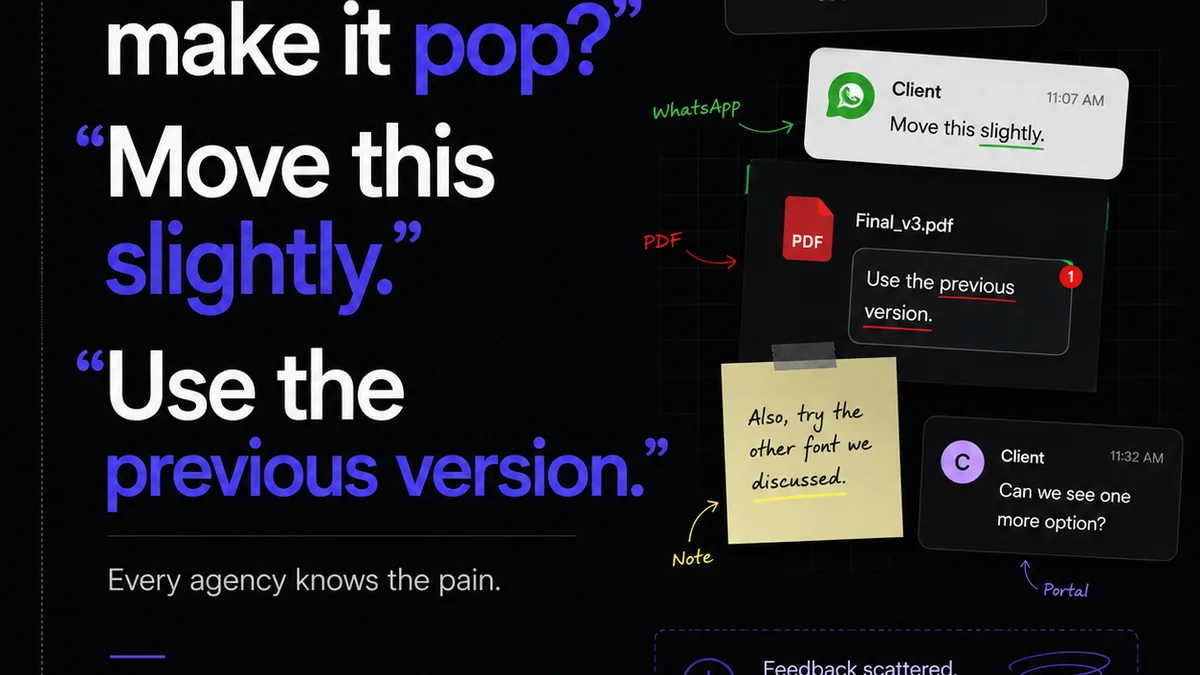
Everyone talks about optimizing design agency workflow. You hear about agile sprints, kanban boards, and the latest project management software. It all sounds great. Like it’s the magic bullet that will finally tame client feedback chaos and boost your team’s output.
None of that is wrong. But it’s incomplete.
The hard truth? Workflow isn’t about the tools you use; it’s about the predictable, repeatable processes you build around them. It’s about reducing friction, clarifying communication, and ensuring quality at every step. It’s about making sure the right people see the right things at the right time, every single time.
1. The Myth of the 'Creative Flow' Bottleneck
Agencies often blame a lack of creative flow for missed deadlines or subpar work. They think the problem is that designers get stuck, or clients take too long to respond. This framing is backward.
Creative flow isn't a mystical force you can't control. It's the *result* of a solid workflow, not the cause of it.
When Does 'Flow' Actually Happen?
- When project briefs are crystal clear.
- When feedback loops are defined and respected.
- When revisions are specific and actionable, not vague.
- When handoffs between teams (design, dev, client) are seamless.
- When approvals are tracked and documented.
When these elements are in place, creatives can focus. They aren't constantly interrupted by clarifying questions or chasing down missing information. They aren't blindsided by last-minute changes that derail their progress.
The real bottleneck isn't a lack of creativity; it's a lack of clarity and process.
2. Deconstructing the Design Process: From Brief to Approval
A truly optimized design agency workflow breaks down the entire project lifecycle into distinct, manageable phases. Each phase has clear inputs, outputs, and quality gates.
Phase 1: Discovery & Briefing
This is where everything starts. Assumptions made here ripple through the entire project. A vague brief guarantees a messy workflow.
- Input: Client goals, target audience, project scope, budget, timeline, existing brand guidelines, competitive landscape.
- Output: A detailed, signed-off creative brief.
- Quality Gate: Client and internal stakeholder sign-off on the brief. No design work begins without this.
Think of the brief as your project's DNA. If it's flawed, the entire organism will be unhealthy.
Phase 2: Concepting & Design
This phase is about exploration, not execution. It’s where you translate the brief into tangible visual directions.
- Input: Approved creative brief.
- Output: Design concepts (e.g., mood boards, wireframes, initial mockups).
- Quality Gate: Internal creative review. Does this concept meet the brief? Is it strategically sound?
Resist the urge to show clients half-baked ideas. Internal reviews catch issues before they become client-facing problems. This saves immense time and prevents awkward conversations.
Phase 3: Development & Iteration
This is where the chosen concept is refined based on feedback. This is the phase where most workflow issues surface if not managed correctly.
- Input: Approved design concept, client feedback.
- Output: Iterated designs, revised mockups.
- Quality Gate: Structured client feedback sessions. Ensure feedback is consolidated, specific, and actionable.
Vague feedback like
Frequently asked questions
What is the most common mistake in design agency workflow?
The most common mistake is focusing on tools rather than processes. Agencies often chase the latest software, believing it will solve their problems, without establishing clear, repeatable steps for communication, feedback, and approvals. This leads to continued inefficiencies despite new technology.
How can I improve client feedback loops in my agency?
Improve client feedback by defining clear channels and timelines for input. Consolidate all feedback into a single source, summarize it, and present it to the client for confirmation before acting on it. This prevents misinterpretations and ensures everyone is aligned on the required revisions.
What are the key phases of an effective design agency workflow?
Key phases include: 1. Discovery & Briefing (clear scope definition), 2. Concepting & Design (internal exploration), 3. Development & Iteration (refinement based on structured feedback), 4. Production & Handoff (final asset creation and delivery), and 5. Quality Assurance & Final Approval (ensuring everything meets standards before launch).
How does centralized feedback help agency workflow?
Centralized feedback eliminates scattered communication across emails, chat apps, and documents. It provides a single source of truth for all client comments and revisions, making it easier to track changes, identify potential conflicts, and ensure no feedback gets lost. This drastically reduces confusion and speeds up the revision process.