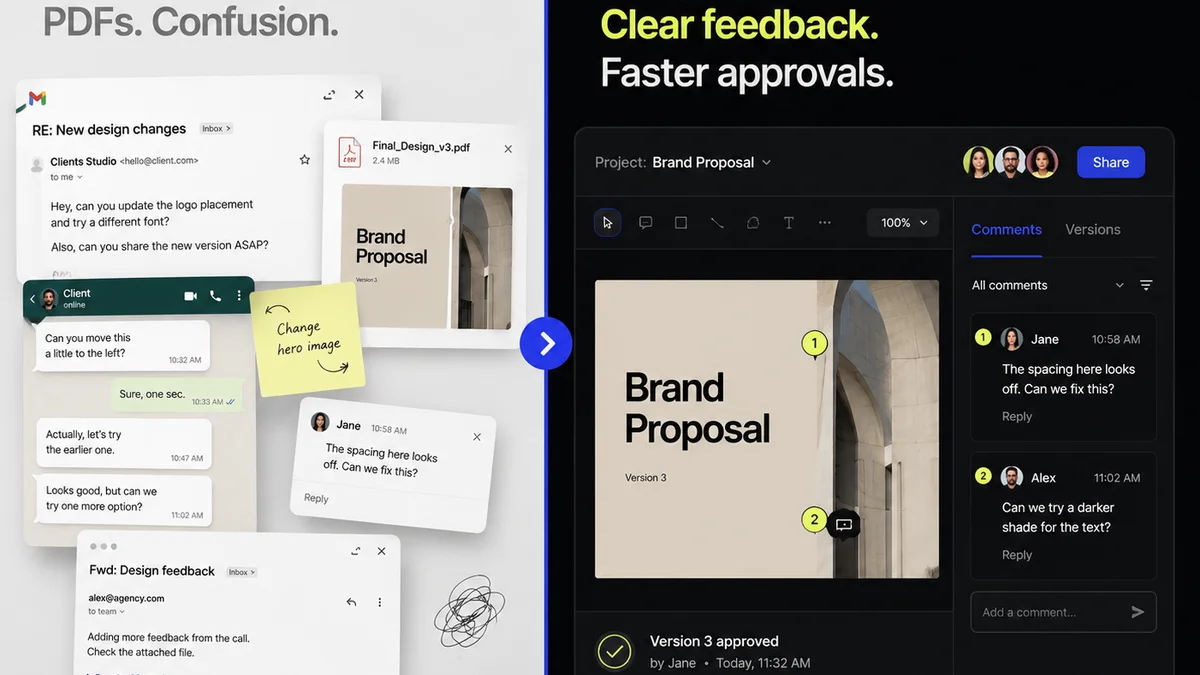
Everyone thinks design approval workflow software is just about getting sign-offs faster. Click, approve, done. None of that is wrong. But it’s incomplete.
The real power of design approval software isn't speed. It's clarity. It’s control. It’s the operational backbone that lets you manage feedback, track revisions, and ensure quality without the chaos.
1. Centralized Feedback: Ditch the Email Chains
Client feedback scattered across emails, Slack messages, and random documents is a productivity killer. It’s the fog that obscures project status and leads to costly mistakes. Good design approval software brings all client input into one place.
Why This Matters
Imagine a single source of truth for every creative asset. No more digging through inboxes for that one crucial comment. Every piece of feedback is logged, timestamped, and tied directly to the version it pertains to.
- Reduces misinterpretation.
- Prevents lost feedback.
- Creates an auditable trail.
- Improves client communication.
This isn't just about convenience; it's about de-risking your projects.
2. Version Control: Know Which Design is Which
How many times has a client approved a design, only for you to realize they were looking at an old version? It happens more than you think. Robust version control is non-negotiable.
Your approval software needs to clearly distinguish between versions. Each upload should create a new iteration, with the ability to compare them side-by-side. This eliminates ambiguity.
Key Features to Seek
- Clear version numbering (v1, v2, v3).
- Side-by-side visual comparison tools.
- Ability to revert to previous versions if needed.
- Automatic versioning upon upload.
This prevents the dreaded
Frequently asked questions
What is the primary benefit of design approval workflow software for agencies?
While speed is a benefit, the primary advantage is centralized clarity and control. It consolidates feedback, tracks revisions, and ensures quality, reducing miscommunication and costly errors.
How does version control in approval software prevent issues?
Clear versioning and side-by-side comparison tools ensure everyone is reviewing and approving the latest iteration. This eliminates confusion, prevents work on outdated designs, and provides an auditable history.
Why is real-time collaboration important in design approval?
Real-time collaboration allows multiple stakeholders to provide feedback simultaneously on the same version. This speeds up the review process, ensures all input is captured, and avoids conflicting comments from different sources.
Can design approval software integrate with other tools?
Yes, integration is key. Look for software that connects with your existing project management, file storage, or communication tools to create a seamless workflow and avoid data silos.