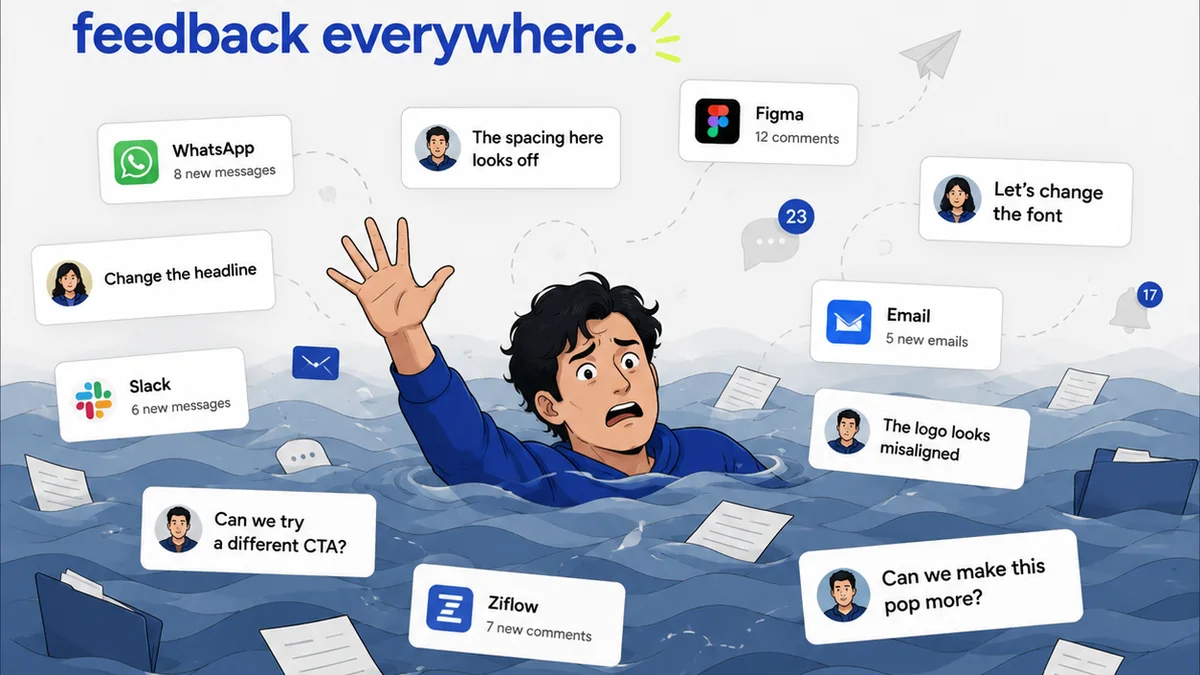
Everyone thinks a design change request checklist is about making sure you've listed every single tweak. None of that is wrong. But it’s incomplete.
The hard truth? A checklist is useless if it doesn't force clarity on the why behind each change. Without that, you’re just managing symptoms, not solving the root cause of scope creep and endless revisions.
1. The Illusion of Clarity: What Most Checklists Miss
You get a list of changes. You tick them off. Job done. Right?
Wrong. A list of desired changes is just the surface. The real work is understanding the context, the client’s evolving strategy, and the impact of each alteration on the original brief.
The Hidden Costs of Vague Requests
- Endless back-and-forth.
- Wasted designer hours.
- Frustrated clients and teams.
- Projects that run over budget and schedule.
- Compromised creative vision.
Your design change request process needs to be more than a task manager. It needs to be a communication hub.
2. Deconstructing the 'Why': The Core of Effective Change Management
Every change request, no matter how small, originates from a need. Your checklist should illuminate that need.
Instead of just 'Change button color to blue,' aim for 'Client wants button color changed to blue to align with new brand guidelines that emphasize trust and stability.'
Key Questions for Every Request
- What problem does this change solve?
- How does this align with the project's original goals?
- What is the impact on user experience?
- What is the impact on the overall design system?
- Are there alternative solutions that achieve the same goal with less disruption?
This level of detail transforms a simple request into a strategic discussion. It empowers your team to push back intelligently or offer better solutions.
3. The Anatomy of a Robust Change Request
A truly effective design change request isn't just a list; it's a structured document. Think of it as a mini-brief for each modification.
Essential Components
- Requestor & Date: Who is asking and when?
- Project & Asset: Clearly identify what needs changing.
- Original State: A screenshot or description of the current design.
- Requested Change: A clear, concise description of the desired modification.
- Rationale/Justification: This is critical. Explain the 'why.'
- Impact Assessment (Internal): How will this affect timeline, budget, and other elements?
- Dependencies: Does this change rely on other elements being completed first?
- Approval: Who needs to sign off on the change?
This structure forces the requestor to think critically and provides your team with all necessary information upfront.
4. Implementing a Workflow That Works
A great checklist is only as good as the process it supports. How do you integrate this into your daily operations?
Common Pitfalls to Avoid
- Email Chaos: Change requests buried in long email threads.
- Verbal Agreements: Changes agreed upon in meetings, never documented.
- Assumptions: Designers guessing what the client *really* means.
- Lack of Ownership: No clear person responsible for managing requests.
Your workflow needs a single source of truth for all feedback and changes.
5. Where Revue Fits In
Managing design change requests effectively requires a system. That's where Revue excels.
Revue provides a centralized platform to capture, track, and manage all client feedback and design revisions. Instead of sifting through emails or scattered documents, every change request lives in one organized place.
Streamlining the Process with Revue
- Centralized Feedback: All comments, annotations, and change requests are logged directly on the creative asset.
- Clear Revision History: Track every iteration, who requested it, and why. This provides invaluable context for current and future changes.
- Version Control: Easily compare different versions of a design, making it clear what has changed and when.
- Approval Workflows: Define clear steps for review and approval, ensuring accountability and reducing bottlenecks.
- Visibility for All: Keep clients and internal teams aligned with a shared view of the project status and feedback.
This structured approach minimizes miscommunication and ensures that every requested change is properly understood and managed, transforming the often-painful change request process into a manageable workflow.
6. When 'No' is the Right Answer (and How to Say It)
Not every change request is valid or beneficial. Part of managing changes is knowing when to push back.
A robust checklist and workflow give you the data to make informed decisions.
Criteria for Pushing Back
- The change contradicts the project's core objectives.
- The change significantly impacts budget or timeline without client agreement.
- The change compromises the user experience or accessibility standards.
- The requested change is a symptom of a larger, unaddressed strategic issue.
Having a documented rationale for the change request, as outlined in our checklist, makes these conversations more productive and less emotional.
7. The Future of Design Change Management
The tools are evolving, but the core principles remain the same: clarity, communication, and collaboration.
As AI and automation become more integrated into design workflows, the emphasis will shift even further towards strategic oversight and creative direction, rather than just task execution.
Your ability to manage feedback and revisions effectively will be a key differentiator.
Final Thought
Is your design change request process a source of friction or a catalyst for better creative outcomes? The difference lies not in the complexity of your checklist, but in the depth of understanding it fosters.
Frequently asked questions
What is the most critical part of a design change request?
The most critical part is the 'Rationale/Justification' section. Understanding the 'why' behind a change request is essential for effective communication, preventing scope creep, and ensuring the final design meets the underlying business or user needs.
How can a checklist prevent endless revisions?
A comprehensive checklist forces clarity on the requestor, ensuring all necessary context and justification are provided upfront. This reduces ambiguity, minimizes back-and-forth, and empowers your team to address the root cause of the change rather than just the surface-level request.
Should designers push back on change requests?
Yes, designers should push back when a change request contradicts project goals, negatively impacts user experience, or is not clearly justified. A structured workflow and checklist provide the documentation and rationale needed to have these critical conversations effectively.
How does a tool like Revue help with change requests?
Revue centralizes all feedback and change requests on the creative asset itself, providing a clear history and context. This eliminates confusion from scattered emails or verbal agreements, streamlines the approval process, and ensures everyone is aligned on the necessary revisions.