Everyone *thinks* they know how to give good design feedback. Just be clear, be constructive, be specific. Right?
None of that is wrong. But it’s incomplete. It’s the surface-level advice that ignores the messy reality of creative collaboration.
The hard truth is, most feedback processes are broken because they’re not built for how creative work actually happens. They treat feedback as an event, not a continuous flow. They prioritize opinions over objectives. And they create more work than they solve.
Let’s fix that. We’re diving into the real best practices for design feedback, the ones that actually make a difference.
1. Align on Objectives First
Before a single pixel is reviewed, the most critical step is defining what success looks like. Not just for the design, but for the *project*.
What is this design supposed to achieve? Increase conversions? Improve user engagement? Clarify a complex process? Communicate a brand message?
Without clear, agreed-upon objectives, feedback devolves into subjective taste.
The Problem with Subjectivity
When objectives are fuzzy, feedback becomes:
- “I don’t like the color.”
- “It feels a bit bland.”
- “Make it pop more.”
These are opinions. They’re not actionable insights because they aren't tied to a measurable goal.
The Solution: Objective-Driven Critiques
Instead, feedback should look like:
- “This blue might not align with our objective of increasing trust, as it’s often associated with caution. Could we test a warmer tone?”
- “The current layout doesn’t clearly guide the user towards the ‘Sign Up’ CTA, which is our primary conversion goal. Let’s explore options that highlight it more effectively.”
- “To improve perceived energy, a key objective for this campaign, we could explore more dynamic typography or a bolder color palette.”
This shifts the conversation from personal preference to strategic effectiveness.
2. Establish a Feedback Framework
A consistent framework ensures everyone speaks the same language and covers the necessary ground. Think of it as a structured way to dissect the design against its goals.
Common Frameworks to Consider
While you can adapt these, the goal is consistency:
- The Eisenhower Matrix (for Urgency/Importance): While not directly for design critique, it helps prioritize *acting* on feedback. Is this a critical issue or a minor tweak?
- The 4 Cs: Clear, Concise, Constructive, Collaborative. This is more a mindset, but essential.
- Specific Critique Models: Some teams use models like “What’s Working, What’s Not Working, What If?” or variations thereof.
The key is not the specific model, but the discipline of using *a* model.
Standardizing Your Process
A good framework might include:
- Context Reminder: Briefly restate the project goals and target audience.
- Specific Area: Identify the part of the design being discussed (e.g., header navigation, checkout form).
- Observation: State what you see.
- Impact: Explain how this observation relates to the project objectives or user experience.
- Suggestion/Question: Offer a concrete alternative or pose a question for consideration.
This structured approach prevents rambling, subjective critiques and keeps the focus sharp.
3. Define Roles and Responsibilities
Who gets to give feedback? Who needs to approve it? Ambiguity here is a fast track to chaos.
Not everyone on the client-side or even within your own team has the same level of authority or expertise regarding a specific design.
The Feedback Hierarchy
Think about:
- Primary Stakeholders: The ones whose buy-in is essential. Their feedback is high-priority.
- Subject Matter Experts: Those with specific knowledge (e.g., legal, accessibility, technical). Their input is crucial for compliance and functionality.
- End Users (or Proxies): If possible, gather input that reflects the actual user.
- Internal Team: Your own designers, strategists, project managers.
Clarify who needs to weigh in on what, and crucially, who has the final say.
The Bottleneck Problem
Too many cooks spoil the broth. Conversely, relying on just one person can create a bottleneck. You need a defined decision-making process.
Ensure that feedback from less critical stakeholders is either consolidated or clearly marked as optional before it reaches the primary approvers.
4. Feedback Timing is Everything
When you ask for feedback, and when you *give* it, matters immensely.
Asking for feedback too early means the design isn't developed enough to be meaningful. Asking too late means significant rework might be needed, causing delays and frustration.
The Sweet Spot for Review
Generally, feedback rounds should occur at logical milestones:
- Conceptualization/Wireframing: Focus on structure, flow, and core functionality.
- Mid-Fidelity Mockups: Refine layout, content hierarchy, and user paths.
- High-Fidelity/Prototypes: Evaluate visual design, micro-interactions, and overall user experience.
- Pre-Launch/Final Review: Catch any remaining bugs, inconsistencies, or critical errors.
Avoid asking for detailed visual feedback on a wireframe or structural feedback on a fully polished design.
Consolidate Feedback
Don’t ask for feedback piecemeal. Batching reviews saves everyone time and prevents context switching.
Schedule specific feedback sessions or set clear deadlines for submitting comments. This prevents the endless drip-feed of minor points that paralyze progress.
5. Be Explicit About What Kind of Feedback You Need
Are you looking for broad strategic alignment? Detailed usability issues? Typographical perfection? Clarity on this upfront is vital.
A client might be focused on brand colors, but your immediate need is to validate the user flow. Stating this prevents misaligned critiques.
Signal Your Intent
Use clear language when requesting feedback:
- “For this round, we’re focused solely on the checkout process flow and clarity of the pricing information. Please hold off on commenting on visual styling until the next review.”
- “We need your expert eye on accessibility compliance for these interactive elements. Are there any WCAG concerns?”
- “Our primary goal is to ensure the core message is immediately understandable. Does the headline and hero image achieve this?”
This guides the reviewer and ensures you get the most valuable input.
6. Document Everything Systematically
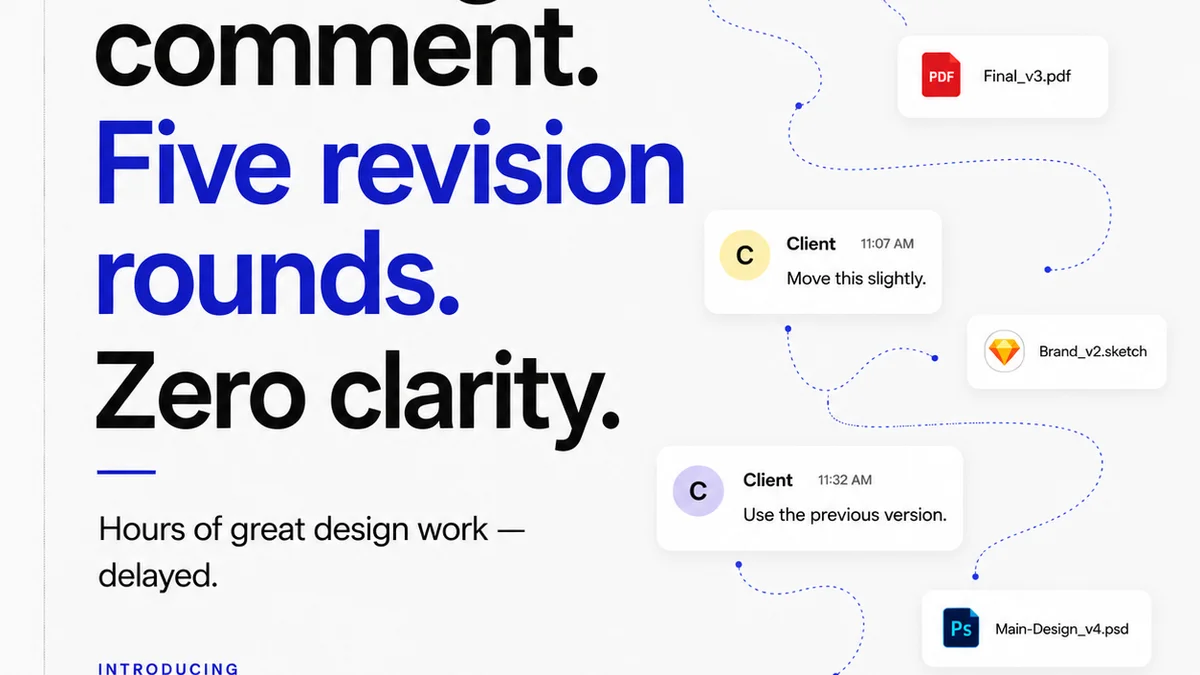
This is where most agencies and teams fall apart. Feedback gets lost in emails, Slack threads, or verbal conversations.
A single source of truth for all feedback and decisions is non-negotiable. This prevents “He said, she said” arguments and ensures accountability.
The Dangers of Disorganization
Unmanaged feedback leads to:
- Missed comments
- Conflicting instructions
- Endless clarification loops
- Lost time tracking down decisions
- Frustrated clients and teams
It’s a productivity killer.
The Centralized Solution
Use a dedicated platform to capture, organize, and track feedback.
This means:
- All comments logged against specific design elements.
- Clear status on each piece of feedback (e.g., Acknowledged, In Progress, Resolved, Won’t Fix).
- A visible history of all discussions and decisions.
This transparency builds trust and efficiency.
7. Respond Thoughtfully to Feedback
Receiving feedback is only half the battle. How you process and respond to it determines its value.
Don’t just acknowledge; engage. Even if you disagree, show you’ve understood.
The Art of the Response
For each significant piece of feedback:
- Acknowledge Receipt: Let the stakeholder know their comment has been seen.
- Clarify if Needed: If a comment is vague, ask specific follow-up questions.
- Explain Your Decision: Clearly state whether the feedback will be implemented, why, or why not. Reference project goals or user data.
- Update Status: Mark the feedback as resolved or provide a reason for deferral.
This closes the loop and shows respect for the reviewer's time and input.
Where Revue Fits In
Managing feedback effectively, especially across multiple stakeholders and revisions, is a core challenge Revue is built to solve.
Instead of wading through scattered emails and endless Slack channels, Revue centralizes all client feedback directly on the creative assets themselves. This means comments are contextual, visible, and actionable.
You can easily track the status of each piece of feedback, ensuring nothing gets lost. Revision history is clear, providing visibility into the evolution of the design and the decisions made along the way. This structured approach turns chaotic feedback into a manageable, transparent workflow, ultimately improving the quality and speed of your creative output.
8. Iterate with Purpose, Not Just Volume
Revisions are inevitable. But endless, aimless revisions kill morale and budgets.
Each iteration should be a deliberate step towards the defined goals, informed by structured feedback.
The Danger of Scope Creep
Without clear objectives and a strong feedback process, clients can request endless changes that dilute the original vision or expand the project beyond its initial scope.
This often stems from unclear initial briefs or a lack of a formal approval process.
Focus on Resolution
Use your feedback framework and documentation to ensure each revision round has a clear purpose:
- Address specific points raised in the previous feedback round.
- Test a particular hypothesis or solution.
- Incorporate necessary scope adjustments that have been formally agreed upon.
When feedback is clear, documented, and responded to, revisions become targeted improvements, not just busywork.
9. Train Your Clients (and Your Team)
Often, the biggest hurdle isn't the feedback itself, but the *way* it's given or received. Many stakeholders haven't been trained on how to provide effective creative feedback.
Your agency or team can lead the way.
Educate Your Stakeholders
Before kicking off a project, or during the onboarding phase, take time to explain:
- Your feedback process.
- What kind of feedback is most helpful at different stages.
- The importance of aligning feedback with project objectives.
- Who the key decision-makers are.
Setting expectations upfront is crucial for managing the feedback loop.
Internal Training
Ensure your own team understands and adheres to the established feedback best practices. Consistent internal application builds confidence and reinforces the value of a structured process.
Final Thought
Giving and receiving design feedback isn’t an art; it’s a science. It requires structure, discipline, and a relentless focus on the project’s objectives.
Are you treating feedback as a collaborative problem-solving session, or just another task to check off?
Frequently asked questions
What's the difference between subjective and objective design feedback?
Subjective feedback is based on personal opinion or taste (e.g., 'I don't like this color'). Objective feedback is tied to measurable project goals, user needs, or established principles (e.g., 'This button placement doesn't align with our goal to increase conversion rates').
How can I prevent feedback overload?
Establish clear feedback rounds tied to project milestones. Define who provides feedback and who has final approval. Use a centralized tool to consolidate comments and track their status, preventing endless drip-feed of minor points.
Who should be involved in giving design feedback?
Involve primary stakeholders, subject matter experts (like legal or accessibility specialists), and potentially end-user proxies. Clearly define roles and the level of authority each person has to avoid conflicting instructions.
How do I ensure feedback is actionable?
Always tie feedback back to project objectives. Ask for specific suggestions or questions rather than vague statements. When responding, clearly explain how the feedback will be addressed (or why not), referencing goals or user data.
What's the best way to document design feedback?
Use a dedicated platform that allows comments to be attached directly to design assets. This creates a single source of truth, tracks revisions, and provides a clear history of all discussions and decisions, preventing confusion and lost information.