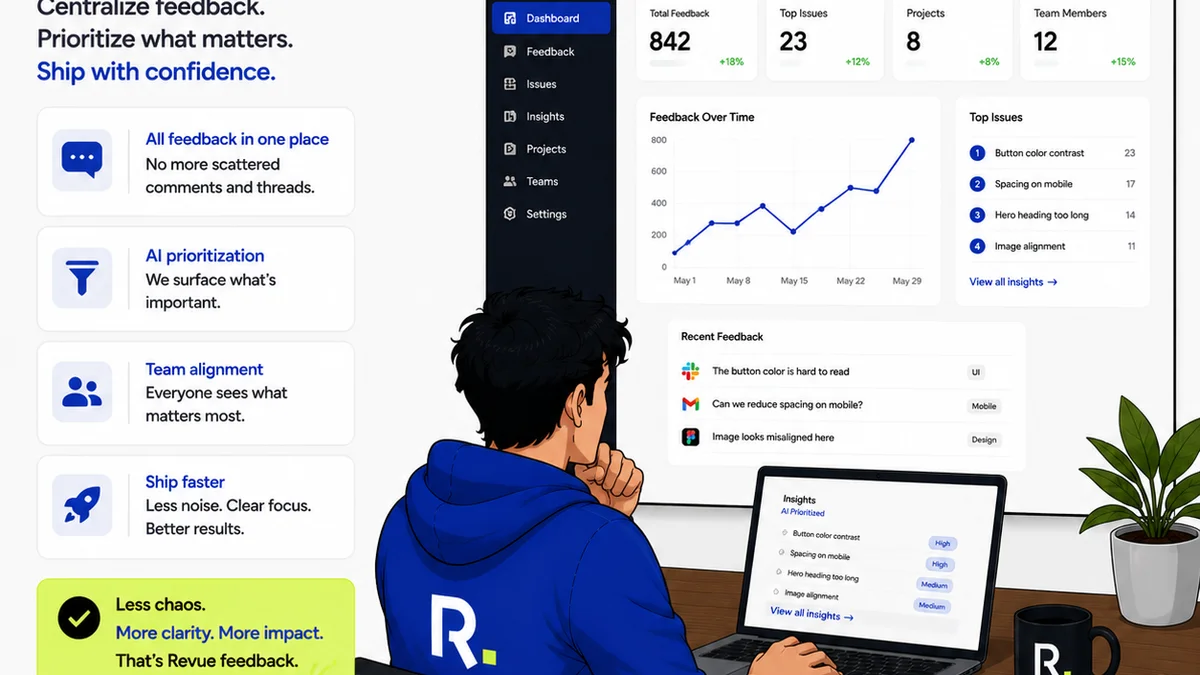
Stop Blaming the Client for Endless Revisions
You’ve just sent over the latest round of design mockups. You’re proud. They’re good. Then it hits: “Can we try this in blue?” “What if we moved the logo over there?” “Does this feel too… corporate?” Suddenly, you’re staring down the barrel of revision round three, four, or maybe even five. It feels like the client just can’t make up their mind, or worse, they don’t know what they want. But is that the real problem?
Most creative teams and agencies blame the client’s indecision or vague feedback for the endless revision cycles. It’s an easy narrative: the client is difficult, and we’re just trying to navigate their whims. But this often misses the systemic issues that lead to those frustrating, time-consuming, and expensive revision rounds. The real reason design feedback spirals into chaos isn't just about the client; it's about the broken process you're using to gather, manage, and act on that feedback.
If you’re stuck in this loop, you’re not alone. It’s a common pain point for agencies and in-house teams alike. The good news? It’s entirely fixable. Let’s unpack why this happens and how to build a better way.
1. The Feedback Black Hole: Unstructured Communication
How do you currently collect design feedback? Is it a chaotic email chain? A Slack thread that disappears into the ether? A hastily scribbled note from a meeting? If your feedback process resembles a digital junkyard, you’re already in trouble.
The Problem:
- Scattered Information: Feedback lives in multiple places, making it impossible to track what’s been said, who said it, and when.
- Lack of Context: A vague comment like “I don’t like this” offers zero actionable insight. Without seeing the design in context or knowing the specific goal, it’s useless.
- Version Control Nightmares: Which version are they even looking at? If you’re not using a centralized system, you’re probably getting feedback on outdated assets.
- Misinterpretation: Tone gets lost in text. A client’s casual suggestion can be perceived as a hard requirement, leading to wasted effort.
This unstructured approach turns feedback into a game of telephone, where critical details get lost, misinterpreted, or ignored. The result? Designers are left guessing, leading to revisions that miss the mark and require *more* feedback.
2. The
Frequently asked questions
What is the most common cause of excessive design revisions?
The most common cause is a lack of a structured feedback process. Scattered communication, vague comments, poor version control, and unclear approval workflows lead to misinterpretations and wasted effort, forcing more revision rounds than necessary.
How can I get clearer design feedback from clients?
Provide specific prompts for feedback, use a centralized platform where feedback is tied directly to the visual asset, and establish clear communication guidelines upfront. Encourage clients to reference specific elements and explain the 'why' behind their suggestions.
Can technology help reduce design revision rounds?
Absolutely. Centralized review and approval platforms allow for precise, contextual feedback directly on the design. Features like version comparison, clear annotation tools, and structured approval tracking significantly reduce ambiguity and speed up the process.
What's the difference between feedback and approval?
Feedback is commentary and suggestions for improvement, often subjective. Approval is a formal sign-off indicating the design meets the requirements and is ready to move forward. A clear process distinguishes these stages to avoid confusion and scope creep.