Everyone talks about the cost of design. You see hourly rates, project quotes, and retainer fees. It all seems straightforward. But that’s just the tip of the iceberg. The real cost of design for US businesses is much deeper, hidden in the inefficiencies you tolerate every single day.
None of that is wrong. But it’s incomplete.
The hard truth? Your agency or in-house team is likely losing significant money not on the hours you bill, but on the hours you *waste*. These are the hours spent chasing feedback, deciphering vague comments, redoing work, and managing endless revision cycles. That’s the hidden design process cost.
1. The Hidden Cost of Indecision and Vague Feedback
The most expensive feedback isn't the critical kind; it's the vague, contradictory, or non-existent kind. A client says, “Make it pop more.” What does that even mean?
This ambiguity forces designers to guess, leading to multiple rounds of revisions that don't hit the mark. Each round adds hours, eats into margins, and delays project completion. For US businesses, this translates directly to increased project costs and potentially lost future work.
The Ripple Effect of Ambiguity
- Increased design hours per deliverable.
- Delayed project timelines.
- Frustrated clients and internal teams.
- Higher risk of scope creep as clients push for 'clarifications' that are actually new requests.
- Reduced profitability on fixed-price projects.
This isn't about blaming clients. It's about recognizing a systemic problem in how feedback is solicited, delivered, and actioned.
2. The Price of Siloed Communication and Tool Sprawl
Where does feedback live in your organization? Is it buried in email chains? Scattered across Slack messages? Jotted down in meeting notes?
When feedback is fragmented, it's impossible to get a clear, consolidated view of what needs to be done. Designers waste time hunting for comments, trying to reconcile conflicting instructions, and ensuring nothing falls through the cracks. This is a major contributor to the overall design process cost.
Consider the hours spent:
- Searching through multiple platforms for a single piece of feedback.
- Attending unnecessary meetings just to clarify what was already said (or should have been).
- Manually compiling feedback into a single brief or task.
- Dealing with version control chaos because the latest feedback wasn't applied to the correct file.
This operational friction adds significant overhead, driving up your effective hourly rate even if your billed rate remains the same.
3. The Opportunity Cost of Inefficient Revision and Approval Workflows
Every hour a designer spends on revisions is an hour they *aren't* spending on new, billable creative work. This is the core of the opportunity cost in design.
Slow, clunky approval processes mean assets get held up. This can halt entire marketing campaigns, delay product launches, and frustrate stakeholders waiting for sign-off. For US businesses, this delay can mean missing critical market windows or losing competitive advantage.
Think about the true cost:
- Delayed campaign launches.
- Missed sales opportunities.
- Strained client relationships.
- Burnout among creative teams.
- Reduced capacity for taking on new clients or projects.
An efficient revision and approval process isn't just nice to have; it's a direct driver of revenue and growth.
4. The Long-Term Impact of Compromised Quality
Rushing through design processes, often a result of trying to cut down on perceived costs, inevitably leads to quality compromises.
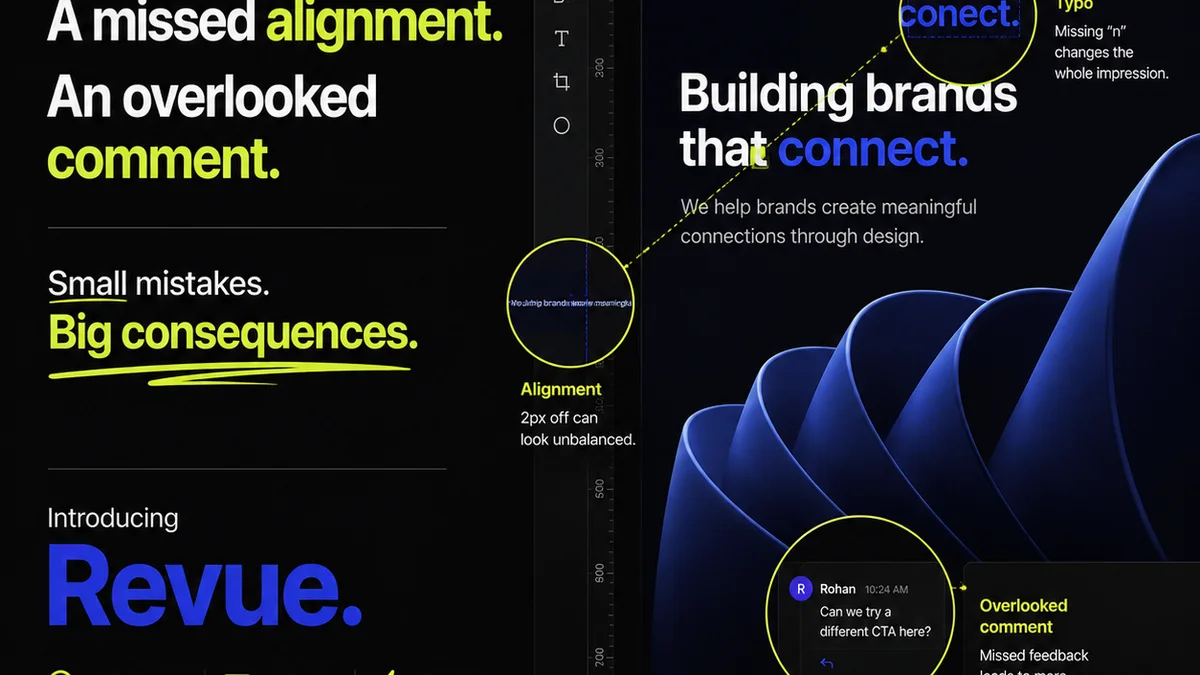
This could mean overlooked typos, inconsistent branding, accessibility issues, or simply work that doesn't meet the strategic objectives of the brief.
The cost of fixing these quality issues later—whether it's a client demanding rework or the brand suffering reputational damage—far outweighs the initial time saved.
Low-quality output can:
- Damage brand perception and trust.
- Lead to costly redesigns or fixes down the line.
- Impact user experience and conversion rates.
- Result in non-compliance with standards (e.g., WCAG for accessibility).
Maintaining quality isn't a luxury; it's a fundamental requirement for sustainable business success.
5. Where Revue Fits In
Addressing these hidden costs requires a fundamental shift in how creative teams manage feedback and approvals. This is where a centralized platform becomes critical.
Revue isn't just another tool; it's a workflow unifier. It brings clarity to the chaos by providing a single source of truth for all client feedback and project revisions.
Centralized Feedback
Imagine all comments, annotations, and approvals living in one place, directly on the creative asset. No more digging through emails or Slack. Designers can see feedback contextually, reducing misinterpretation and speeding up revisions.
Revision and Approval Visibility
Revue offers a clear audit trail. You can see who provided feedback, when, and what decisions were made. This transparency streamlines the approval process, reduces back-and-forth, and minimizes disputes over scope and changes.
Quality Checks Made Easy
With all feedback and revisions tracked, performing final quality checks becomes significantly more efficient. You can easily verify that all required changes have been implemented and approved, ensuring a higher standard of output before delivery.
By streamlining these core aspects of the design process, Revue helps US businesses significantly reduce their hidden operational costs, improve project profitability, and deliver better creative work, faster.
Final Thought
Are you measuring the true cost of your design process, or just the sticker price?
The real expense isn't the hours you bill, but the hours you waste. By focusing on workflow efficiency, clear communication, and robust approval processes, you can unlock significant savings and elevate your creative output. It’s time to look beyond the invoice and see the operational reality.
Frequently asked questions
What is the biggest hidden cost in a design process?
The biggest hidden cost is often the time and resources wasted due to vague or contradictory client feedback, leading to multiple, inefficient revision cycles. This ambiguity drives up design hours, delays projects, and increases overall project cost beyond initial estimates.
How does fragmented communication increase design process costs?
Fragmented communication, where feedback is scattered across emails, chats, and meetings, forces designers to spend valuable time searching for and reconciling comments. This operational friction increases overhead, delays decision-making, and increases the risk of errors or missed feedback, thereby inflating the true cost of design.
Can inefficient approval workflows impact profitability?
Absolutely. Inefficient approval workflows create bottlenecks, delaying project completion and asset delivery. This means designers are spending time waiting for approvals instead of working on billable tasks, directly impacting the agency's capacity and profitability. It also increases the risk of clients pushing back on timelines or costs due to delays.
How can a centralized platform like Revue help reduce design costs?
Revue helps reduce design costs by centralizing all client feedback and revision history in one place, directly on the creative asset. This eliminates time spent searching for comments, reduces misinterpretations, streamlines the approval process, and provides clear visibility, leading to fewer errors, faster turnarounds, and more efficient use of creative resources.