Everyone talks about design thinking. They say it’s about empathy, iteration, and problem-solving. None of that is wrong. But it’s incomplete.
The hard truth? A well-defined design process isn't just a creative exercise. It’s a direct driver of business growth. It’s how you scale, retain clients, and build a reputation that commands premium pricing.
1. The Illusion of 'Creative Freedom'
Chasing Shiny Objects vs. Strategic Output
Many agencies operate under the banner of 'creative freedom.' This often translates to a reactive, project-by-project approach. The team jumps from one urgent request to the next, with little strategic alignment across projects or over time.
This isn’t freedom. It’s chaos disguised as creativity. It leads to burnout, inconsistent client experiences, and a portfolio that looks more like a random collection of work than a cohesive brand story.
Real creative freedom comes from having a robust process that handles the operational heavy lifting. This frees up mental space for genuine innovation, not just busywork.
The Cost of Inconsistency
When your design process is ad hoc, the output suffers. Clients receive work that’s a different flavor every time. They don’t see a reliable partner; they see a vendor.
- Missed deadlines due to unclear scope.
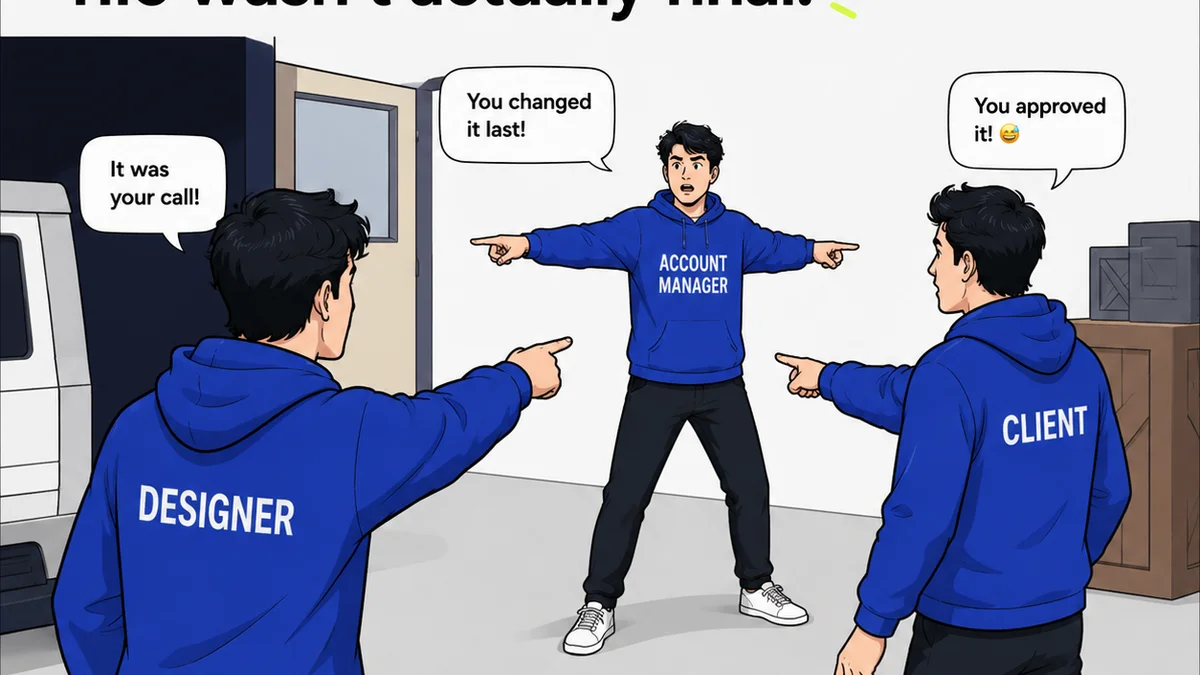
- Endless revision cycles because initial briefs were vague.
- Client dissatisfaction stemming from a lack of clear communication.
- Team frustration from constantly reinventing the wheel.
This inconsistency directly impacts your bottom line. It erodes trust, limits your ability to upsell, and makes it harder to attract high-value clients who expect predictability and professionalism.
2. From Reactive to Proactive: Building Predictability
The Power of a Standardized Workflow
A mature design process introduces predictability. It’s a roadmap that guides every project from initiation to completion. This isn't about stifling creativity; it's about creating guardrails so creativity can flourish effectively.
Think of it like a well-oiled manufacturing line, but for creative output. Each stage is defined, with clear inputs, outputs, and quality checks.
Key Stages of a Growth-Oriented Process
While every agency is unique, a robust process typically includes:
- Discovery & Strategy: Deeply understanding the client’s business goals, target audience, and competitive landscape. This isn’t just asking “What do you want?” but “Why do you want it?” and “What does success look like?”
- Concept Development: Exploring multiple creative directions based on the strategic brief. This is where divergent thinking happens.
- Design & Iteration: Developing the chosen concept, incorporating feedback systematically. This is convergent thinking, refining the best ideas.
- Feedback & Revisions: Establishing clear channels and protocols for client input. This stage is critical for managing scope and expectations.
- Quality Assurance & Handoff: Final checks for brand consistency, technical accuracy, and adherence to project goals before delivery.
- Post-Project Analysis: Reviewing what worked, what didn’t, and how to improve for future projects.
Each of these stages needs defined deliverables and client touchpoints. This prevents scope creep and ensures everyone is aligned.
3. The ROI of a Structured Design Workflow
Client Retention and Lifetime Value
Clients stick with agencies that are reliable and deliver consistent results. A structured process builds that reliability.
When clients know what to expect—clear communication, predictable timelines, and high-quality deliverables—they trust you more. This trust leads to repeat business and longer-term partnerships. Higher client lifetime value is a direct outcome of a process that consistently delivers.
Efficiency and Profitability
A well-defined process eliminates wasted time and resources. Less time spent on internal confusion or chasing down ambiguous feedback means more time spent on billable, high-value work.
This improved efficiency directly boosts your profit margins. You can take on more projects with the same team, or deliver more value within the same project budget.
Scalability and Team Growth
How do you scale an agency? Not by hiring more people to do the same chaotic work. You scale by systemizing your operations.
A clear process makes onboarding new team members faster and easier. It ensures that regardless of who is working on a project, the standards and methodologies remain consistent. This allows you to grow your team without a proportional drop in quality or efficiency.
4. Where Revue Fits In
Managing client feedback, revisions, and approvals can be a major bottleneck. It’s often where processes break down, leading to frustration and delays.
Revue is built to address these specific pain points. It provides a centralized platform for all creative assets and client communication.
Streamlining Feedback and Revisions
Instead of sifting through endless email threads or Slack messages, all feedback lives in one place, tied directly to the creative asset. Stakeholders can leave comments directly on the design, in context.
This clarity drastically reduces misinterpretations and the need for lengthy clarification calls. It makes the revision process efficient and transparent.
Visibility and Approval Tracking
Knowing who has reviewed what and what the current approval status is crucial for project momentum. Revue offers clear visibility into the entire review and approval lifecycle.
This prevents work from stalling because someone missed an email or a comment was buried. It provides a single source of truth for project status, crucial for both internal team management and client confidence.
Ensuring Quality Control
Before a final deliverable goes out the door, a quality check is essential. Revue helps ensure that all feedback has been addressed and that the final output meets project requirements and brand standards.
By centralizing assets and communication, you create an auditable trail, making it easier to track revisions and confirm that final sign-off means exactly that. This rigor protects your agency’s reputation and client satisfaction.
5. The Long Game: Building a Resilient Business
Beyond the Project Cycle
A strong design process isn’t just about completing the current project successfully. It’s about building a foundation for long-term success.
It’s about creating an agency that clients can rely on, year after year. It’s about building a team that feels empowered and efficient, not overwhelmed.
Culture and Continuous Improvement
A well-defined process also fosters a culture of continuous improvement. When you have systems in place, it’s easier to identify bottlenecks and areas for optimization.
Regularly reviewing your process—what’s working, what’s not—becomes part of the operational rhythm. This iterative approach to your own internal workflow mirrors the design thinking you apply to client projects.
Final Thought
Are you treating your design process as a creative luxury or a strategic imperative? The difference isn't just semantic. It's the difference between an agency that survives and one that thrives.
Frequently asked questions
What is a design process?
A design process is a structured methodology used by designers and creative teams to solve problems and create solutions. It typically involves stages like understanding the problem, ideation, prototyping, testing, and implementation, ensuring a systematic approach to creative work.
How does a design process help business growth?
A well-defined design process drives business growth by increasing efficiency, improving client retention through consistent quality, enabling scalability, and boosting profitability by reducing wasted time and resources. It turns creative output into predictable business value.
Is a rigid design process bad for creativity?
No, a rigid process doesn't have to stifle creativity. Instead, it provides a framework and guardrails that manage operational aspects, freeing up mental energy for genuine innovation. It ensures that creative efforts are focused, efficient, and aligned with business goals.
How can agencies streamline client feedback with a design process?
Agencies can streamline feedback by integrating clear communication protocols and centralized platforms into their design process. This ensures feedback is contextual, actionable, and tracked, reducing misinterpretations and revision cycles.