Everyone’s talking about AI, VR, and the metaverse shaping design processes by 2026. None of that is wrong. But it’s incomplete.
The real operational shift won’t come from a new piece of software or a futuristic interface. It’s about getting back to basics: ruthless clarity, seamless collaboration, and ironclad control over your creative workflow.
1. The Myth of the 'Agile' Creative Process
Agile methodologies, borrowed from software development, are often lauded as the holy grail for creative agencies. The idea is rapid iteration, flexible planning, and quick responses to client feedback.
But let’s be honest. How often does a creative project truly fit into neat two-week sprints? Client needs shift. Stakeholders change their minds. Unforeseen scope creep becomes the norm.
The hard truth is that true agility in design isn’t about rigid sprints. It’s about building a process that can absorb inevitable changes without dissolving into chaos.
The Symptoms of 'Fake Agile'
- Endless rounds of revisions that feel like they’re going nowhere.
- Team members working in silos, unaware of each other’s progress.
- Key decisions getting lost in email chains or Slack threads.
- A constant state of panic as deadlines loom, fueled by last-minute feedback.
- Difficulty tracking project history and understanding why certain decisions were made.
This isn't agility. It's just messy project management masquerading as innovation.
2. Feedback Friction: The Silent Killer of Creative Output
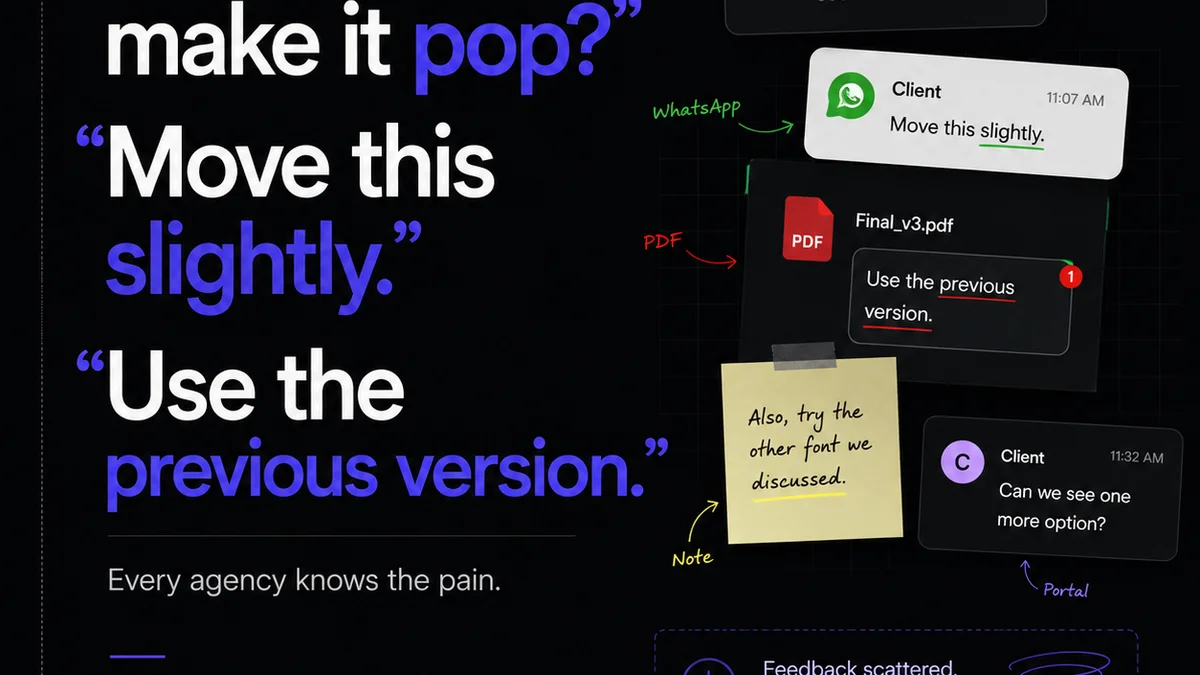
Client feedback is the lifeblood of any agency. It’s how we ensure the work resonates. But it’s also a notorious bottleneck. Vague comments, conflicting opinions, and delayed responses can derail even the most brilliant concepts.
By 2026, the agencies that thrive will be those that have engineered friction *out* of the feedback loop.
This means moving beyond simple email attachments or generic comment sections. It requires structured, contextual, and actionable feedback.
Strategies for Streamlined Feedback
- Centralized Commenting: Tools that allow stakeholders to comment directly on specific design elements, versions, or stages. Think annotations on mockups, video timestamps, or PDF markups.
- Clear Feedback Channels: Establishing defined pathways for feedback. Is it a formal review meeting? A dedicated platform? A specific point person?
- Version Control Visibility: Making it crystal clear which version of the creative is being reviewed. No more 'Is this the final-final one?' confusion.
- Actionable Input: Training clients (gently) on how to provide constructive, specific feedback. Moving from
Frequently asked questions
What are the most important design process trends for 2026?
The most impactful design process trends for 2026 focus on enhancing clarity, streamlining collaboration, and improving feedback loops, rather than just adopting new technologies. This includes structured feedback mechanisms, clear version control, and efficient revision management.
How can agencies improve client feedback processes?
Agencies can improve client feedback by centralizing comments on specific design elements, establishing clear feedback channels, ensuring version control visibility, and guiding clients to provide actionable input. Tools that facilitate contextual feedback are key.
Is AI a major trend for design processes in 2026?
While AI will play a role in augmenting design tasks, the primary operational trends for 2026 are focused on the foundational elements of workflow: collaboration, communication, and process control. AI will likely enhance these, not replace them.
How does version control impact design workflows?
Clear version control is crucial for preventing confusion and ensuring everyone is working on the latest iteration. It streamlines the review process by making it obvious which version is being discussed and approved, reducing errors and wasted effort.