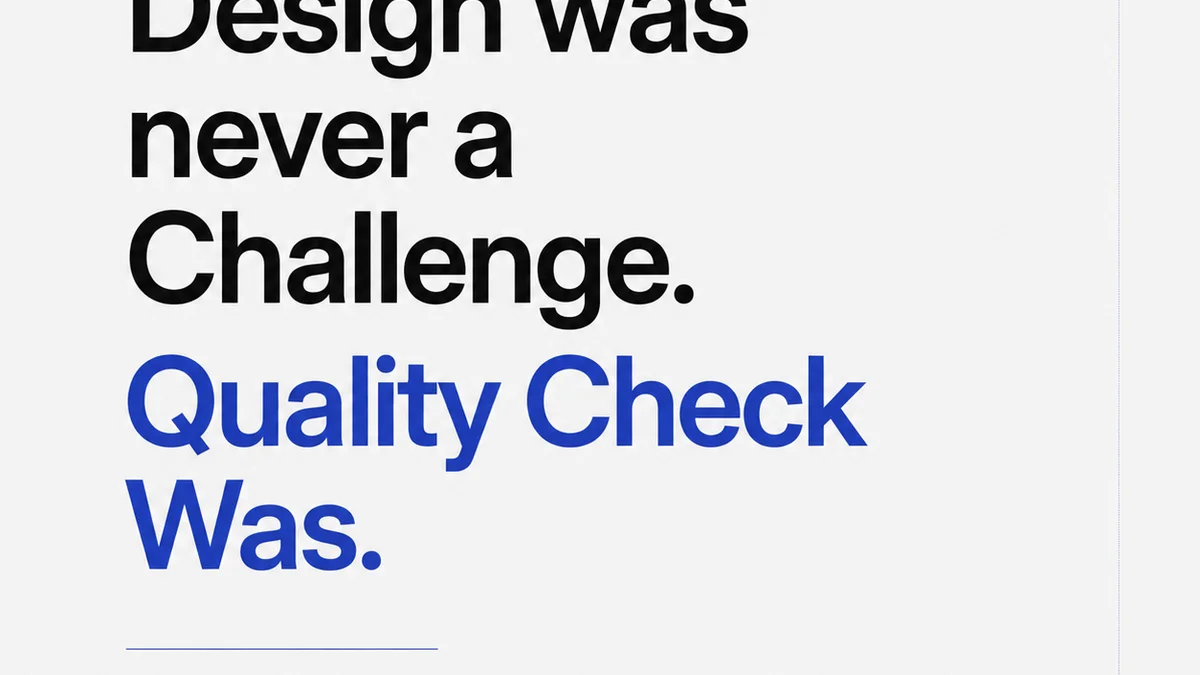
Everyone agrees that design Quality Assurance (QA) is important. You check for visual bugs, broken links, and inconsistent spacing. You make sure the design matches the brief. None of that is wrong. But it’s incomplete.
For enterprise teams, design QA is not a final gate; it’s an integrated, ongoing operational discipline that impacts everything from brand consistency to development efficiency and client satisfaction. The hard truth is that most enterprise design QA efforts are reactive, siloed, and ultimately, inefficient. They become a bottleneck, not a safeguard.
1. Design QA is Not Just a Checklist, It’s a Process Audit
A checklist is a tool. A process is how you use the tools. Most teams think of design QA as a list of things to tick off before launch. This is fundamentally flawed.
True design QA starts much earlier. It’s about embedding quality checks at every stage of the design lifecycle, not just at the end.
The Symptoms of a Checklist-Only Approach
- Endless revision cycles late in the project.
- Inconsistent feedback from different reviewers.
- Developers building based on outdated or misunderstood specs.
- Missed visual or functional bugs that reach production.
- Frustrated clients and internal teams.
These aren't just design problems; they are process failures.
2. Define
Frequently asked questions
What's the difference between design QA and UAT?
Design QA focuses on the visual and functional fidelity of the design against specifications, brand guidelines, and usability heuristics. User Acceptance Testing (UAT) is performed by end-users or client representatives to confirm the product meets business requirements and user needs in a real-world context.
How can I automate design QA?
Automation can help with repetitive checks like pixel-perfect comparisons, accessibility scans (e.g., color contrast), and broken link detection. Tools can flag deviations, but human review is still crucial for subjective elements and overall user experience.
What are the key components of a design QA checklist?
A comprehensive checklist includes: visual consistency (typography, color, spacing), functional accuracy (interactions, states), responsiveness across devices, accessibility compliance (WCAG standards), content accuracy, and adherence to brand guidelines.
How often should design QA be performed?
Design QA should not be a single event. It should be integrated throughout the design and development process. Regular checks after major design handoffs, before development sprints, and before final deployment are essential.