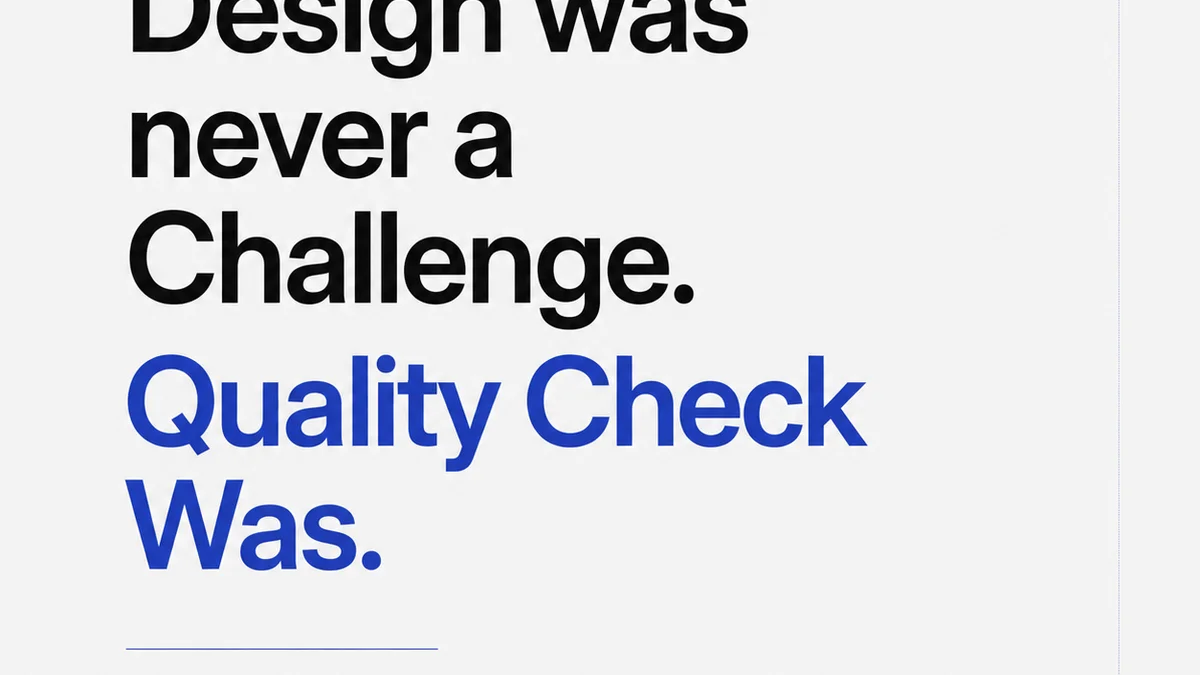
Everyone agrees that design quality matters. You’ve probably heard that design QA is crucial for catching errors before launch. That’s not wrong. But it’s incomplete.
The hard truth is that treating design Quality Assurance as a separate, final step is a costly mistake. It breeds a reactive culture, hides systemic issues, and slows down your entire marketing engine. True design QA isn't a gate; it's a continuous process woven into every stage of your creative workflow.
This is how marketing teams can move beyond superficial checks and implement robust design QA.
1. Define 'Done' (and 'Good Enough')
Before any design work begins, your team needs a crystal-clear understanding of what constitutes a successful outcome. This goes beyond just
Frequently asked questions
What is design QA in a marketing context?
Design QA in marketing involves a systematic process of reviewing creative assets (like ads, landing pages, social graphics) to ensure they meet brand standards, technical specifications, strategic objectives, and are free of errors before launch.
Why is continuous design QA better than a final check?
A final check often leads to rushed fixes, missed errors, and frustration. Continuous QA integrates quality checks throughout the process, catching issues early when they are cheaper and easier to fix, leading to a more polished final product and a smoother workflow.
How can marketing teams standardize design QA?
Standardization comes from documented checklists, clear brand guidelines, defined roles and responsibilities for QA, and using a centralized platform for feedback and approvals to ensure consistency across all reviews.
What are the key elements of a design QA checklist?
A comprehensive checklist should cover brand consistency (logos, colors, fonts), technical requirements (file formats, dimensions, resolution), accessibility (WCAG compliance), content accuracy (spelling, grammar, CTAs), and strategic alignment (message clarity, target audience fit).