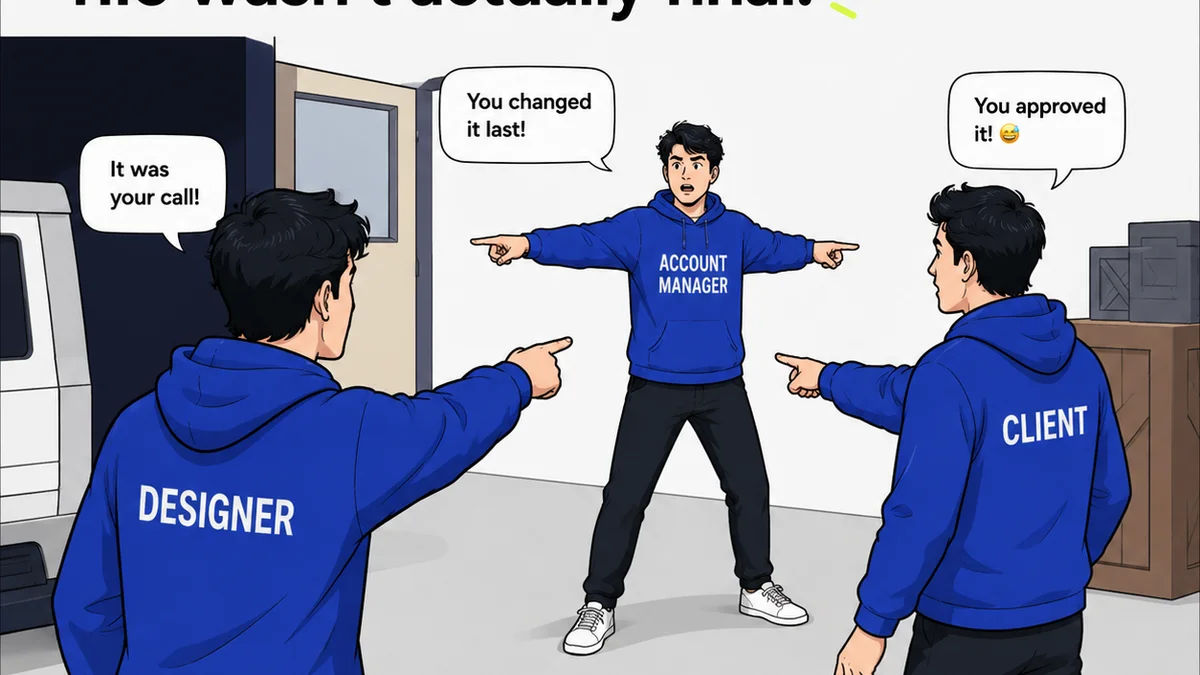
Everyone thinks design Quality Assurance (QA) is the last step. The final gate before launch. Where someone ticks boxes and catches typos.
None of that is wrong. But it’s incomplete. Especially for enterprise teams.
The hard truth? Design QA for enterprise teams isn't a single event; it's a continuous, integrated process woven into the fabric of your entire creative workflow. It’s about preventing problems, not just finding them.
1. The Myth of the 'Final Review'
The traditional view of design QA paints a picture of a handoff. Design is done, then it's thrown over the wall to QA. QA finds issues. Design fixes them. Maybe. This is a recipe for chaos in an enterprise setting.
Enterprise teams produce volume and complexity that dwarfs smaller operations. Think global campaigns, multiple product lines, diverse user bases, and strict brand guidelines. A single, late-stage QA pass is a bottleneck waiting to happen.
The Real Bottleneck
A late-stage QA process creates:
- Extended timelines
- Increased costs due to late-stage rework
- Frustration for design and development teams
- Risk of inconsistent brand application
- Missed opportunities for genuine improvement
This isn't just about aesthetics. It's about operational efficiency and brand integrity at scale.
2. Shifting Left: Integrating QA Early and Often
The modern approach is
Frequently asked questions
What is the difference between design QA and traditional software QA?
Traditional software QA focuses on functional bugs, performance, and security. Design QA specifically targets the visual, interactive, and experiential aspects of a product or campaign, ensuring it aligns with brand guidelines, usability standards, and aesthetic goals.
How can enterprise teams manage design QA across multiple projects and global teams?
Centralized platforms for feedback and asset management are crucial. Establishing clear, documented brand guidelines and QA checklists, and training all teams on these standards, helps maintain consistency. Regular cross-team syncs and automated checks where possible also improve oversight.
What are the key benefits of integrating design QA earlier in the process?
Integrating QA early ('shifting left') reduces costly rework later, shortens project timelines, improves collaboration between design and development, catches potential brand inconsistencies sooner, and leads to a higher-quality final output that better meets user and business objectives.
How do I ensure brand consistency with design QA for enterprise clients?
Develop a comprehensive brand style guide and a specific design QA checklist that covers brand elements (logos, colors, typography), tone of voice, and adherence to established templates. Regular audits and feedback loops with brand stakeholders are essential.