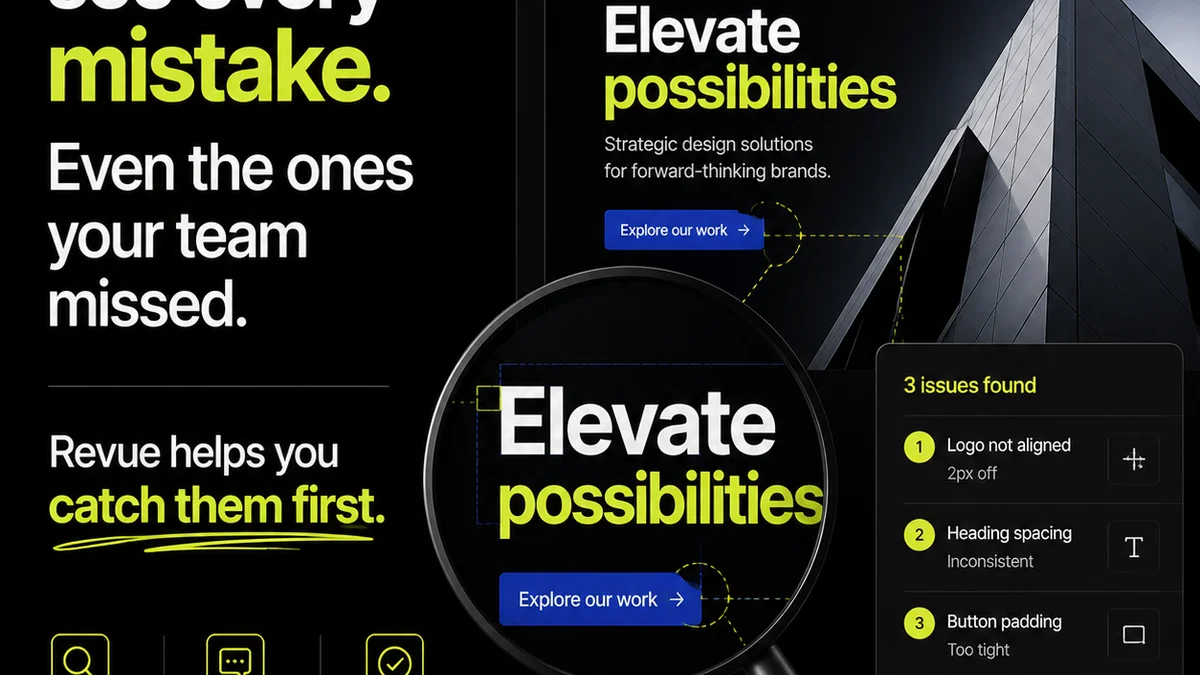
Everyone agrees that design Quality Assurance (QA) is crucial for enterprise teams. More eyes on the work mean fewer mistakes, right? That’s the party line. None of that is wrong. But it’s incomplete.
The hard truth? Most design QA processes are reactive, inefficient, and frankly, a waste of time. They create bottlenecks, foster frustration, and often miss critical issues anyway. True enterprise design QA isn't about throwing more people at the problem; it's about systemic rigor.
1. Shifting from
Frequently asked questions
What is the primary goal of design QA for enterprise teams?
The primary goal is to ensure that creative assets and digital products meet established quality standards, brand guidelines, technical specifications, and user experience requirements before launch, minimizing errors and maximizing impact for large-scale operations.
How does design QA differ for enterprise teams compared to smaller agencies?
Enterprise design QA involves more complex workflows, multiple stakeholders, stricter brand governance, larger scale projects, and often integration with broader product development lifecycles. The process needs to be highly scalable and auditable.
What are the common pitfalls of enterprise design QA?
Common pitfalls include reactive testing, lack of clear ownership, insufficient documentation, inconsistent processes across teams, reliance on manual checks, and a failure to integrate QA early in the design lifecycle.
Can design QA be automated?
While full automation is challenging for subjective design elements, many aspects can be automated. This includes checking for brand guideline adherence (color, typography), responsive behavior, accessibility standards (WCAG), and broken links. Tools can significantly augment manual QA efforts.