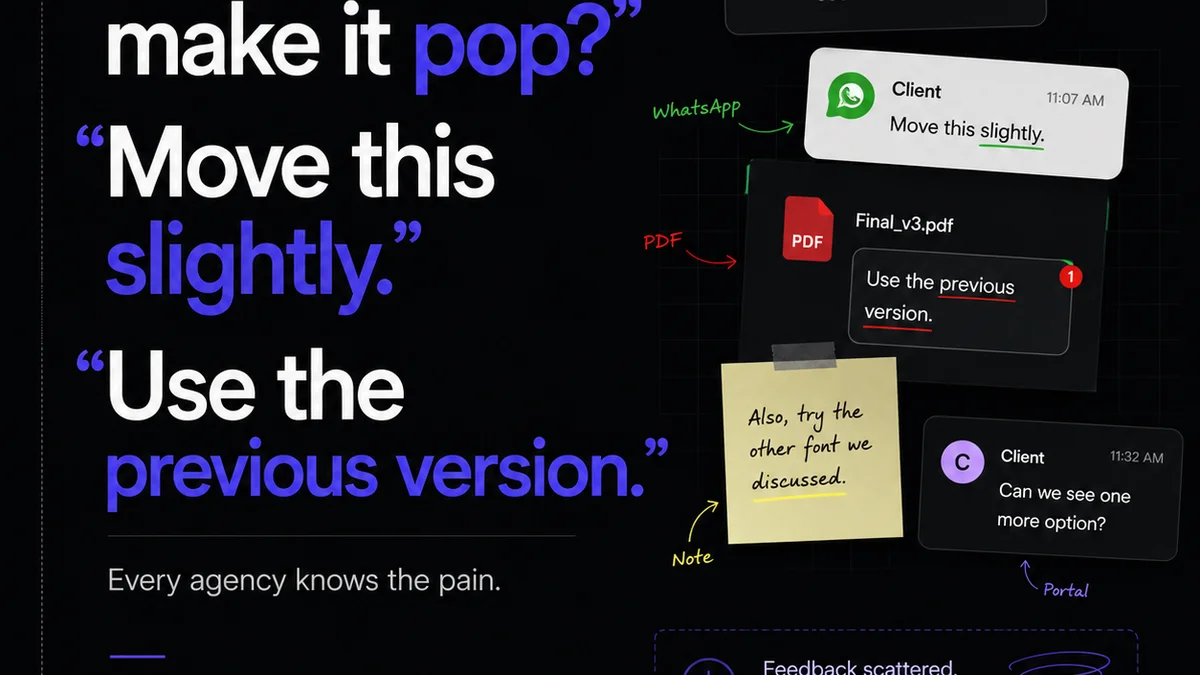
You think design QA software is all about catching typos and misplaced pixels. None of that is wrong. But it’s incomplete.
The real job of design QA software for marketing teams isn't about achieving some mythical pixel-perfect state. It’s about streamlining communication, ensuring brand consistency, and getting client feedback into the hands of the right people, fast.
1. Beyond the Checklist: The Problem with Basic QA
Most teams approach design QA with a checklist. Is the logo present? Is the copy correct? Are the colors on-brand?
This is a good start. But it’s a reactive approach. It treats QA as the final gate before launch, rather than an integrated part of the creative process.
This leads to:
- Endless revision cycles that eat into project timelines.
- Misunderstandings between creative, client, and development.
- A bottleneck when approvals are needed.
- Missed opportunities for strategic feedback.
The assumption is that a good QA tool will just make this process easier. The hard truth? The tool itself won’t fix a broken process. You need software that supports a better workflow, not just automates a bad one.
2. What Marketing Teams *Really* Need from Design QA Software
Marketing teams face unique pressures. Deadlines are tight, brand guidelines can be complex, and feedback often comes from multiple stakeholders with varying levels of design literacy.
Your design QA software needs to address these realities. It’s not just about checking boxes; it’s about facilitating clarity and collaboration.
Centralized Feedback is Non-Negotiable
Scattered feedback via email, Slack, or even sticky notes is a recipe for disaster. You need a single source of truth for all design comments and revisions.
This means the software must allow stakeholders to:
- Annotate directly on the design mockups, wireframes, or prototypes.
- Leave clear, actionable comments tied to specific elements.
- See the full history of feedback and revisions in one place.
This isn't just about convenience; it's about reducing the risk of misinterpretation and ensuring that crucial feedback isn't lost in the shuffle. Think about the time saved when everyone is looking at the same version and the same comments.
Clear Revision and Approval Tracking
Who approved what? When? What changes were made based on that approval? If you can’t answer these questions instantly, you have a problem.
Good design QA software provides:
- Version control that clearly shows the progression of a design.
- Status tracking for each revision (e.g., Pending, Approved, Needs Revision).
- Audit trails of who reviewed, commented, and approved designs, and when.
This transparency is critical for accountability and for managing client expectations. It prevents the dreaded
Frequently asked questions
What are the key features of design QA software for marketing?
Key features include centralized commenting, direct annotation on designs, version control, clear approval workflows, and audit trails for feedback and revisions. It should also integrate with existing tools and support various file types.
How does design QA software help with client feedback?
It consolidates all client feedback in one place, directly on the design. This eliminates scattered emails and messages, clarifies comments, and provides a clear history of revisions, making the feedback process more efficient and less prone to errors.
Can design QA software improve team collaboration?
Absolutely. By providing a single platform for feedback, revisions, and approvals, it ensures all team members and stakeholders are on the same page. This reduces miscommunication and speeds up the review process.
What's the difference between basic QA and effective design QA software?
Basic QA often relies on checklists and manual review, usually at the end of the process. Effective design QA software integrates into the workflow, allowing for real-time feedback, clear version tracking, and streamlined approvals throughout the design lifecycle.