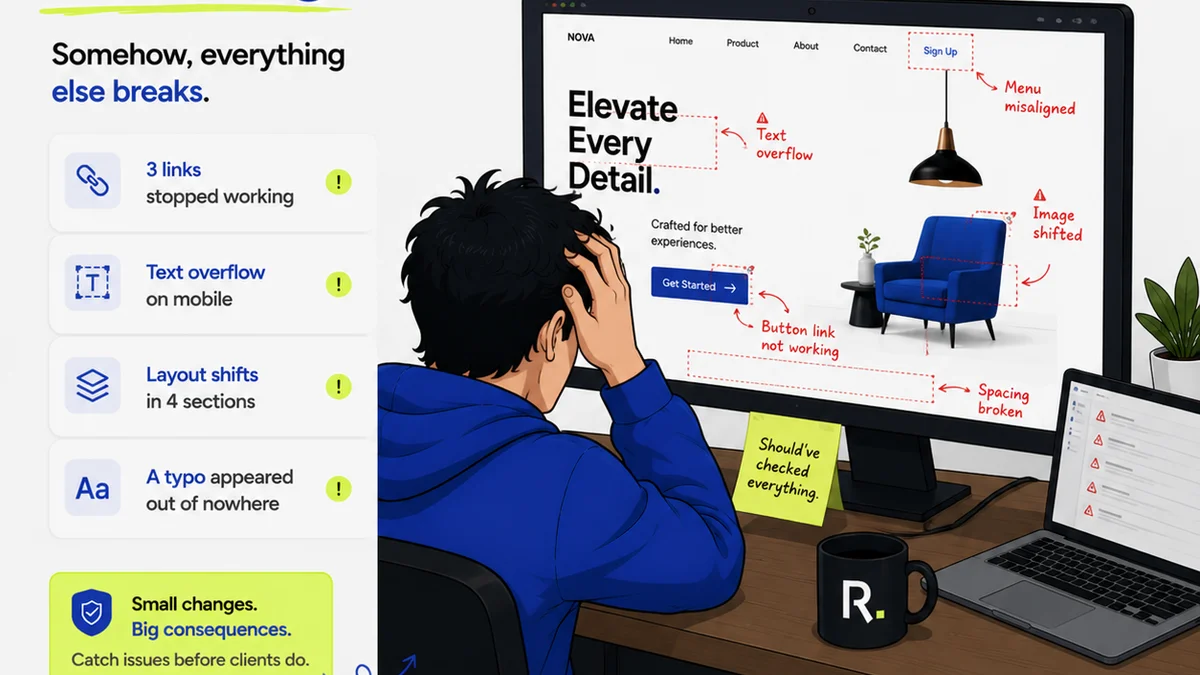
Everyone talks about design quality assurance. They talk about checking for typos, ensuring brand consistency, and verifying that the final files match the approved mockups. None of that is wrong. But it’s incomplete.
The hard truth is that a robust design QA process isn’t just a final checkpoint. It’s an operational discipline woven into the fabric of your entire creative workflow. It’s about preventing errors, not just catching them.
1. The Illusion of the Final Review
Many teams treat QA as a last-minute scramble. The design is done, the client has signed off (or so they think), and then someone does a quick sweep for obvious mistakes. This is a reactive approach. It’s expensive and inefficient.
This model assumes that quality can be easily inspected at the end. But by then, issues are deeply embedded.
Why the Final Review Fails
- Late Discovery: Errors found late require rework, often with tight deadlines.
- Client Frustration: Presenting a
Frequently asked questions
What is the difference between design QA and proofreading?
Proofreading is a component of design QA, focusing specifically on text. Design QA is a broader discipline that encompasses visual accuracy, brand compliance, technical correctness, and adherence to project requirements, in addition to text accuracy.
How can I automate design quality assurance?
Automation in design QA often involves using tools for style guide checks, accessibility audits, and file format verification. For client feedback and revision tracking, specialized software like Revue can automate the process of centralizing communication and maintaining an audit trail.
When should design QA ideally happen in a project?
Ideally, design QA is an ongoing process, not just a final step. It should start early with requirement checks, continue through design iterations with internal reviews, and culminate in a thorough final review before client handover or deployment. Proactive checks at each stage are more effective than a single end-of-project review.
What are the key benefits of a strong design QA process?
A strong design QA process leads to fewer errors, reduced rework, increased client satisfaction, improved team efficiency, and a more consistent, high-quality final product. It protects your agency's reputation and profitability.