Everyone thinks they know what a design review is. It’s the client looking at a PDF. It’s the creative director giving feedback. It’s the final sign-off before launch.
None of that is wrong. But it’s incomplete. Dangerously incomplete.
The hard truth? For modern creative teams, a design review isn’t just a step in the process. It’s the core operational mechanic that determines the quality, speed, and profitability of your agency.
1. The Myth of the “Quick Look”
The assumption: A quick glance is enough to catch issues. That feedback can be delivered casually, via email or a Slack message.
This is how small problems fester. It’s how projects spiral into endless revisions.
Here’s the reality:
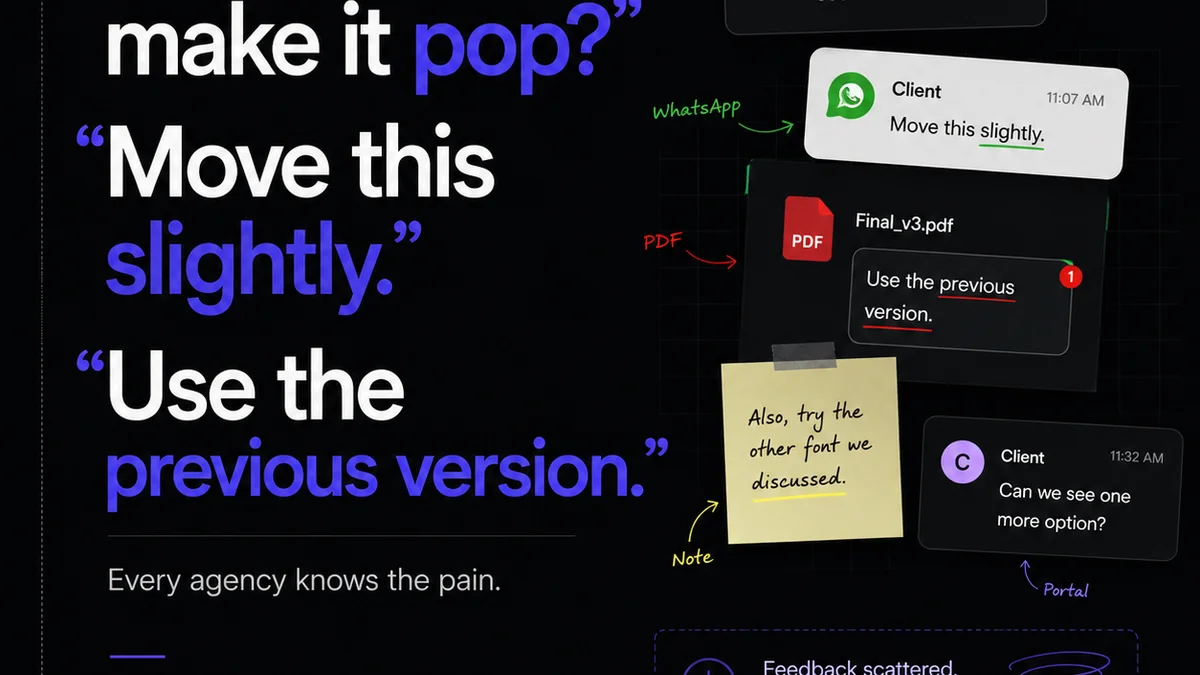
- Context Collapse: Feedback sent without clear context about the specific version, the intended goal, or previous discussions is useless.
- Version Chaos: When clients or internal teams send feedback on the wrong file version, it creates confusion and wasted effort.
- The “Just One More Thing” Trap: Casual feedback often leads to scope creep, as minor requests pile up without formal acknowledgment or impact assessment.
- Lack of Accountability: Unstructured feedback makes it impossible to track who said what, when, and why.
Effective design review demands structure, not spontaneity.
2. The Cost of Ambiguity
Ambiguity in design review kills efficiency. It’s the silent killer of project margins.
Consider the typical email chain:
- Client: “I don’t love the blue.”
- Designer: “Which blue? And what’s wrong with it?”
- Client: “The main one. It’s just… off.”
Now the designer has to guess. They might try a slightly different shade. Or a completely different color palette. Hours are spent iterating on a subjective feeling, not a clear objective.
This isn't just annoying; it's expensive. Every hour spent deciphering vague feedback is an hour not spent on billable creative work or strategic thinking.
Clear, actionable feedback requires a framework. It needs to reference specific elements and desired outcomes.
3. The Revision Rabbit Hole
The assumption: Revisions are a natural, unavoidable part of the design process. Clients expect to ask for changes.
They do. But the *way* revisions are handled makes all the difference. A poorly managed revision process is a black hole.
Think about it:
- Endless Iterations: Without clear approval gates, feedback loops can become infinite, with clients constantly tweaking minor elements.
- Developer Delays: Designers might make changes, but if the client’s final approval isn’t locked in, developers might build something that needs to be re-done.
- Team Burnout: Constant back-and-forth erodes team morale and leads to burnout. Creative energy is finite.
You need a system that defines when feedback is final and when a version is officially approved. This isn’t about saying “no” to clients; it’s about managing expectations and workflow effectively.
4. The Hidden Impact on Quality
Design review is often seen as a gate for client satisfaction. It’s also a critical quality control checkpoint for your agency.
Are your reviews catching:
- Brand Misalignment: Does the design still adhere to the brand guidelines?
- Technical Issues: Are there accessibility concerns? Are assets correctly sized and formatted?
- Usability Problems: Is the user experience intuitive and effective?
- Consistency Errors: Do all elements across the design system look and behave as intended?
A superficial review misses these. A robust process, involving both internal checks and structured client feedback, ensures the final output is not just aesthetically pleasing but also functional, compliant, and on-brand.
5. The Realities of Remote and Hybrid Work
The pandemic accelerated a shift. Many agencies now operate with distributed teams and clients.
This makes structured design review more critical than ever.
Informal “water cooler” chats about designs are gone. Relying on scattered email threads and ad-hoc video calls isn’t sustainable.
You need tools and processes that:
- Centralize all feedback in one place.
- Provide clear visibility into the revision history.
- Allow for precise annotation on specific design elements.
- Facilitate clear communication across time zones and locations.
The technology you use for design review directly impacts your team’s ability to collaborate effectively, regardless of physical location.
Where Revue Fits In
This is where a dedicated platform for creative feedback and approvals becomes essential. Moving beyond generic tools like email or shared folders isn’t a luxury; it’s a necessity for efficient operations.
Revue is built for this. It provides a centralized hub for all your creative assets and client feedback. Instead of sifting through endless email chains or Slack messages, every comment, revision, and approval is logged against the specific design version.
- Centralized Feedback: All stakeholders provide comments directly on the design. No more scattered notes.
- Version Control: Easily track every iteration. Clients and teams always see the latest, approved version.
- Clear Revision Tracking: Understand exactly what changed, who requested it, and when.
- Streamlined Approvals: Formal sign-off stages ensure projects move forward with confidence.
- Quality Assurance: Internal checklists and structured feedback loops help catch issues before they reach the client or go live.
It transforms design review from a chaotic bottleneck into a predictable, manageable workflow.
Final Thought
Is your design review process a source of friction and inefficiency, or is it the engine driving your agency’s creative excellence and profitability? The answer lies not in the tools you use, but in the rigor of the process you establish.
Frequently asked questions
What's the biggest mistake agencies make with design review?
Treating it as an informal, unstructured step rather than a critical operational process. This leads to ambiguity, endless revisions, and scope creep.
How can I ensure client feedback is actionable?
Implement a structured feedback process using a dedicated platform. Require comments to be specific, reference clear elements, and state desired outcomes. Avoid vague statements like 'I don't like it'.
How does design review impact agency profitability?
Inefficient review processes waste billable hours deciphering feedback and managing endless revisions. A streamlined process saves time, reduces errors, and improves project margins.
Is design review just about client approvals?
No, it's also a crucial internal quality control step. A robust process helps catch brand misalignment, technical issues, and usability problems before final delivery.