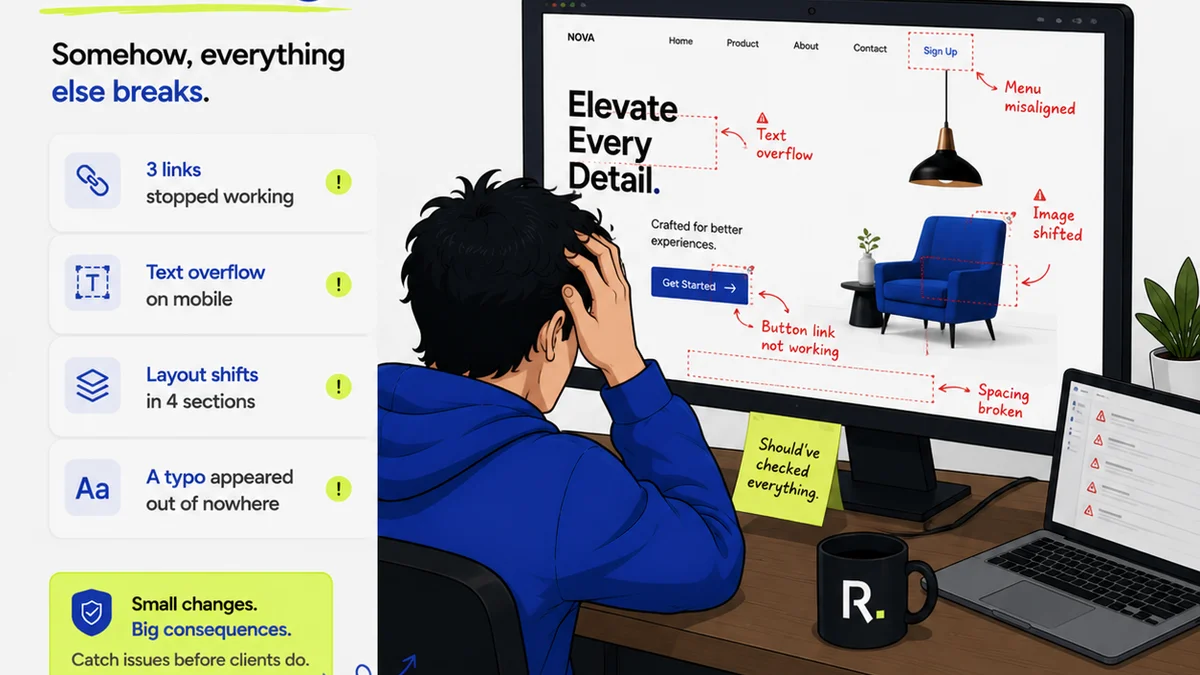
Everyone knows design reviews are important. They’re where creative work gets polished, client opinions are heard, and projects move forward. That’s the common wisdom. None of that is wrong. But it’s incomplete.
The hard truth? Most design reviews are a mess. They’re inefficient, subjective, and often lead to more confusion than clarity. This isn't just frustrating; it's a drain on your agency's resources and your team's morale.
Improving design review best practices isn't about fancier templates or more meetings. It's about fundamentally changing how you gather, process, and act on feedback.
1. The Illusion of 'Good' Feedback
What does 'good feedback' even mean? Most teams operate with a fuzzy definition. They collect comments, track changes, and hope for the best. This approach is doomed from the start.
Feedback often falls into a few unhelpful categories:
- Vague Suggestions: "I don't love this." "Make it pop more."
- Subjective Opinions: "It feels a bit too blue." "My wife doesn't like the font."
- Scope Creep: "While we’re here, can you also…?"
- Conflicting Input: Client A wants X, Client B wants Y, and the designer is caught in the middle.
This isn't about blaming clients or designers. It's about the system (or lack thereof) that allows this to happen.
The Real Problem: Lack of Structure
The core issue is a lack of structure around feedback collection and evaluation. Without a framework, feedback becomes noise.
Design review best practices require a system.
2. Defining Clear Objectives and Criteria
Before any design review begins, you need to know *what* you’re reviewing *for*. Is it a mood board concept? A final UI mock-up? A campaign landing page?
Each stage has different goals and requires different types of feedback.
Set the Stage
At the outset of a project, or even at the start of a review cycle, establish:
- The Goal of the Design: What business problem is this design solving?
- The Target Audience: Who are we trying to reach?
- Key Performance Indicators (KPIs): How will we measure success?
- Brand Guidelines: What are the non-negotiables?
- Technical Constraints: What are the platform limitations?
When clients understand these parameters, their feedback naturally becomes more focused and strategic.
Use a Feedback Matrix
For more complex projects, consider a simple matrix to categorize feedback:
| Category | Description | Action |
|---|---|---|
| Strategic Alignment | Does it meet the project goals and KPIs? | High Priority |
| Brand Consistency | Does it adhere to brand guidelines? | High Priority |
| User Experience (UX) | Is it intuitive and easy to use? | Medium Priority |
| Aesthetic Preference | Subjective taste, within brand and strategic bounds. | Low Priority / Discussion |
| Technical Feasibility | Can it be built within constraints? | High Priority |
This forces a level of evaluation that moves beyond gut feelings.
3. Centralizing Feedback: The Enemy of Silos
Email chains. Slack messages. PDFs with annotations. Client calls transcribed from memory. This is the chaotic reality for many agencies.
Each method creates a silo of information. This leads to:
- Lost feedback.
- Conflicting versions.
- Misinterpretation of comments.
- Endless searching for context.
This is where many teams stumble. They assume a tool isn't necessary, or that their current method is
Frequently asked questions
What are the most common mistakes in design reviews?
Common mistakes include collecting feedback in silos (email, Slack), lacking clear objectives for the review, accepting vague or subjective comments without clarification, and not having a structured process for evaluation and approval.
How can I make client feedback more constructive?
Set clear project goals and review criteria upfront. Educate clients on the difference between subjective preference and strategic necessity. Use a structured feedback format that categorizes comments by priority and alignment with project objectives.
Why is centralizing feedback crucial for design reviews?
Centralizing feedback prevents lost comments, reduces misinterpretation, ensures everyone works from the latest version, and provides a single source of truth for all decisions. This streamlines the revision process and avoids costly errors.
What role does a project manager play in design reviews?
A project manager acts as a facilitator, ensuring feedback is collected centrally, clarified, categorized, and communicated effectively to the design team. They help manage client expectations and keep the review process on track according to project goals.