Everyone talks about design review best practices. They’ll tell you to check for brand consistency, usability, accessibility, and technical feasibility. None of that is wrong. But it’s incomplete.
The real best practice isn’t a checklist; it’s a system. A system built on clear communication, defined roles, and accountability. Without it, your reviews become endless loops of subjective opinions and missed deadlines.
1. The Hard Truth: It’s Not About the Design, It’s About the Process
Your design review process is probably broken because you’re treating it like a gate, not a collaboration.
A gate implies a single point of entry, a final hurdle. A collaboration implies continuous input and shared ownership of the outcome.
Most agencies and in-house teams operate with a gate mentality. Feedback is siloed, subjective, and often arrives too late.
The Symptoms of a Broken Process
- Endless revision cycles that feel like whack-a-mole.
- Subjective feedback (“I don’t like the blue”) derailing objective goals.
- Key stakeholders missing, leading to rework later.
- Lack of clear ownership for decisions made during review.
- Designers feeling defensive instead of receptive.
- Clients feeling confused or unheard.
- Missed deadlines and budget overruns.
These aren't minor annoyances. They are indicators of a fundamental flaw in how you manage creative feedback.
2. Define the Purpose of Each Review
Not all reviews are created equal. A preliminary wireframe review has a different goal than a final client approval.
Before any review meeting or feedback round, ask:
- What are we trying to achieve with this specific review?
- What decisions need to be made?
- Who needs to make those decisions?
- What information do reviewers need to make informed decisions?
For example, a concept review might focus on strategic alignment and core idea validation. A usability review would focus on user flow and interaction clarity. A final sign-off is about confirming all requirements are met.
Match the Review to the Stage
Early-stage reviews should be broad and strategic. Late-stage reviews should be granular and focused on execution details.
Trying to get final sign-off on a rough concept is a recipe for disaster. So is nitpicking pixel placement on a first draft.
3. Clarify Roles and Responsibilities
Who is actually responsible for giving feedback? Who is responsible for making the final decision?
This is often where things fall apart. Too many cooks in the kitchen, or worse, no one at the helm.
Key Roles to Define
- Initiator: The person or team requesting the review (usually the designer or project manager).
- Reviewers: Those providing feedback. This group should be clearly defined.
- Decision Maker(s): The person(s) with the authority to approve or reject the work, or to make final calls on conflicting feedback.
- Facilitator: The person running the review meeting, ensuring it stays on track and productive (often the project manager or creative lead).
Ensure everyone knows their role before the review begins. This prevents scope creep and ensures the right people are involved at the right time.
4. Standardize Feedback Capture
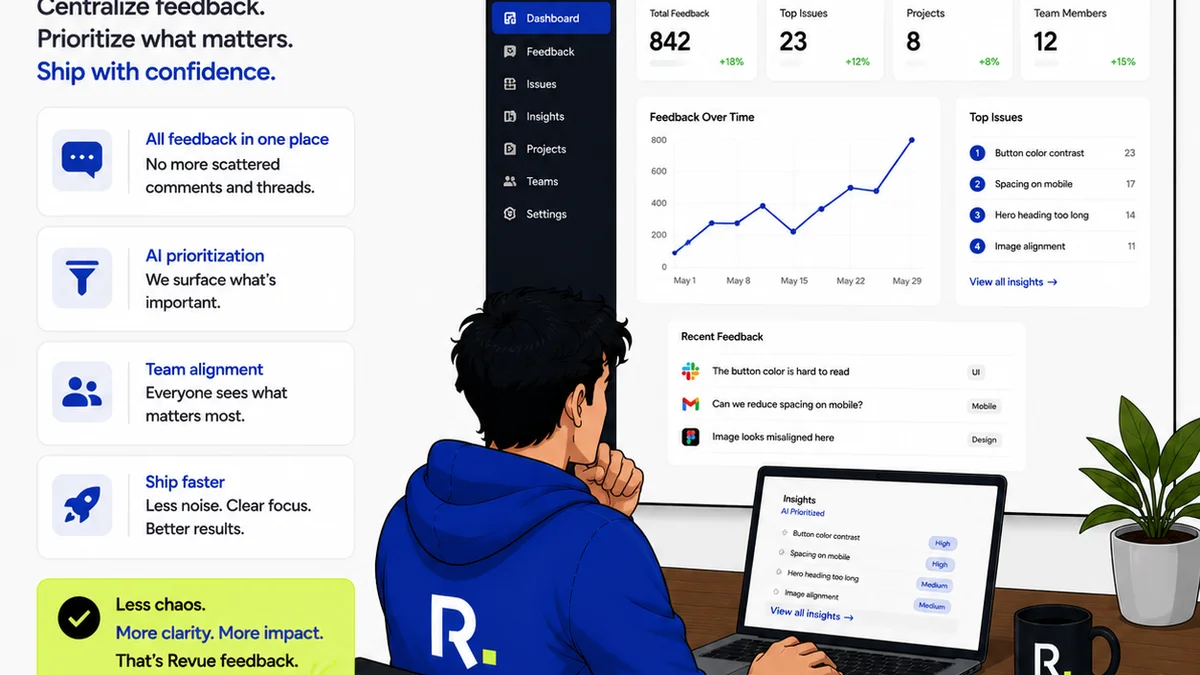
This is where most teams fail. Feedback is scattered across emails, Slack messages, sticky notes, and verbal conversations.
It's impossible to track, prioritize, and act on feedback that isn't centralized.
The Problem with Scattered Feedback
- Critical comments get lost.
- Contradictory feedback is hard to reconcile.
- It’s difficult to see the history of revisions.
- Clients can claim they never said something.
- Designers waste time trying to piece it all together.
You need a single source of truth for all design feedback. This allows for clear documentation, easy reference, and accountability.
5. Make Feedback Actionable and Objective
Subjective feedback is the enemy of efficient design reviews. “Make it pop more” is not helpful.
Feedback should be tied to project goals, user needs, or established criteria.
Transforming Subjective to Objective
- Instead of: “I don’t like this color.”
Try: “This color deviates from the established brand palette, potentially impacting brand recognition. Can we explore options within the approved palette?” - Instead of: “This button is hard to find.”
Try: “Based on user testing, users struggled to locate the primary call-to-action button within 5 seconds. Consider increasing its prominence or improving visual hierarchy.” - Instead of: “Make it more modern.”
Try: “The current visual style doesn’t align with the target audience’s perceived aesthetic. Let’s review the mood board and ensure the design reflects the agreed-upon modern, minimalist direction.”
Encourage reviewers to explain the *why* behind their feedback. This fosters understanding and leads to better solutions.
6. Schedule Reviews Strategically
Ad-hoc reviews kill productivity. Scheduled, focused reviews ensure everyone is prepared and respects time.
Avoid
Frequently asked questions
What is the biggest mistake teams make in design reviews?
The biggest mistake is treating design reviews as a mere formality or checklist exercise, rather than a structured process for collaboration and decision-making. This leads to scattered feedback, subjective opinions, missed deadlines, and endless revision cycles.
How can I make design feedback more objective?
Tie feedback to specific project goals, user needs, or established criteria. Instead of subjective statements like 'I don't like it,' ask 'Why?' and frame feedback around objective impacts, such as brand consistency, usability issues, or alignment with strategic objectives.
Who should be involved in a design review?
Involve clearly defined roles: the initiator (designer/PM), reviewers (those providing feedback), decision-makers (those with final approval authority), and a facilitator (to manage the meeting). Avoid inviting everyone; focus on stakeholders whose input is critical for the specific review stage.
How often should design reviews happen?
Design reviews should happen strategically at key project milestones, not randomly. The frequency depends on the project phase and complexity, but each review should have a clear purpose and defined outcomes, whether it's concept validation, usability testing, or final client approval.