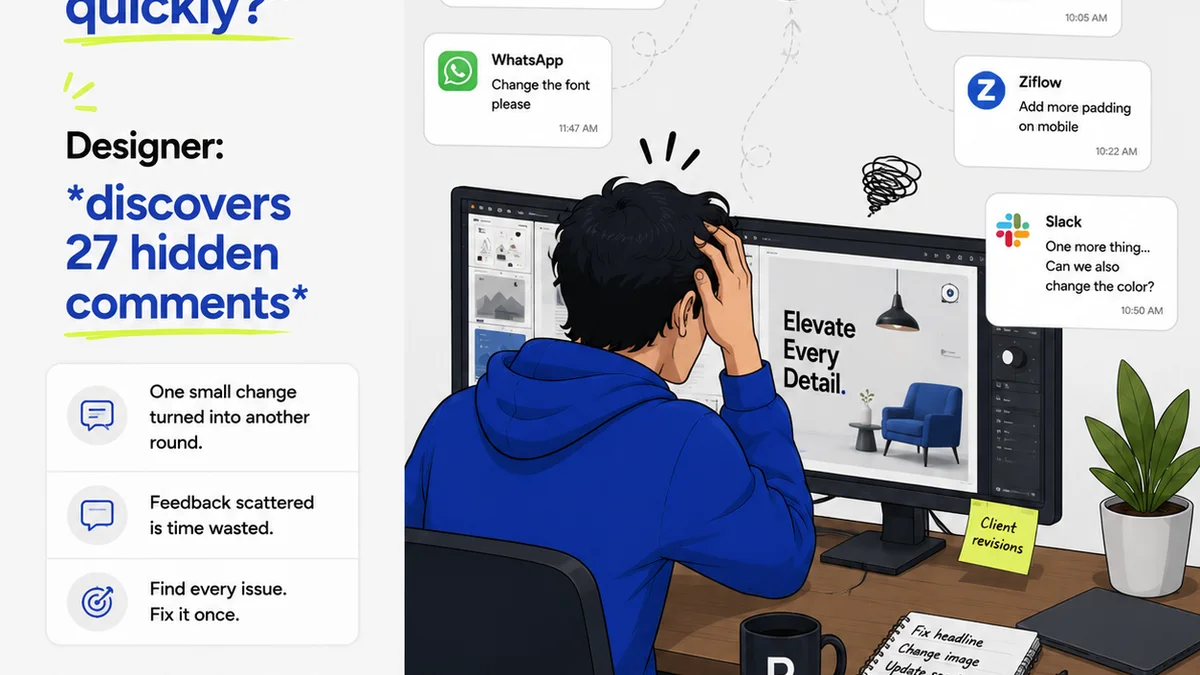
Everyone thinks they know how to do a design review. You gather stakeholders, present the work, collect feedback, and iterate. Simple, right?
None of that is wrong. But it’s incomplete.
The hard truth? Most design reviews devolve into subjective opinions, vague comments, and endless back-and-forth that kills momentum and frustrates everyone involved. Your team’s time gets eaten alive by inefficient processes, and clients feel like they’re not being heard.
What if there was a better way? A structured approach that cuts through the noise and focuses on actionable feedback. This isn't about a rigid, bureaucratic checklist. It's about embedding smart practices into your workflow that make design reviews productive, not painful.
1. Define the Goal Before You Start
Before anyone even sees a pixel, everyone needs to know *why* they're looking at this design. What is this specific review trying to achieve?
Is it:
- Initial concept validation?
- Mid-fidelity progress check?
- Final pre-launch approval?
- Usability testing feedback synthesis?
Clarity here prevents scope creep and ensures feedback is relevant. A design review checklist should start with this fundamental question.
Aligning Stakeholders
Every stakeholder needs to understand their role and the objective of the meeting. Are they there to provide strategic direction, aesthetic judgment, or technical sign-off?
A common mistake is inviting everyone but failing to define what feedback is actually needed from whom. This leads to a cacophony of opinions where valuable input gets lost.
Setting Expectations
Communicate the review's scope and desired outcome beforehand. Let people know what stage the design is in and what kind of feedback is most helpful right now. This primes them to think critically and constructively.
2. Establish Clear Feedback Guidelines
Vague feedback is the enemy of efficient design reviews.
Frequently asked questions
What is the most important part of a design review?
Defining the specific goal and desired outcome for each review session is paramount. Without this, feedback becomes unfocused and inefficient.
How can I get more actionable feedback from clients?
Provide clear guidelines on the type of feedback you need at each stage, use structured review methods, and ensure all feedback is logged and responded to promptly.
How often should design reviews happen?
The frequency depends on the project phase and complexity. However, reviews should be regular and scheduled, not ad-hoc, to maintain momentum.
What's the biggest mistake agencies make in design reviews?
Allowing subjective opinions to dominate without grounding them in project goals or user needs, and failing to provide a clear process for collecting and acting on feedback.