Everyone thinks design review bottlenecks happen because clients don’t know what they want. Or maybe they’re just being difficult. None of that is wrong. But it’s incomplete.
The hard truth? Most design review delays stem from a lack of clear process, poor communication tools, and an inability to manage feedback effectively. It’s an operational failure, not a creative one.
1. The Illusion of 'Quick Chat' Feedback
The default mode for many teams is the ‘quick chat’ feedback loop. Someone pings you on Slack, sends a quick email, or even calls. “Just take a look at this banner. What do you think?”
This seems efficient. Fast, even.
But it’s a trap.
This type of ad-hoc feedback lacks structure. It’s easy to miss, hard to track, and impossible to organize later. Was that feedback for the desktop version or mobile? Did they approve that change or just mention it in passing?
The Symptoms:
- Endless email chains with conflicting notes.
- Slack messages lost in the noise.
- Versions getting confused, leading to rework.
- Designers guessing what feedback *really* matters.
- Clients feeling like their input isn’t being heard (because it’s buried).
This isn't a creative problem. It's a workflow problem.
2. Version Control Chaos
How many times have you seen a design, approved it, only for the designer to say, “Oh, we updated that based on *another* piece of feedback you didn’t see”?
This is a direct consequence of unstructured feedback. Without a clear system for tracking revisions, everyone operates on a different version of reality.
The designer might be working off a list of verbal notes, while the client thinks they’re reviewing the latest approved iteration.
Common Pitfalls:
- Naming files like `logo_final.ai`, `logo_final_v2.ai`, `logo_final_really_final.ai`.
- No central record of which version is the *actual* current one.
- Difficulty rolling back to previous versions if a new direction fails.
- Ambiguity about who has the final say on a specific version.
This breeds confusion and kills momentum. It’s a slow-motion train wreck.
3. Unclear Approval Workflows
When does a design officially move from 'in progress' to 'approved'? Is it when the client says "looks good" in an email? Or is there a formal sign-off?
Without a defined approval process, designs can languish in a perpetual state of 'almost done'.
Clients might think they’ve approved something, but the internal team knows there are still minor tweaks pending. Or worse, the client *thinks* they’ve approved it, but then asks for major changes later, citing something they mentioned weeks ago.
Signs of Trouble:
- “Is this approved yet?” questions that never get a definitive answer.
- Scope creep disguised as minor revisions.
- Projects hitting unexpected roadblocks because approvals were assumed, not confirmed.
- Teams working on designs that are technically not yet signed off.
This isn't about client indecision. It’s about a lack of clarity on the finish line.
4. The 'Too Many Cooks' Syndrome
In many organizations, multiple stakeholders provide feedback. Sales, marketing, product, legal, executives – they all have opinions. And they all want to be heard.
When feedback comes from everywhere, unfiltered, it creates a tangled mess for the design team.
It’s hard to prioritize. It’s impossible to reconcile conflicting advice. Who owns the final decision?
The Impact:
- Designers are paralyzed by competing priorities.
- The 'loudest voice' often dictates changes, not the best ones.
- Projects get bogged down in internal debates.
- Burnout for the creative team trying to satisfy everyone.
This isn't about democracy in design. It’s about accountability.
5. Poor Visibility into Feedback and Revisions
The core issue underlying many of these bottlenecks is a lack of visibility. The design team can’t see all the feedback in one place. The client can’t see the history of revisions or understand why certain changes were made (or not made).
This opacity breeds distrust and inefficiency.
When feedback is scattered across emails, chats, and meetings, it’s easy for crucial details to slip through the cracks. Everyone is working in a silo.
What's Lost:
- Context for design decisions.
- A clear audit trail of changes.
- Efficient communication between client and creative team.
- The ability to quickly identify the source of a delay.
This lack of transparency is a productivity killer.
Where Revue Fits In
These aren't abstract problems. They're daily frustrations for creative teams. The solution isn't to train clients better or hire 'faster' designers. It’s to implement a system that manages the workflow.
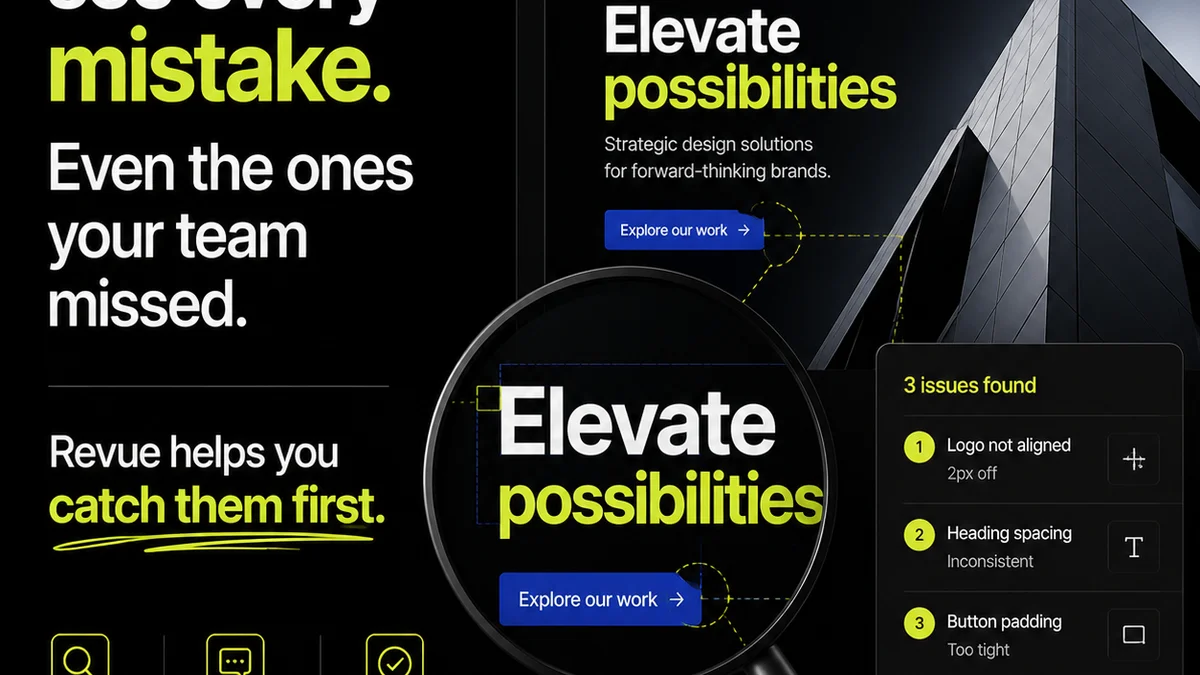
Revue provides that system. It centralizes client feedback, making it impossible for notes to get lost. Every comment is tied to a specific version, providing clear context.
Revision history is tracked automatically. Approval status is explicit, not implied. Stakeholders can see the entire feedback loop, from initial concept to final sign-off.
This clarity eliminates ambiguity, streamlines communication, and drastically reduces the time spent chasing down information or clarifying feedback.
6. The Cost of Inefficiency
Let’s talk numbers, not fluff. Every hour a project is stuck in review is an hour that can’t be billed. It’s an hour the client doesn’t have the final asset. It’s an hour that impacts team morale.
Quantifying these delays is crucial.
- Lost billable hours.
- Delayed project launches.
- Strained client relationships.
- Demotivated creative teams.
- Wasted resources on rework.
These aren't minor inconveniences; they are direct hits to your bottom line and your team’s well-being.
7. Shifting from 'Creative Differences' to Operational Excellence
The narrative that design reviews are inherently subjective and prone to conflict is a convenient excuse for poor process.
While creative taste is subjective, the *process* of gathering, organizing, and acting on feedback doesn't have to be.
By implementing structured workflows, clear communication channels, and robust version control, you move the conversation from 'I don't like it' to 'Here's the feedback, here's how we're addressing it, and here's the approved direction.'
This shift requires intentionality. It means investing in tools and adopting methodologies that support efficiency.
Key Shifts:
- From scattered notes to centralized feedback.
- From ambiguous approvals to explicit sign-offs.
- From version chaos to clear revision history.
- From 'who said what?' to documented decision-making.
This is the foundation of operational excellence in creative delivery.
Final Thought
Are design review bottlenecks truly about subjective taste, or are they a symptom of outdated, unmanaged workflows? The answer dictates whether you keep accepting delays or start building a more efficient, predictable creative process.
Frequently asked questions
What is a design review bottleneck?
A design review bottleneck occurs when the process of gathering feedback, making revisions, and obtaining final approval for creative work becomes significantly slowed down, impeding project progress.
How does scattered feedback cause delays?
Scattered feedback across emails, chats, and meetings leads to missed notes, conflicting instructions, and ambiguity about which feedback is prioritized or approved, forcing designers to guess or seek constant clarification, which slows down the entire review cycle.
Why is clear version control important in design reviews?
Clear version control ensures everyone is working from and reviewing the same iteration of a design. Without it, teams can waste time making changes to outdated versions or approving designs that have already been superseded, leading to rework and delays.
How can a centralized platform help with design reviews?
A centralized platform like Revue consolidates all feedback, revision history, and approval statuses in one place. This provides clear context, reduces miscommunication, tracks progress, and ensures all stakeholders are aligned, thereby eliminating many common bottlenecks.