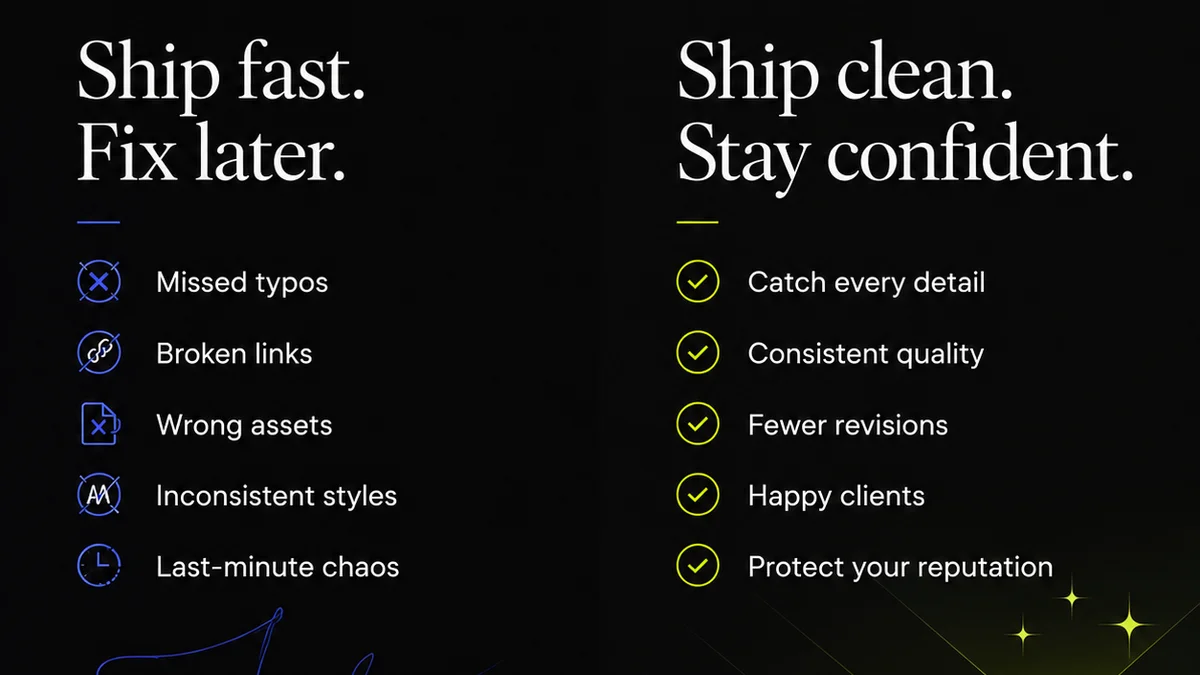
Everyone knows design reviews can be slow. It’s a common frustration. But if you think the problem is just “people taking too long to give feedback,” you’re missing the real story. That’s the symptom, not the disease.
The hard truth is that most design review bottlenecks aren't about individual slowness. They’re systemic. They’re baked into how you manage feedback, revisions, and approvals.
1. The Feedback Black Hole
This is where feedback goes to die. Or worse, where it gets lost, misinterpreted, or ignored.
Scattered Feedback Channels
Is feedback coming from email, Slack, client calls, random documents, and sticky notes? That’s a recipe for disaster.
- Emails get buried.
- Slack messages are ephemeral.
- Verbal feedback is easily forgotten or misquoted.
- Notes from meetings are often unstructured.
Each channel creates a separate source of truth. Or, more often, a separate source of confusion.
Vague and Unactionable Comments
“Make it pop.” “I don't like it.” “Needs more wow.”
These are common phrases that do nothing to help the design team move forward. They waste time and create frustration.
Good feedback is specific, constructive, and clearly states the desired outcome or problem. It’s not just a feeling; it’s a direction.
Lack of Context
When reviewers don't understand the project goals, the target audience, or the previous iterations, their feedback can be off-base. They might be critiquing something that’s intentionally designed that way.
Providing context upfront—project brief, user personas, previous design versions—is crucial for effective feedback.
Delayed Feedback Cycles
Waiting days or weeks for a single round of feedback is a killer. It stalls momentum and makes it hard to maintain creative flow.
This often happens because reviewers are overloaded, don't have a clear deadline, or don't see the urgency.
2. The Revision Maze
Once feedback is in, the real work begins. But if this stage isn't managed well, it becomes a labyrinth of confusion and rework.
Misinterpreting Feedback
Even with clear feedback, misinterpretation happens. Without a way to clarify or discuss, designers are left guessing.
This leads to wasted hours on revisions that don't address the actual issue.
Unclear Revision Scope
Did the feedback require a minor tweak or a complete overhaul? Without clear direction, designers might over-engineer a solution or under-deliver.
Defining the scope of revisions *before* the designer starts working is essential.
Lack of Version Control
Which is the latest version? Which version had that specific feedback? Without proper version control, it's easy to work on the wrong file.
This is a classic source of errors and duplicated effort.
Inefficient Collaboration
If designers and reviewers can't easily communicate about revisions, problems fester. Back-and-forth emails or calls to clarify can be time-consuming.
A streamlined way to discuss changes is vital.
3. The Approval Paralysis
This is the final gate. And it’s often where projects get stuck indefinitely.
Ambiguous Approval Criteria
What does “approved” actually mean? Does it mean it meets the brief, or that no one has any more minor nitpicks?
Clear, objective criteria for final approval prevent endless tweaking.
Multiple Stakeholders, One Decision
When too many people need to sign off, the process can grind to a halt. Everyone has an opinion, and consensus is hard to reach.
Streamlining the approval chain and defining decision-makers is key.
Lack of Transparency
Stakeholders might not know the status of the design or why it’s taking so long. This can lead to frustration and unnecessary follow-ups.
Visibility into the approval process manages expectations.
The “Final Final” Version Syndrome
This is the curse of the last-minute change request after approval. It signals a breakdown in the earlier stages.
Strong gatekeeping at the approval stage prevents scope creep and endless revisions.
4. The Quality Check Quagmire
Before anything goes live, it needs a quality check. If this is done haphazardly, it’s another bottleneck.
Inconsistent Checklists
Are you checking for brand consistency, accessibility, technical specs, and usability every time? If not, your checks are inconsistent.
A standardized quality checklist ensures thoroughness.
Last-Minute Discoveries
Finding major issues right before launch is a crisis. It leads to rushed fixes, potential errors, and missed deadlines.
Integrating quality checks earlier in the process is more efficient.
Lack of Ownership
Who is responsible for the final quality check? If ownership is unclear, things fall through the cracks.
Assigning clear responsibility for quality assurance is non-negotiable.
5. The Tooling Tangle
Using the wrong tools, or too many disconnected tools, creates its own set of problems.
Disparate Systems
Juggling project management software, file-sharing services, communication apps, and design tools makes it impossible to get a clear overview.
Each tool has its purpose, but if they don't talk to each other, they create silos.
Lack of Centralization
Where is the single source of truth for a project's feedback, revisions, and approvals? If it's not obvious, time is wasted searching.
Centralization is the antidote to the scattered feedback problem.
Poor Visibility
Can everyone on the team and relevant stakeholders see the status of feedback, revisions, and approvals at a glance? If not, you’re flying blind.
Transparency is a key component of an efficient workflow.
Where Revue Fits In
This is where a centralized feedback and approval platform like Revue becomes critical. It’s built to tackle these exact bottlenecks head-on.
Instead of feedback scattered across emails and Slack, Revue provides a single, organized space for all comments, annotations, and discussions directly on the creative assets.
This ensures feedback is contextual, actionable, and tracked. Revisions are managed with clear version history, making it easy to see what changed, why, and by whom.
Approvals become streamlined with clear status tracking and defined sign-off processes. No more guessing who needs to approve what, or whether it's been done.
Ultimately, Revue brings clarity and efficiency to the entire design review lifecycle, helping teams move from concept to final delivery without getting bogged down in unnecessary process.
Final Thought
Are your design review processes designed to help your team create better work, faster? Or are they an accidental barrier?
Take a hard look at where the friction points are. Then, fix them.
Frequently asked questions
What are the most common design review bottlenecks?
The most common design review bottlenecks include scattered feedback channels, vague or unactionable comments, delayed feedback cycles, misinterpreting revisions, ambiguous approval criteria, and a lack of centralized tools for managing the entire process.
How can I make design feedback more actionable?
To make feedback more actionable, ensure reviewers provide specific comments tied to project goals, suggest concrete changes, and explain the reasoning behind their suggestions. Providing context about the project brief and target audience upfront also helps.
What is the role of version control in design reviews?
Proper version control is crucial for design reviews to ensure everyone is working on and referencing the correct iteration of a design. It prevents confusion, reduces errors, and ensures that feedback and revisions are applied to the latest approved version.
How can a centralized platform help with design review bottlenecks?
A centralized platform like Revue consolidates feedback, revisions, and approvals in one place. This eliminates scattered communication, provides clear version history, improves transparency, and streamlines the entire review process, thereby reducing common bottlenecks.