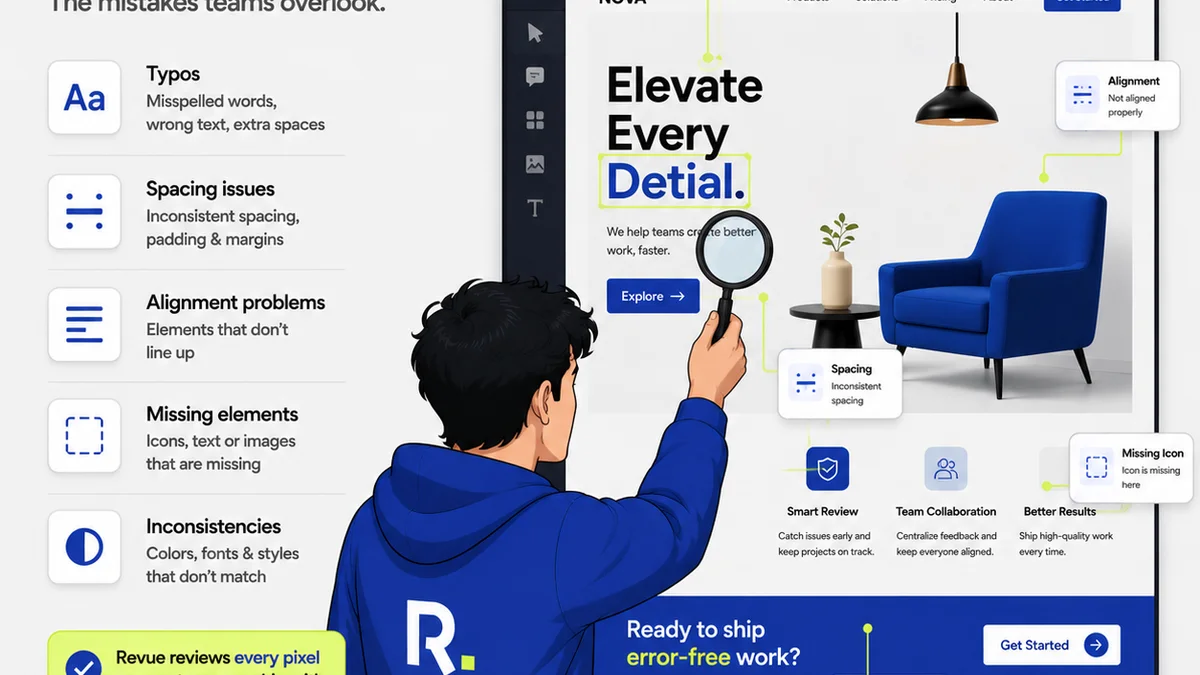
Everyone thinks a design review checklist is about catching errors. About ticking boxes before a deliverable goes out the door.
None of that is wrong. But it’s incomplete.
The hard truth? A checklist isn't just a safety net; it's a strategic tool. It’s how you ensure consistency, maintain quality, and ultimately, communicate value to clients. A good checklist isn't about preventing mistakes. It's about elevating the work.
1. What a Real Design Review Checklist Does
Most teams cobble together checklists from random sources. They’re often a mix of brand guidelines, accessibility standards, and whatever tripped someone up last week.
This is a mistake. A proper design review checklist is a living document that reflects your agency’s specific goals and processes. It’s built around what truly matters for *your* clients and *your* creative output.
Think of it less as a gatekeeper and more as a quality assurance framework. It ensures every piece of creative work meets a defined standard of excellence.
The Core Functions
- Consistency: Ensures all deliverables align with brand standards, project briefs, and overall client strategy.
- Quality Control: Catches potential issues before they reach the client, reducing rework and improving client satisfaction.
- Efficiency: Streamlines the review process, making it predictable and faster.
- Knowledge Transfer: Acts as a reference point for junior designers and a reminder for senior ones.
- Risk Mitigation: Identifies potential legal, technical, or accessibility problems.
A superficial checklist misses these deeper benefits. It becomes a chore, not a strategic advantage.
2. Building Your Agency's Design Review Checklist
Don't just download a template. Build one from the ground up, tailored to your agency. This takes more effort upfront, but it pays dividends.
Start with the Brief
Every review should tie back to the original project brief. What were the goals? Who is the target audience? What are the key messages?
Your checklist items should directly address these points. Did the design meet the brief’s objectives?
Involve Your Team
The people doing the work and the people reviewing it know best what’s important. Designers, project managers, and even account leads should contribute.
This fosters buy-in and ensures the checklist is practical, not just theoretical.
Categorize for Clarity
A jumbled list is useless. Group items logically. Common categories include:
- Brand Alignment: Logo usage, color palette, typography, tone of voice.
- Content Accuracy: Copy errors, factual correctness, call-to-action clarity.
- Technical Specifications: File formats, resolution, responsiveness, code standards.
- User Experience (UX): Navigation, usability, accessibility, information hierarchy.
- Client-Specific Requirements: Any unique needs or approvals mandated by the client.
This structure makes the review process systematic.
Define
Frequently asked questions
What is the main purpose of a design review checklist?
While a design review checklist helps catch errors, its deeper purpose is to ensure consistency, maintain quality standards, communicate value, and mitigate risks, all aligned with project briefs and client goals.
Who should be involved in creating a design review checklist?
The creation process should involve a cross-functional team including designers, project managers, and account leads. Their combined insights ensure the checklist is practical, relevant, and addresses all critical aspects of the creative output.
How often should a design review checklist be updated?
A design review checklist should be treated as a living document. It needs regular updates to reflect evolving brand guidelines, new client requirements, changing technology standards, and lessons learned from previous projects.
Can a checklist guarantee perfect design outcomes?
No checklist can guarantee perfection. However, a well-structured and consistently applied checklist significantly increases the likelihood of high-quality, error-free deliverables by providing a systematic framework for evaluation.