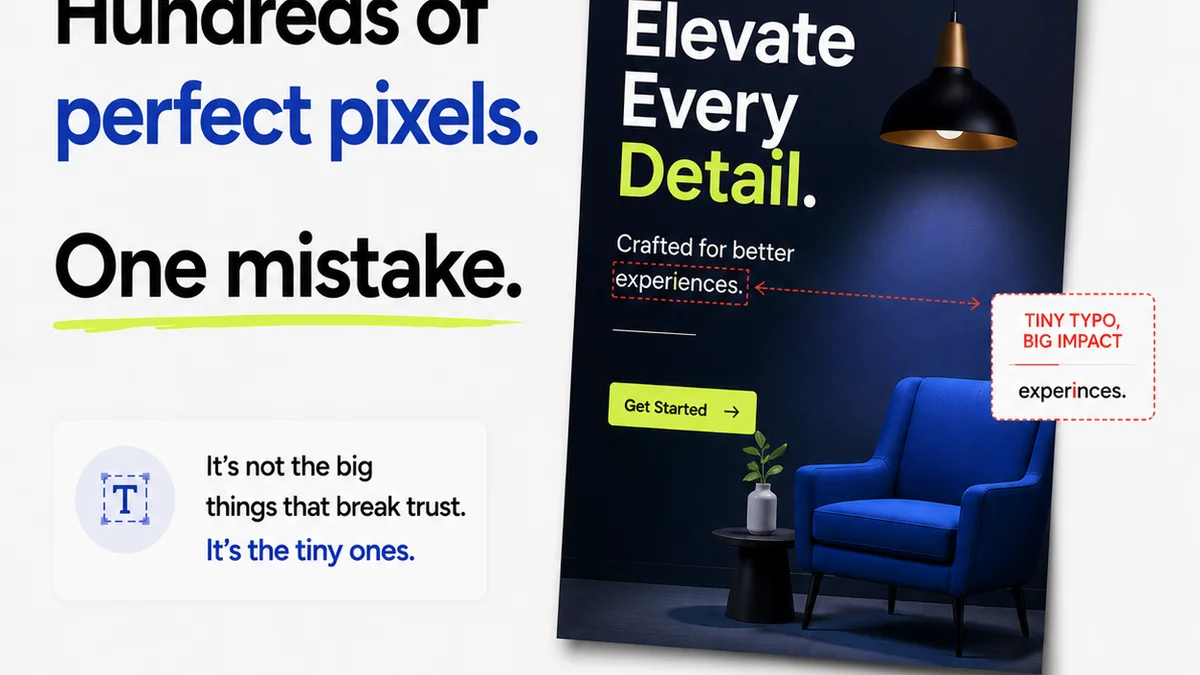
Everyone thinks a design review is about making sure the logo is the right color and the text is legible. That’s not wrong. But it’s incomplete.
The real work of a design review for marketing teams isn't about aesthetics; it's about strategic alignment and impact. It’s where you catch whether creative is *actually* going to do the job it was designed for.
1. The Strategic Brief Check
Before anyone even looks at a pixel, confirm the creative meets the brief. This sounds obvious, but it’s where most reviews go off track.
Is the Objective Clear?
What is this piece of creative supposed to achieve? Brand awareness? Lead generation? Direct sales? A click-through?
If the objective isn't crystal clear and measurable, the creative can't possibly succeed. And the review can't possibly assess it.
Target Audience Resonance
Who are we talking to? Does the tone, language, and imagery speak directly to them? Or is it generic?
A slick design that alienates the target audience is a failure. Full stop.
Key Message Delivery
What’s the single most important thing the audience should take away? Is that message front and center, or buried?
Marketing creative needs to communicate. If the core message is lost, the design has failed.
Call to Action (CTA) Clarity
What do you want the audience to do next? Is the CTA obvious, compelling, and easy to act upon?
A weak or missing CTA is a missed opportunity. Every time.
2. The Brand Consistency Audit
Your brand is your reputation. Every piece of marketing creative needs to reinforce it, not dilute it.
Logo Usage
Is the logo present, correctly sized, and in the right placement according to brand guidelines? No distortions, no weird color overlays.
Color Palette Adherence
Are the brand’s primary and secondary colors used appropriately? Are there any rogue colors that clash?
Typography Standards
Is the correct brand font family being used? Are the weights, sizes, and line spacing consistent with guidelines?
Typography is a silent brand ambassador. Get it wrong, and your brand feels off.
Imagery Style
Does the photography or illustration style align with the brand's established aesthetic? Is it aspirational, professional, or whatever your brand dictates?
3. The Usability & Accessibility Scan
Good marketing creative isn't just pretty; it's functional. And it needs to work for everyone.
Readability and Legibility
Is the text easy to read against its background? Is the font size sufficient for the intended medium (e.g., web vs. print)?
Contrast ratios are crucial here. Tools like the WCAG contrast guidelines provide a benchmark.
Interactive Element Clarity
For digital assets: are buttons and links clearly identifiable? Is it obvious what will happen when you click them?
Information Hierarchy
Does the design guide the viewer’s eye through the content logically? Is the most important information the most prominent?
Accessibility Considerations
Are there alt texts for images? Is color contrast sufficient for visually impaired users? Are interactive elements navigable via keyboard?
This isn't just good practice; it's often a legal requirement. Ignoring accessibility alienates a significant portion of your audience.
4. The Performance Prediction
This is where you move beyond mere approval and start assessing potential effectiveness.
Emotional Impact
What emotion does this creative evoke? Does it align with the desired brand perception and campaign goal?
A campaign aiming for trust shouldn't evoke anxiety. Simple as that.
Clarity of Value Proposition
Does the creative clearly communicate the benefit to the customer? Why should they care?
Compelling Offer (if applicable)
If there's a promotion, discount, or offer, is it presented attractively and clearly? Does it create urgency or desire?
Platform Appropriateness
Is this creative optimized for the intended platform? A social media ad needs different considerations than a print banner or a website hero image.
A beautiful design that’s too small for a billboard is a wasted effort.
5. The Technical & Production Check
Creative needs to be buildable and deliverable. This is the practical reality check.
File Format and Specifications
Are the files provided in the correct format (e.g., JPG, PNG, SVG, PDF)? Do they meet the technical specs for the intended output (e.g., resolution, color mode, bleed, trim marks)?
Asset Delivery Readiness
Are all necessary assets included? Are they organized logically? Are there any dependencies that need to be managed?
Brand Guideline Compliance (Technical)
Does the output strictly adhere to technical brand guidelines regarding file naming, color profiles, and resolution?
Where Revue Fits In
Managing this kind of comprehensive design review process can become chaotic. Especially with multiple stakeholders, feedback rounds, and versions.
Revue is built to bring order to that chaos.
Instead of scattered email threads and endless Slack messages, you get a centralized platform. Every piece of creative lives in one place. Stakeholders can provide clear, contextual feedback directly on the design.
This makes it easy to track revisions, ensure all points from your design review checklist are addressed, and maintain visibility on the approval status. It streamlines the entire workflow, from initial concept to final sign-off, ensuring that what gets approved is strategically sound, on-brand, and ready for production.
Final Thought
Are your design reviews a gatekeeper for quality and strategy, or just a formality to get the project moving? The difference determines whether your creative assets are truly working for your business.
Frequently asked questions
What is the primary goal of a design review for marketing teams?
The primary goal is to ensure that marketing creative not only looks good but also aligns with strategic objectives, resonates with the target audience, reinforces brand identity, and is technically sound for production and distribution.
How does a checklist improve the design review process?
A checklist provides a standardized framework, ensuring that all critical aspects—from strategic alignment to technical specifications—are consistently evaluated. This reduces subjective bias, catches potential issues early, and leads to more effective creative.
What are the key areas to cover in a design review checklist?
Key areas include strategic brief adherence, brand consistency, usability and accessibility, potential performance impact, and technical/production readiness. Each area has specific points to verify.
How can a tool like Revue help with design reviews?
Revue centralizes feedback, tracks revisions, and provides visibility into the approval process, making it easier to manage complex design review workflows and ensure all checklist items are addressed systematically.