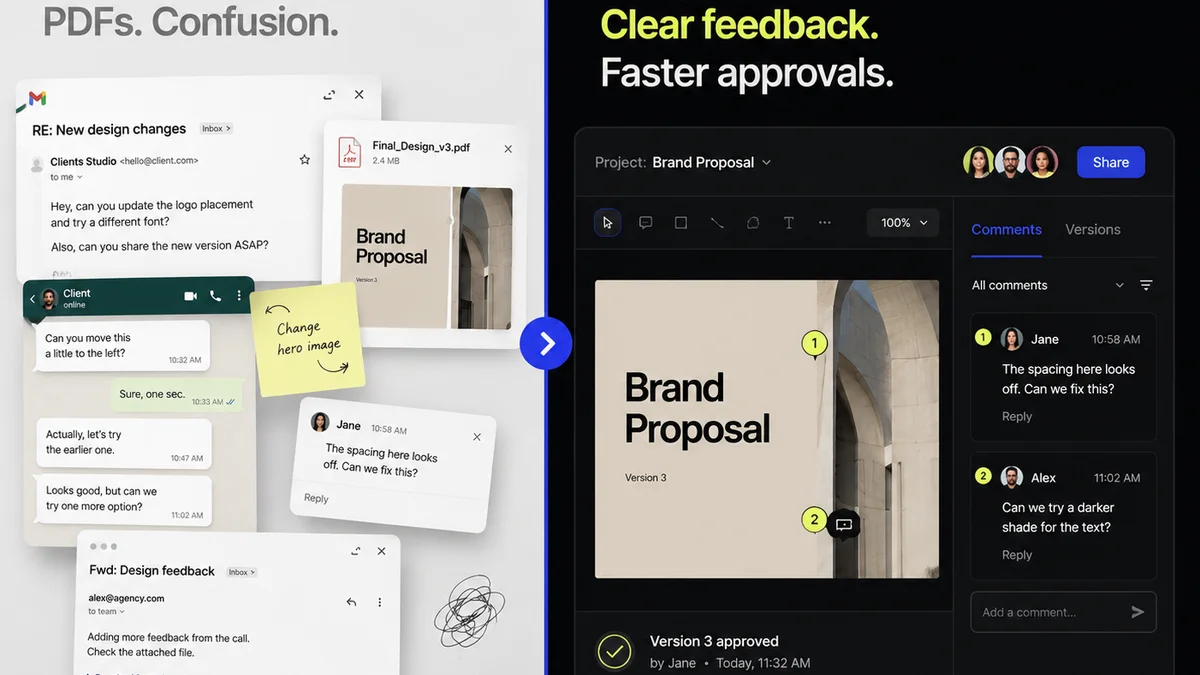
Everyone talks about design review. They say it’s about catching typos. It’s about ensuring brand consistency. It’s about making sure the client’s logo is the right size.
None of that is wrong. But it’s incomplete.
For enterprise teams, design review is a strategic imperative, not just a quality gate. The real challenge isn’t spotting errors; it’s weaving feedback into a coherent, efficient, and strategically aligned workflow that scales across complex organizations.
1. The Illusion of Centralized Feedback
Many enterprise teams assume that because feedback comes from a designated point person or a specific department, it's inherently centralized. This is a dangerous assumption.
True centralization isn't about a single inbox. It's about a single source of truth for feedback, revisions, and approvals.
Consider these symptoms of *decentralized* feedback:
- Emails buried under mountains of other communications.
- Multiple versions of the same document floating around, each with slightly different comments.
- Stakeholders providing feedback directly to designers, bypassing the official review process.
- Key decisions lost in Slack threads or impromptu hallway conversations.
- A lack of clear audit trail for why certain feedback was incorporated or rejected.
This chaos breeds inefficiency and, worse, strategic drift. When feedback is fragmented, it’s impossible to see the forest for the trees. You end up chasing individual comments instead of steering the project towards its overarching goals.
2. The True Cost of Revision Hell
The common wisdom is that revisions are a necessary evil. They’re part of the creative process.
For enterprise teams, however,
Frequently asked questions
What's the difference between design review for small teams vs. enterprise?
For small teams, design review might be a quick chat or a shared doc. For enterprise teams, it's a complex, multi-stakeholder process requiring robust systems for version control, audit trails, and strategic alignment across departments.
How can enterprise teams ensure brand consistency during review?
Establish clear brand guidelines and ensure they are accessible to all reviewers. Use design review tools that allow for annotation directly on assets, referencing specific guideline points. Centralizing feedback helps prevent conflicting brand interpretations.
What are the biggest challenges in enterprise design review?
Key challenges include managing numerous stakeholders and their feedback, maintaining version control, ensuring timely approvals, and preventing strategic drift. Lack of a centralized system exacerbates these issues.
How does technology help with enterprise design review?
Technology provides a central platform for feedback, version tracking, and communication. It automates workflows, creates audit trails, and ensures all stakeholders are working from the latest version, significantly reducing errors and delays.