Everyone assumes design review governance is about speed. About getting those client approvals faster.
None of that is wrong. But it’s incomplete.
The real win isn't just speed. It's clarity. It's control. It's building a process that prevents rework, delights clients, and keeps your creative teams from burning out. That’s the hard truth behind effective design review governance.
1. What “Governance” Really Means in Design Review
Governance isn't just a fancy word for process. It’s the framework that ensures consistency, accountability, and quality across all your creative projects. For design reviews specifically, it means defining:
- Who reviews what.
- When they review it.
- How feedback is given.
- How decisions are made.
- How revisions are tracked.
- Who has final sign-off.
Without these guardrails, reviews devolve into chaos. Feedback gets lost. Scope creep runs rampant. Your best designers end up doing the same work three times.
This is especially critical for US teams, where client expectations can be high and project timelines often tight.
The Cost of Unchecked Feedback
Think about the last time a project went sideways. Chances are, it involved a messy review cycle.
Emails with vague comments. Slack messages buried under a mountain of other chats. A client casually mentioning a change on a call, with no record. These aren't just minor annoyances; they're symptoms of a broken governance system.
The result?
- Wasted hours in endless revision rounds.
- Frustrated clients who feel ignored.
- Demoralized design teams working overtime.
- Projects that miss their deadlines and blow their budgets.
This isn't sustainable. Not for your agency, and certainly not for your clients.
2. Key Features of Effective Design Review Governance Tools
You need tools that support a robust governance strategy. Not just another place to dump files. Look for platforms that offer:
Centralized Feedback Hub
All feedback, in one place. No more hunting through email chains or chat logs.
This means clear annotations directly on the creative asset – mockups, videos, PDFs, whatever it is.
Version Control and History
Every iteration needs to be tracked. Clients should see what’s changed from one version to the next.
This transparency builds trust and prevents arguments about whether a requested change was already addressed.
Clear Roles and Permissions
Define who can provide feedback, who can approve, and who manages the process. This avoids conflicting input and ensures the right people are making decisions.
Automated Workflows and Notifications
Streamline the review process. Automatically notify the next stakeholder when a review is ready or when feedback is provided.
This keeps things moving and reduces manual follow-up.
Approval Tracking
A clear, auditable record of approvals. This is your proof of sign-off, protecting both you and the client.
It’s the final gate before launch.
Integrations
Does it play well with your existing stack? Think project management tools, design software, and communication platforms.
Seamless integration means less friction for your team.
3. Evaluating Tools for US-Based Creative Agencies
When choosing a tool, consider the specific needs of US teams. This often means:
Scalability
Can the tool grow with your agency? From a small startup to a larger, multi-team operation, your governance needs will evolve.
Client Experience
How easy is it for your clients to use? A clunky interface will frustrate them, undermining the entire point of a streamlined process.
US clients often expect polished, intuitive digital experiences.
Security and Compliance
Especially if you handle sensitive client data, ensure the tool meets industry standards for security. For US teams, this might involve understanding data residency and privacy regulations.
Support and Onboarding
What kind of support does the vendor offer? Quick, responsive support is crucial when you’re on a tight deadline.
US-based support teams can often be more attuned to local business hours and cultural nuances.
Reporting and Analytics
Can you track review cycle times, common feedback themes, or approval bottlenecks? This data is gold for process improvement.
Understanding your own workflow is key to optimizing it.
4. Common Pitfalls to Avoid
Implementing a new tool is only half the battle. The real challenge is adopting the *governance* mindset.
Treating the Tool as a Magic Bullet
No software can fix a fundamentally broken process. A tool amplifies your existing workflow. If your workflow is chaotic, the tool will just make the chaos digital.
Lack of Team Buy-In
If your designers, account managers, and clients don’t understand *why* you’re using a new system, they won’t use it effectively. Training and clear communication are non-negotiable.
Over-Complicating the Process
Governance should simplify, not add layers of bureaucracy. Keep your workflows as lean as possible. Focus on the essential steps.
Ignoring Feedback on the Tool Itself
Your team and clients will encounter friction points. Listen to their feedback and iterate on your governance process. It’s not set in stone.
Failing to Define Roles Clearly
Ambiguity leads to confusion and dropped balls. Ensure everyone knows their responsibilities within the review cycle.
5. Where Revue Fits In
This is where a platform like Revue becomes indispensable for managing design feedback and approvals. It’s built from the ground up to address the chaos of scattered communication.
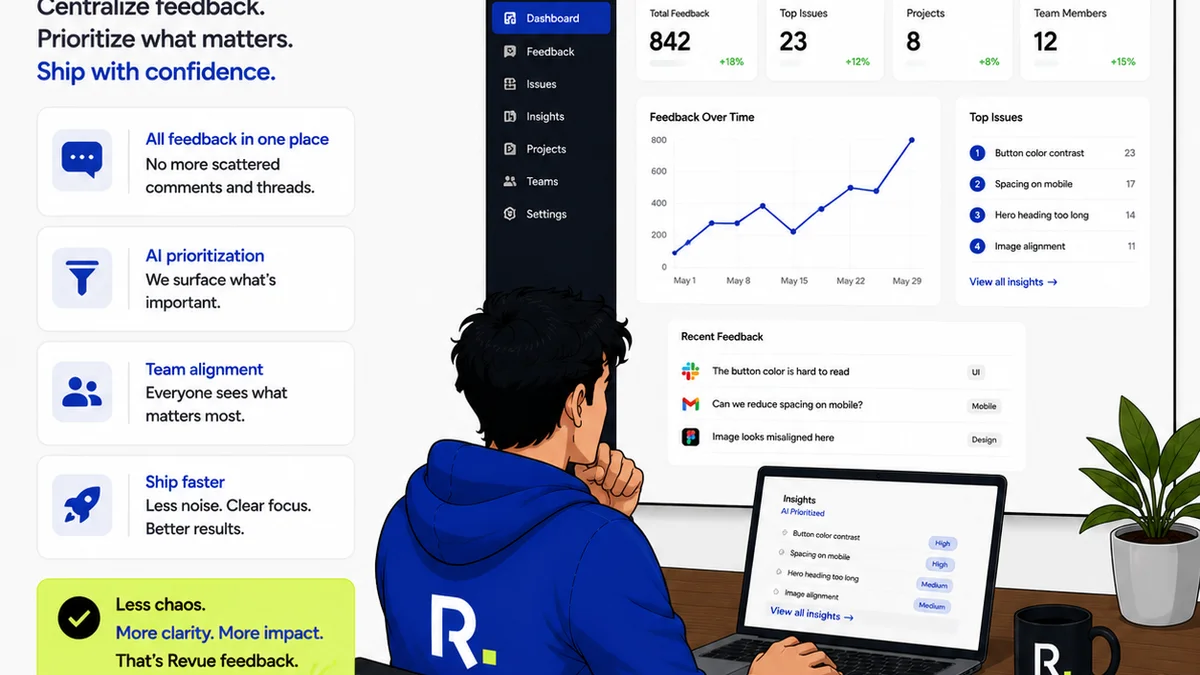
Revue acts as your central hub. It consolidates all client feedback, comments, and revision requests directly onto your creative assets. No more digging through emails or Slack channels.
With clear version tracking and annotation tools, you maintain a visible history of changes. This transparency is key to avoiding disputes and ensuring everyone is on the same page.
Defining review stages and assigning stakeholders within Revue ensures that feedback flows logically, and approvals are captured with certainty. This structured approach minimizes the back-and-forth that plagues so many creative projects.
Ultimately, Revue provides the governance layer needed to transform design reviews from a bottleneck into a streamlined, efficient part of your agency’s workflow.
6. Final Thought
The best design review governance tools aren't just about managing assets. They're about managing people, expectations, and the very flow of creative work.
Are you using tools to simply track work, or are you using them to fundamentally improve how creativity flows through your agency?
Frequently asked questions
What is the primary benefit of design review governance tools?
The primary benefit is not just speed, but clarity, control, and consistency in the feedback and approval process. This leads to reduced rework, better client satisfaction, and less stress on creative teams.
How do governance tools help with client feedback?
Governance tools centralize all feedback, provide clear version control, and ensure that feedback is given by the right people at the right time. This prevents lost comments, reduces ambiguity, and creates an auditable trail of communication.
Are there specific considerations for US teams when choosing these tools?
Yes, US teams should consider scalability for growth, ease of use for clients accustomed to polished digital experiences, security and compliance with relevant regulations, and responsive, localized support.
Can a tool alone fix a bad review process?
No, a tool amplifies your existing process. Governance tools are most effective when implemented alongside a clear, well-defined workflow and when there is strong team buy-in and adoption.